¡Búscanos en las redes sociales!
How do we reach our dreams?
For World RA Day 2026, under the theme “Reach Your Dreams,” we go beyond sharing dreams (as we did at our successful WAD 2025 event). This year is built on concrete actions that give people with Rheumatic and Musculoskeletal Diseases (RMDs) and their caregivers simple but powerful tools to turn their aspirations into reality.
Learn more about World RA Day 2026




Activities
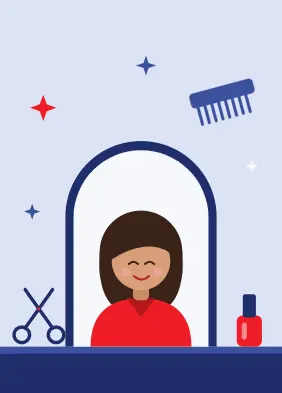
Makeover
Gallery
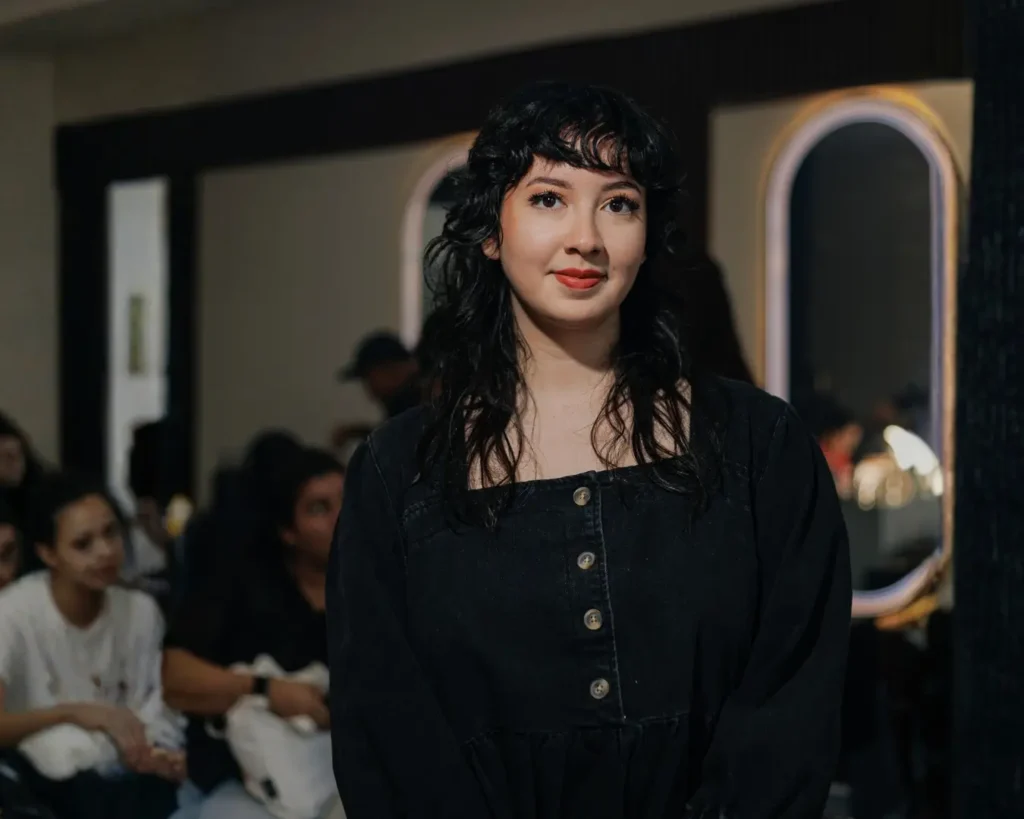
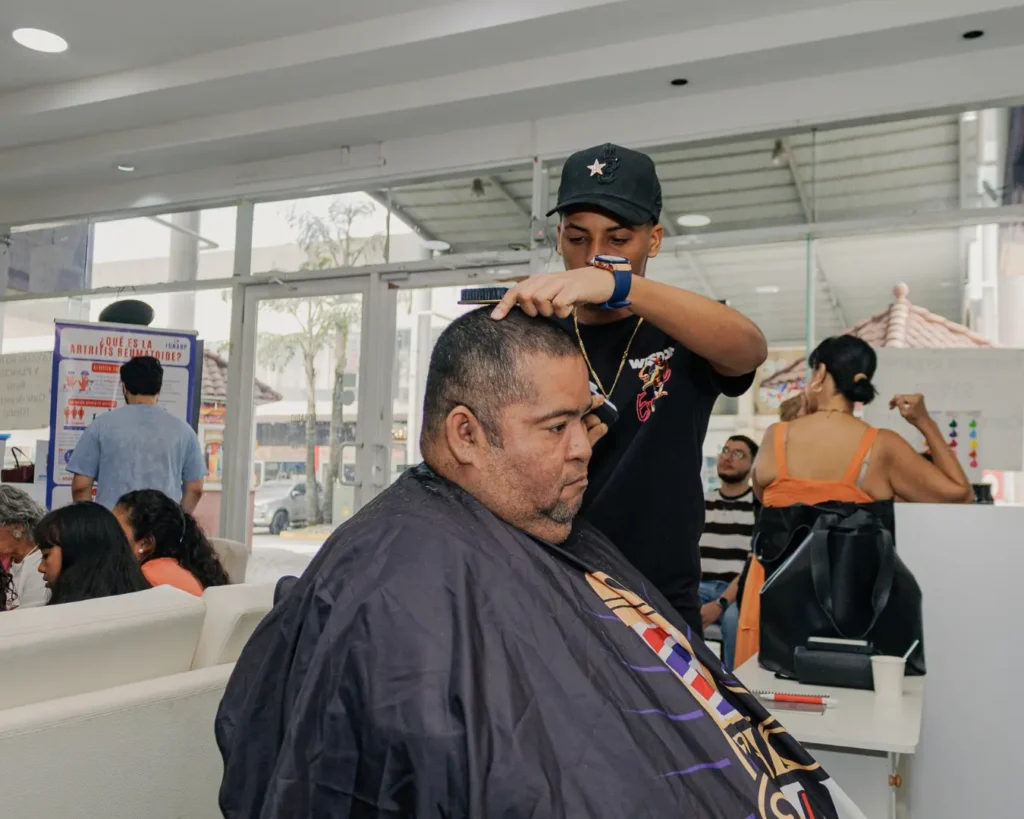
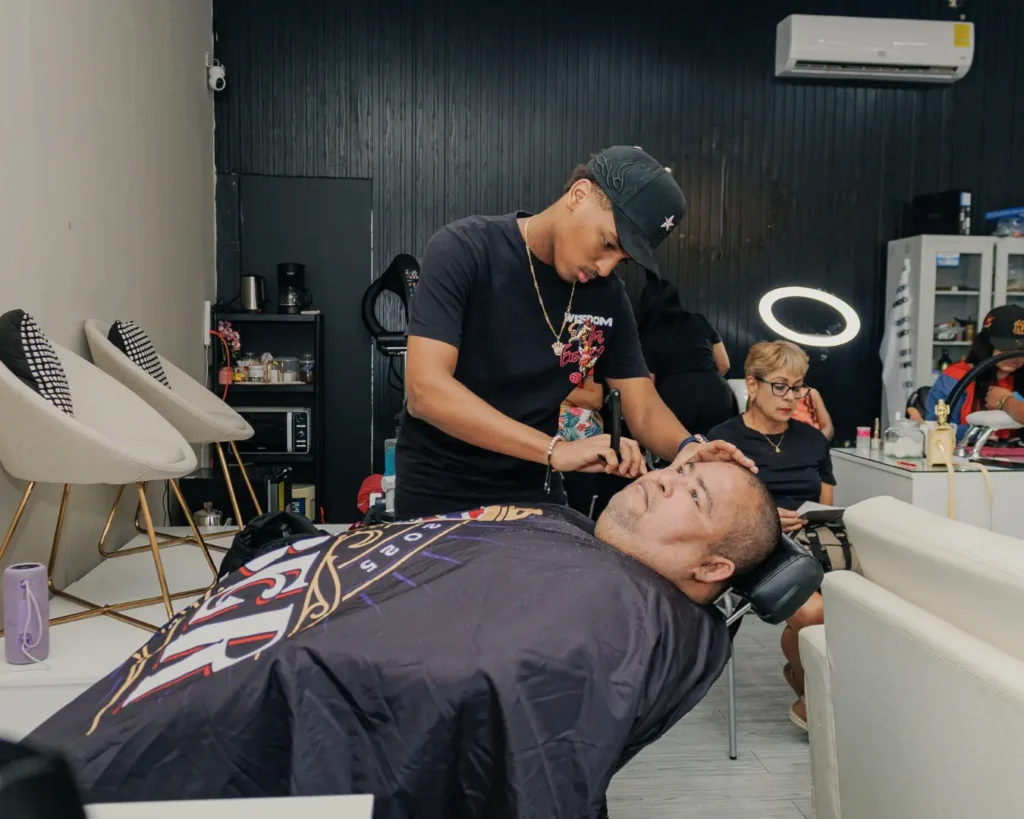

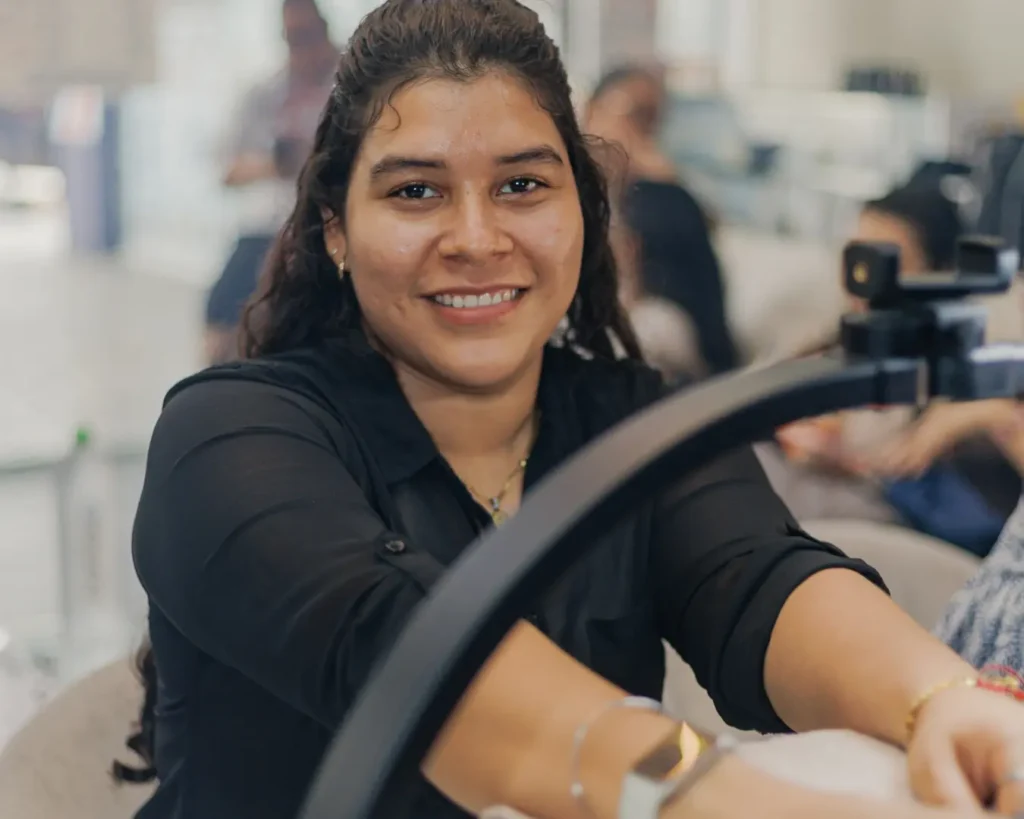
Caregiver self-care
Living with a rheumatic or musculoskeletal disease means living with pain, fatigue and uncertainty. Beyond medication, well-being also depends on how we manage stress and on the activities that give meaning to our day.
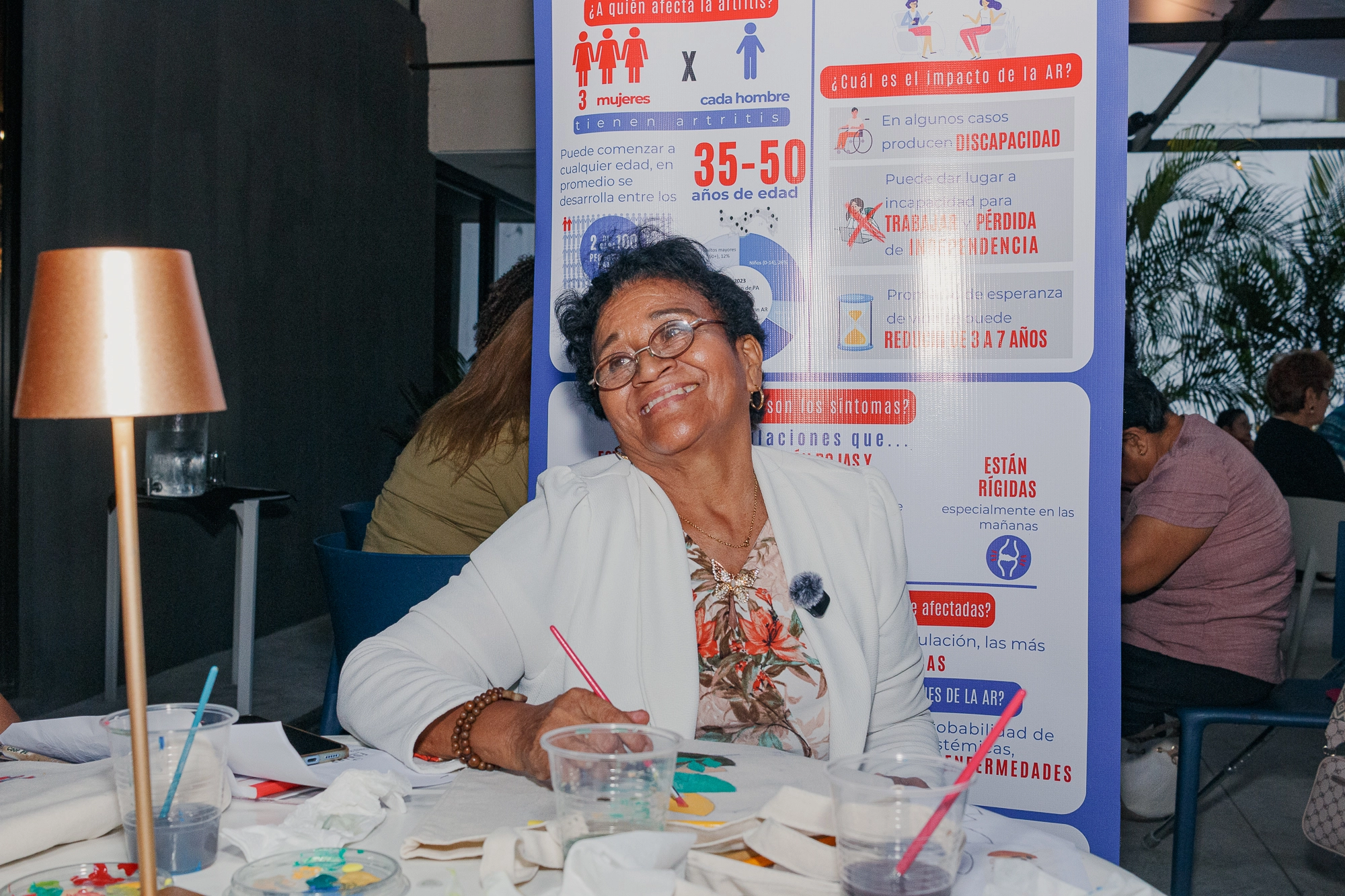
Creativity offers an accessible and enjoyable way to manage chronic pain, always alongside medical treatment and never as a substitute, as the manual itself points out. With this in mind, we organized a painting workshop that combined a medical talk, a guided meditation and a group creative experience, so participants could learn how hobbies influence well-being and pain perception, and leave with a concrete technique to add to their routine.
Why is it needed?
Psychoeducational and cognitive-behavioral interventions have reduced caregiver burden and depressive symptoms.
Approaches aimed at the caregiver–patient pair have also shown more positive results. In rheumatology, however, there are few interventions for caregivers, leaving a gap that programs such as the FUNARP manual can begin to fill.
The 2021 EULAR recommendations support education, goal setting and problem solving as components of self-management. Although they are aimed at patients, they provide a logical basis for adapting them to caregivers.
A caregiver with the right tools burns out less, sustains care for longer and better supports treatment, which likely benefits the patient as well.
How did we do it?
We invited 10 caregivers of FUNARP member patients who attended the World RA Day 2025 commemoration.
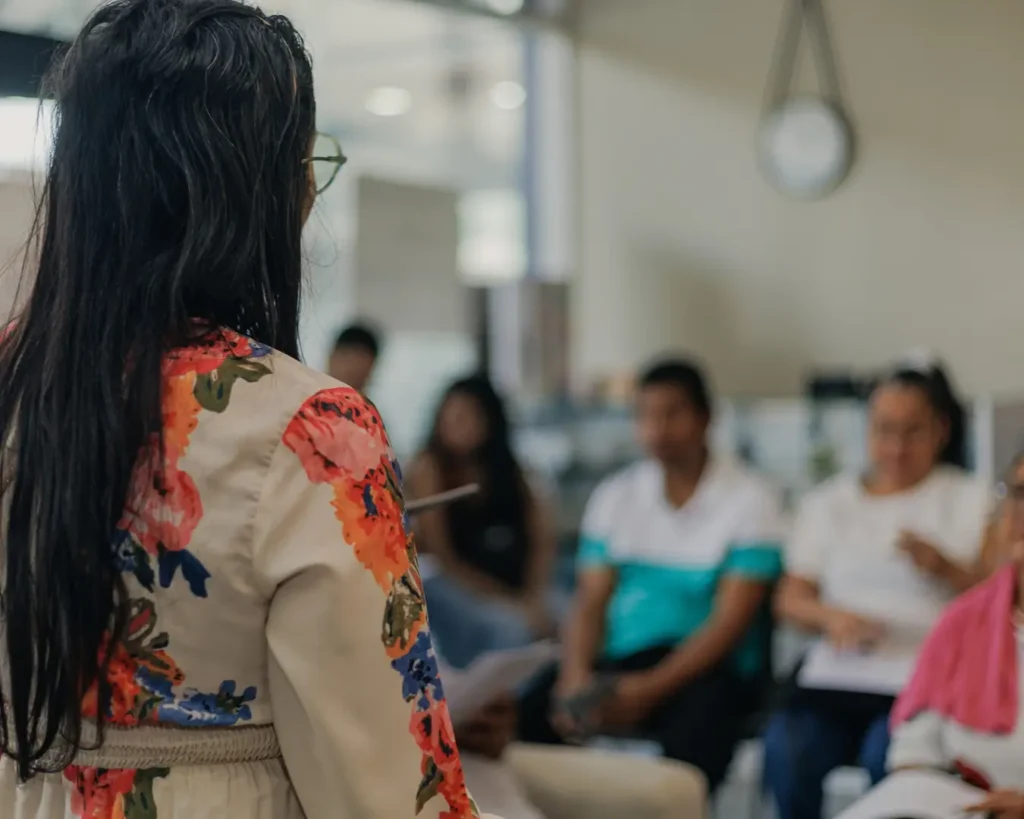
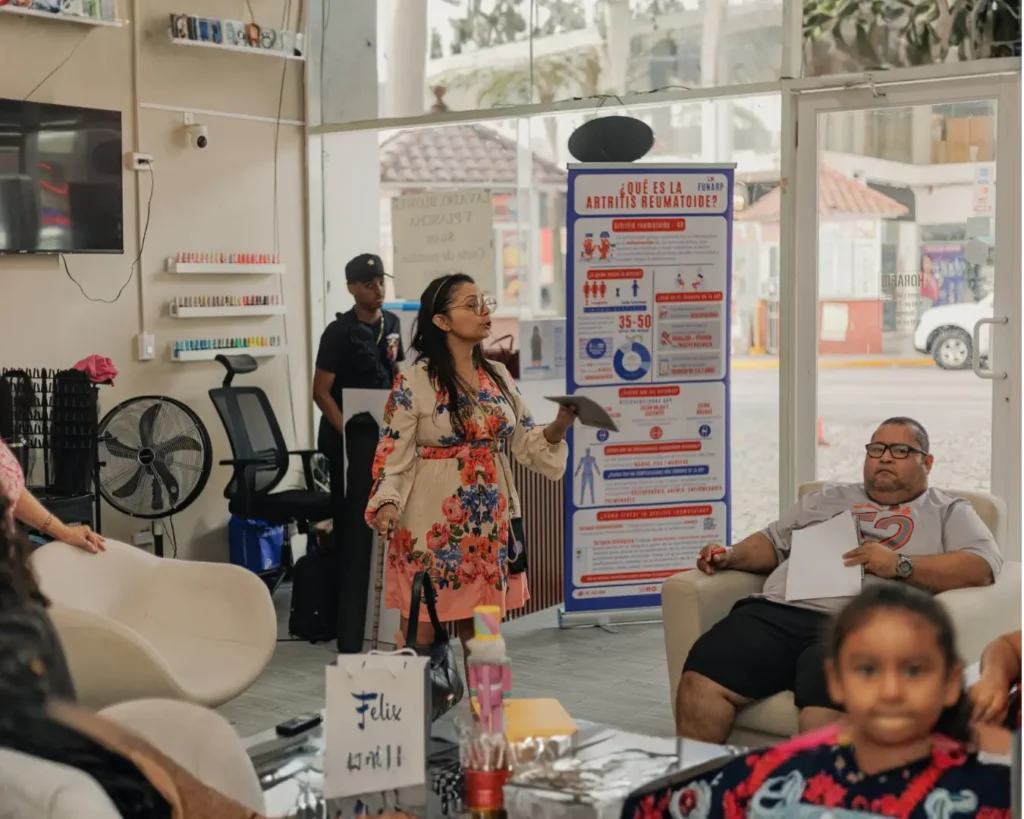
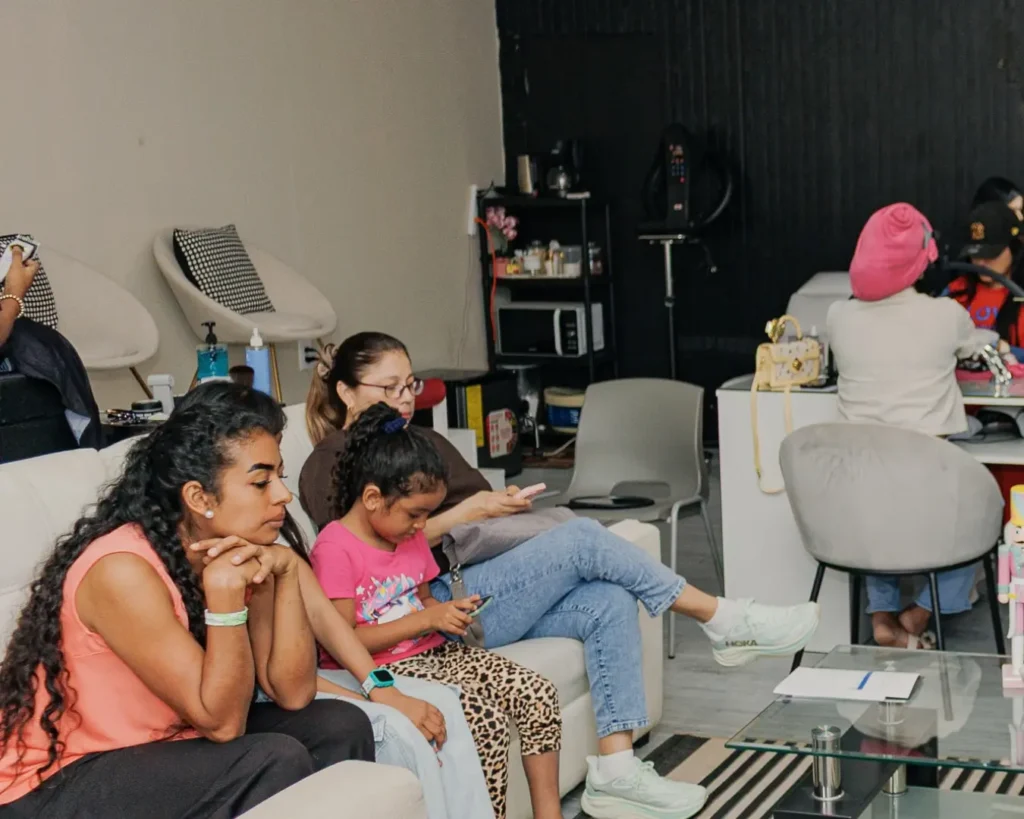
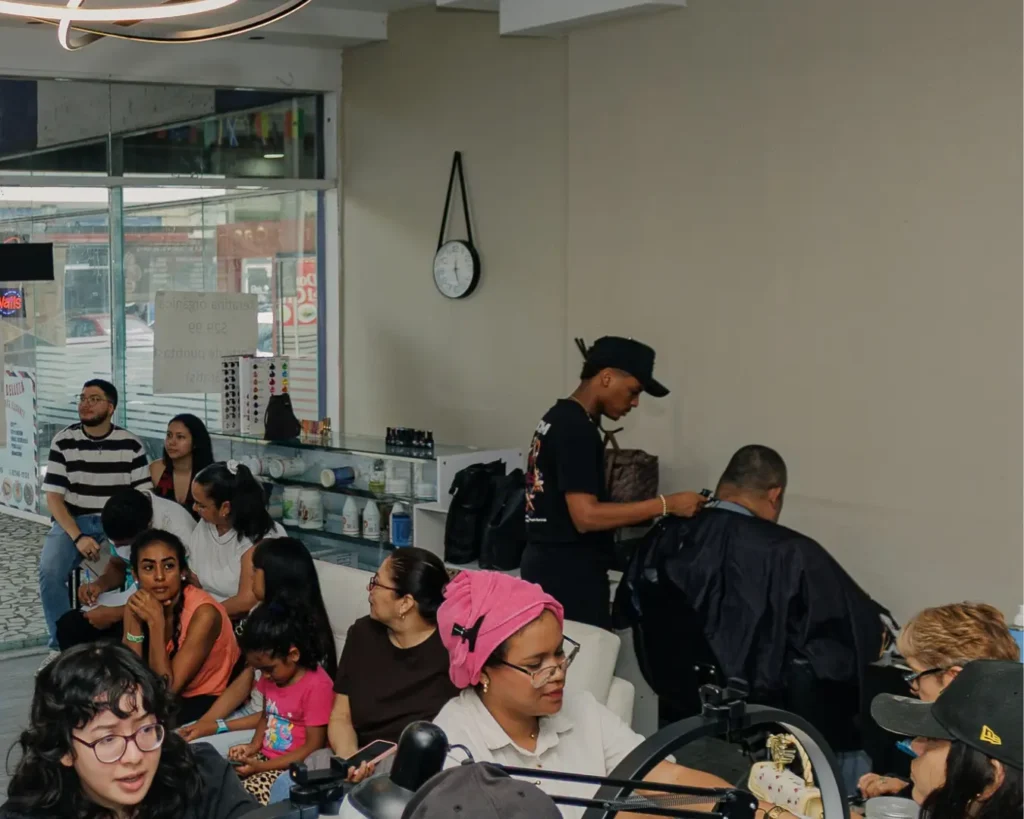
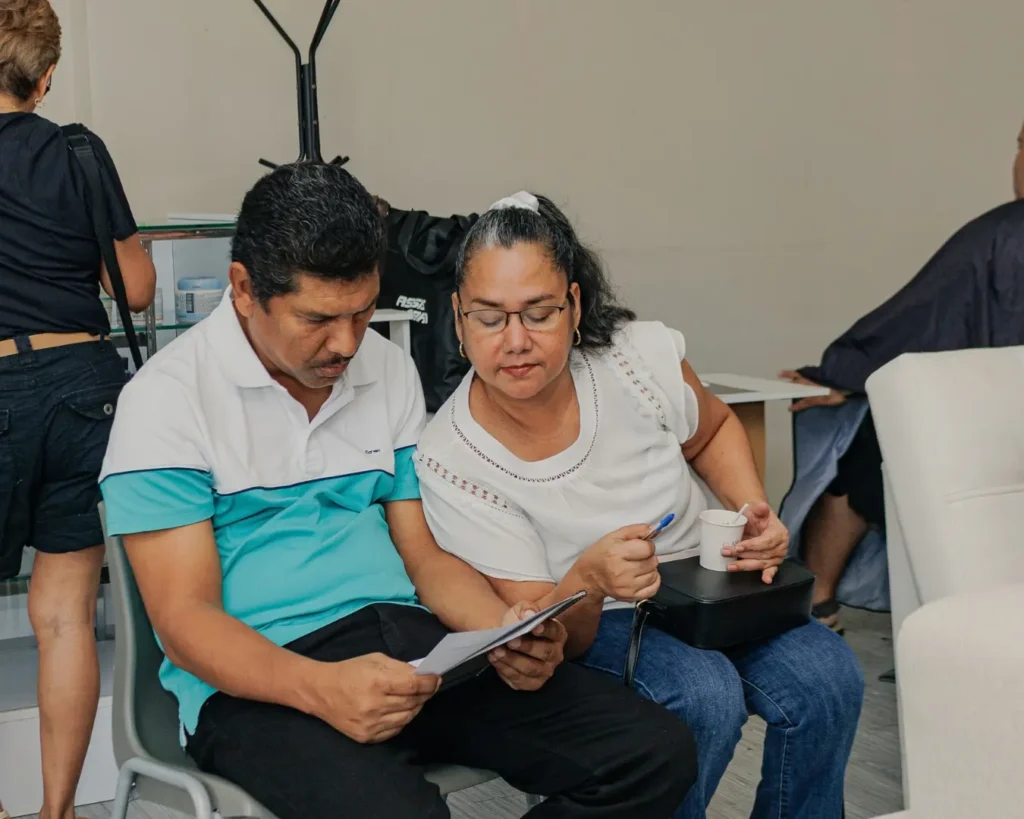
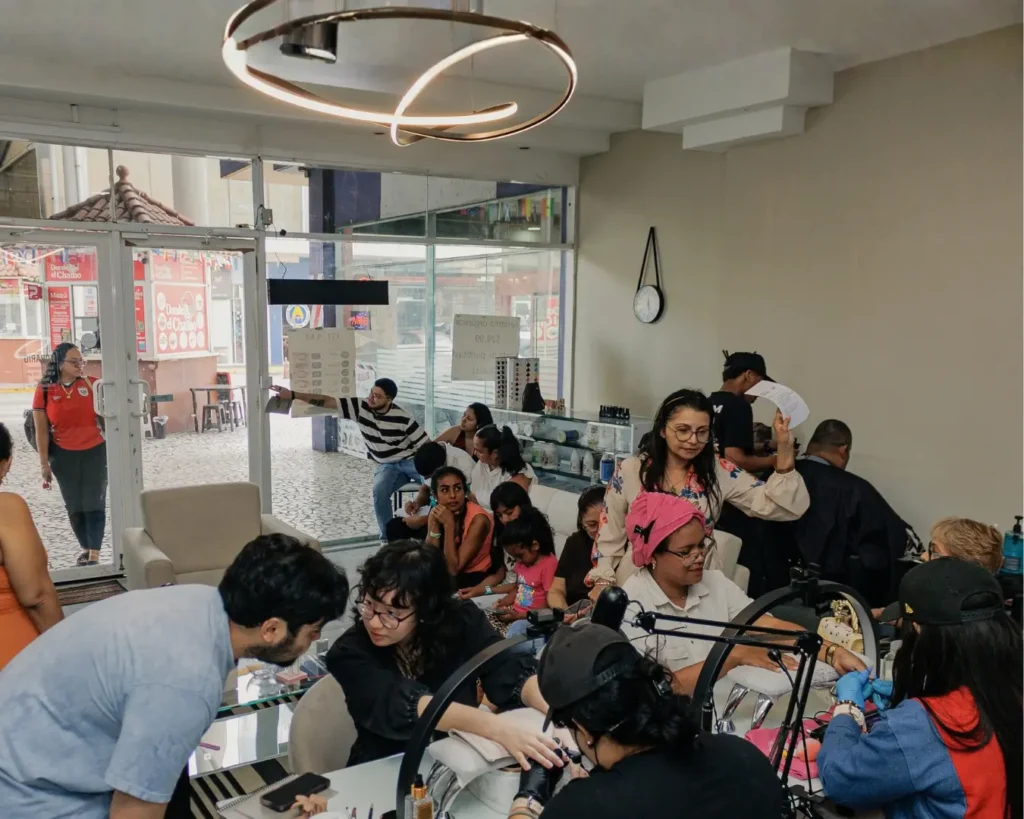
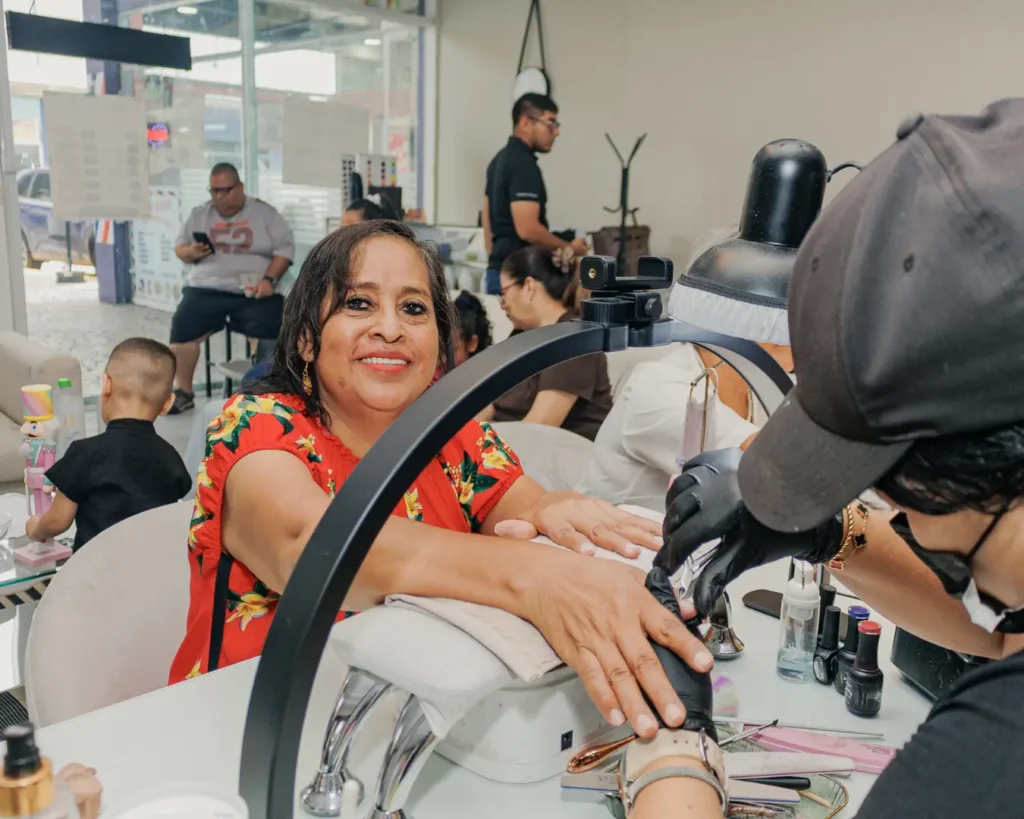
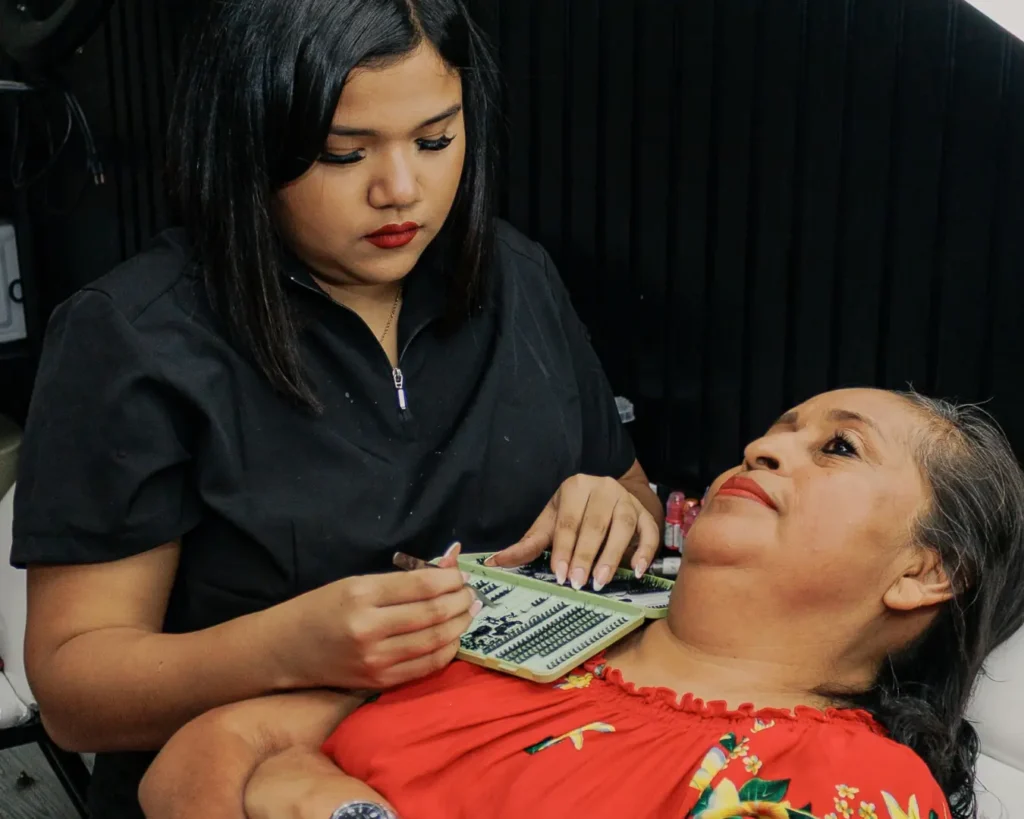
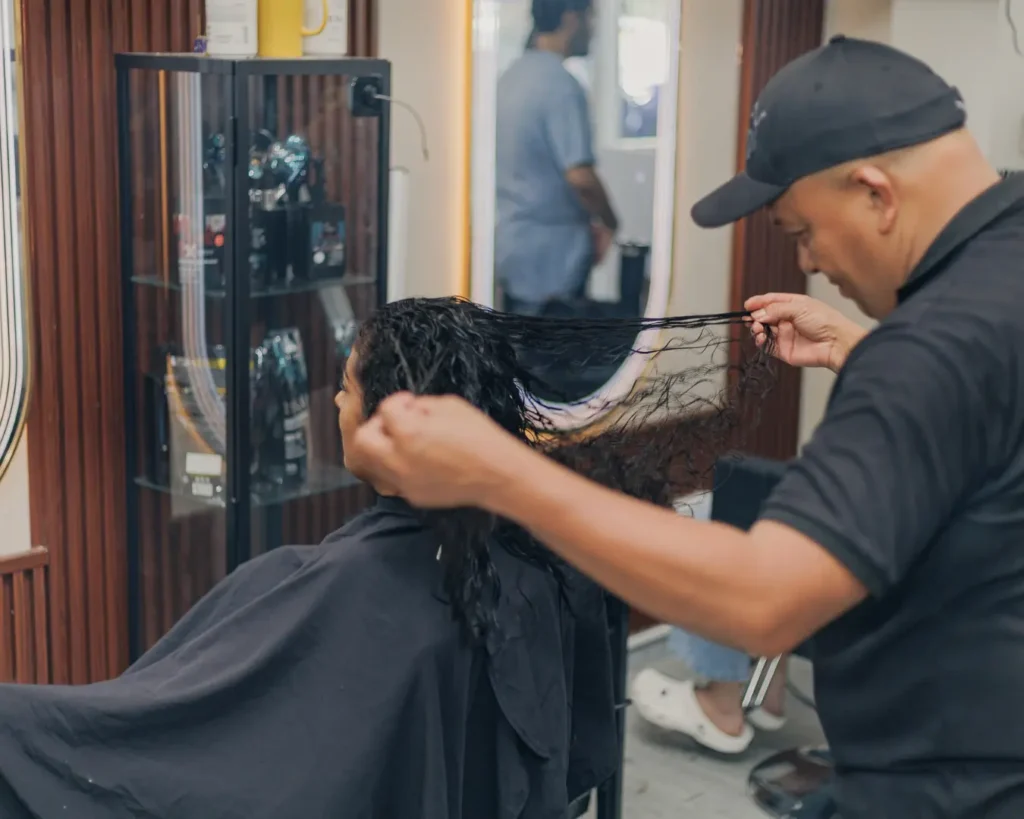
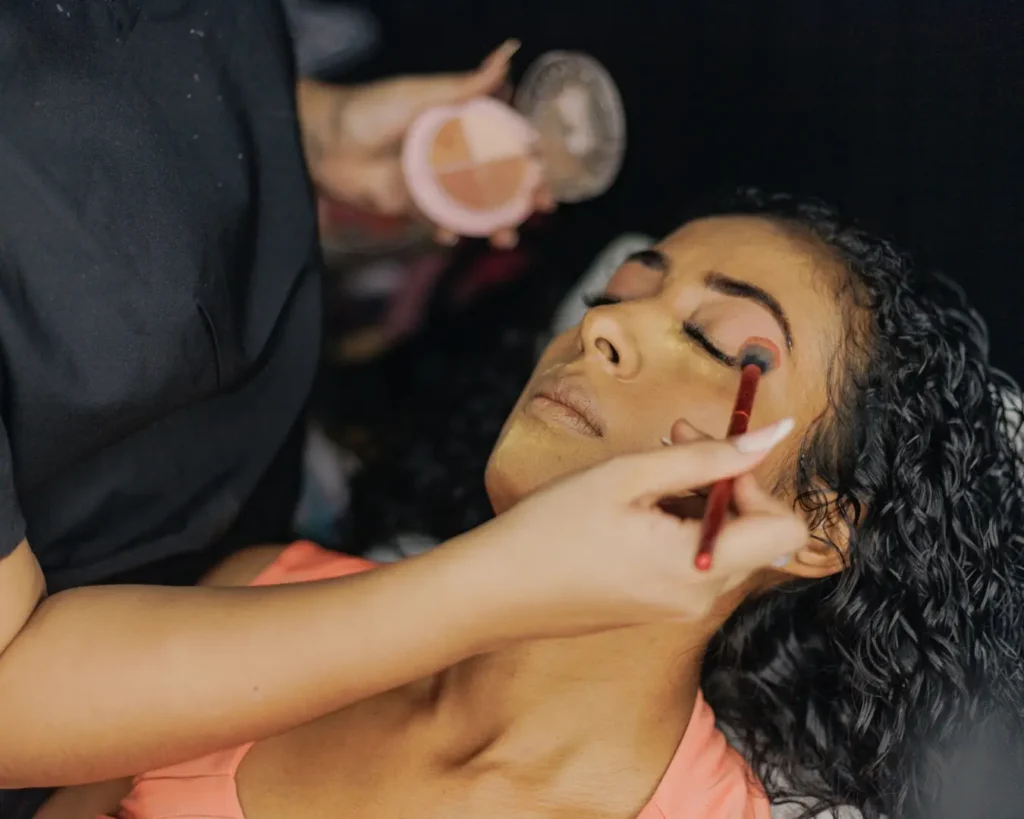
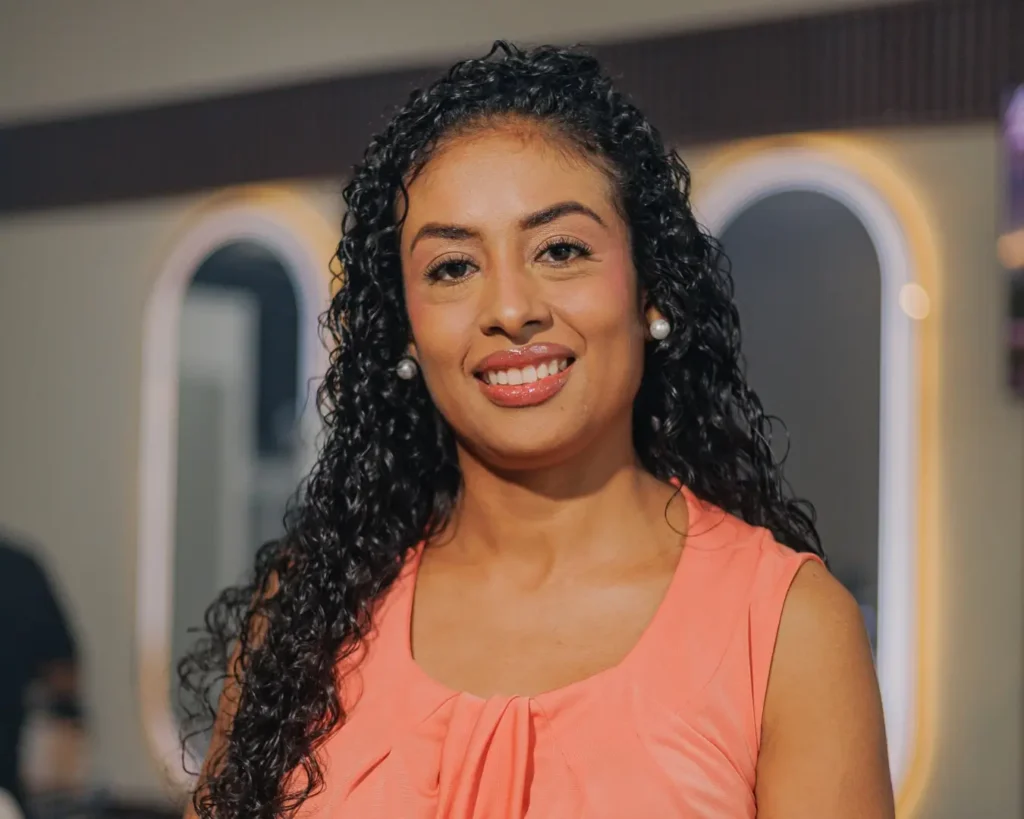
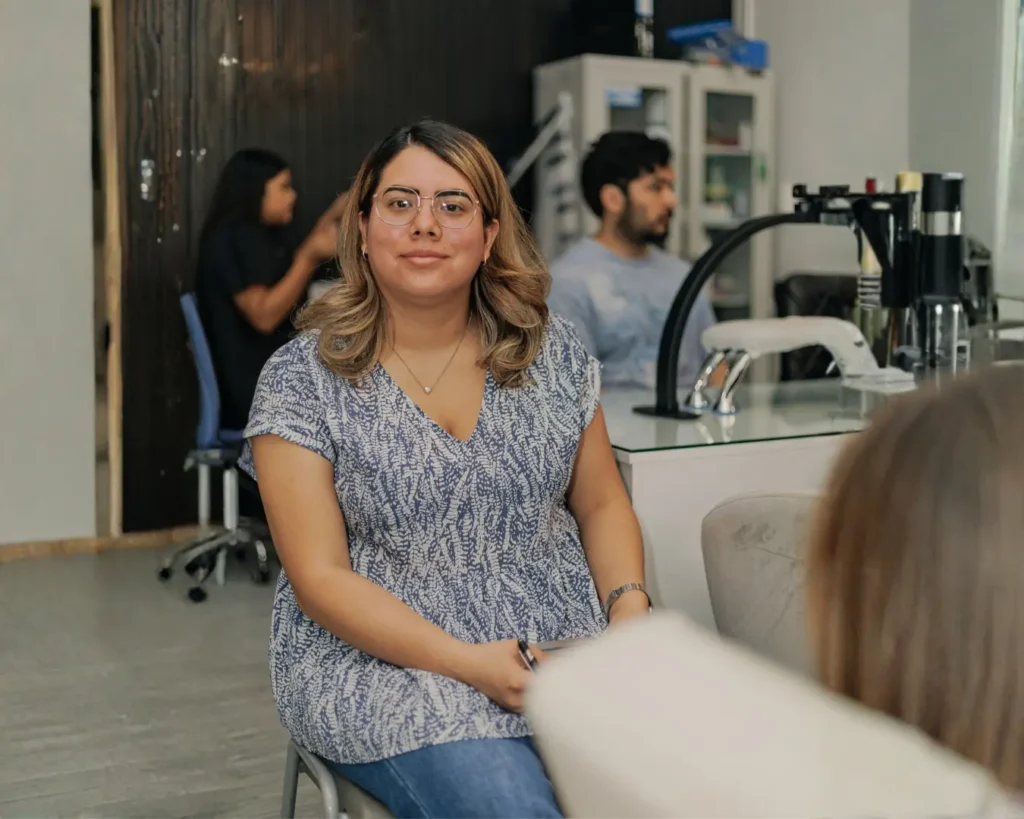
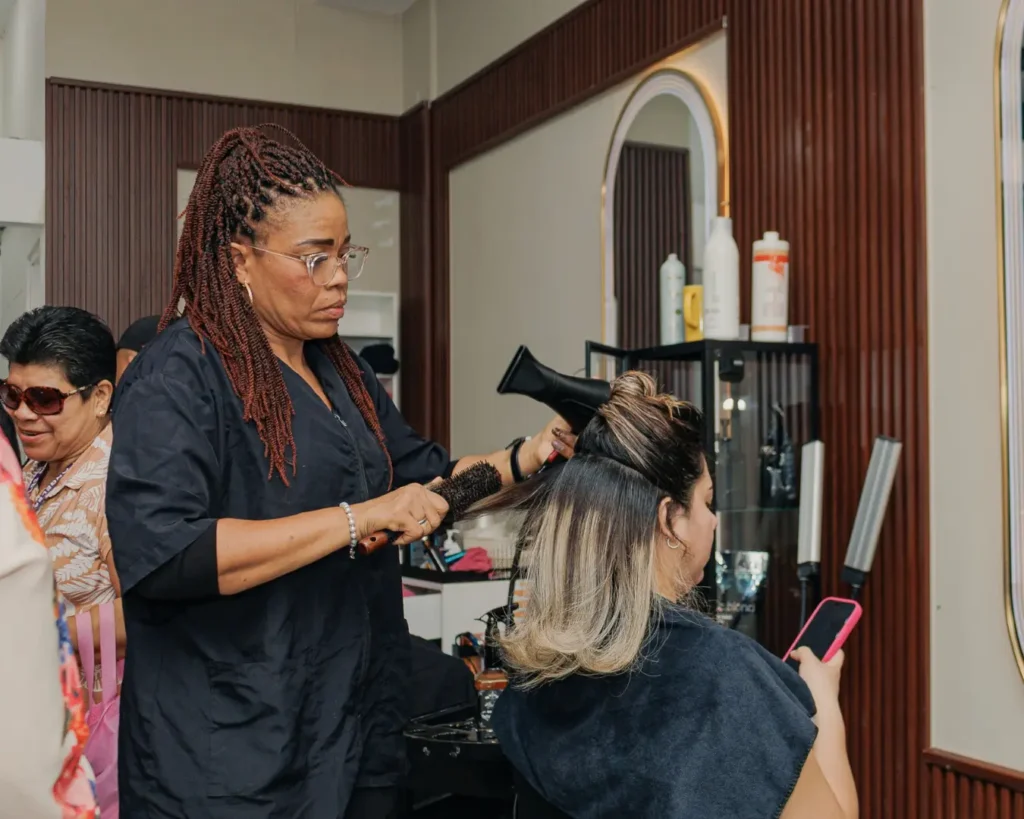
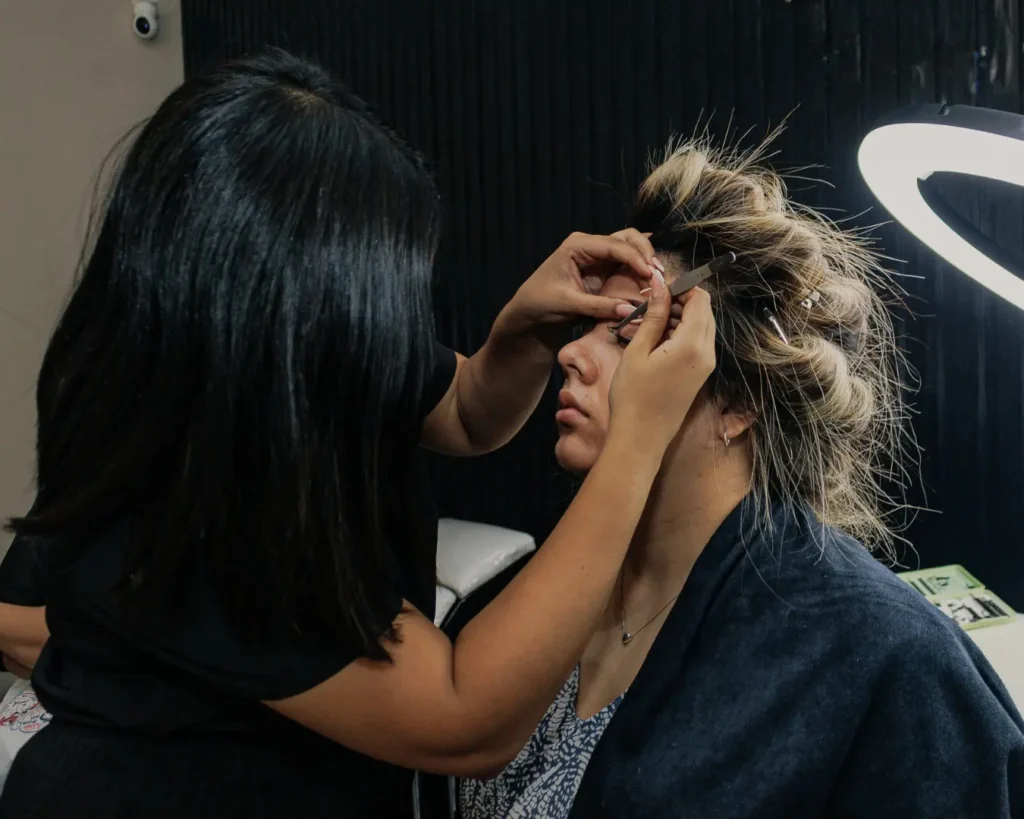
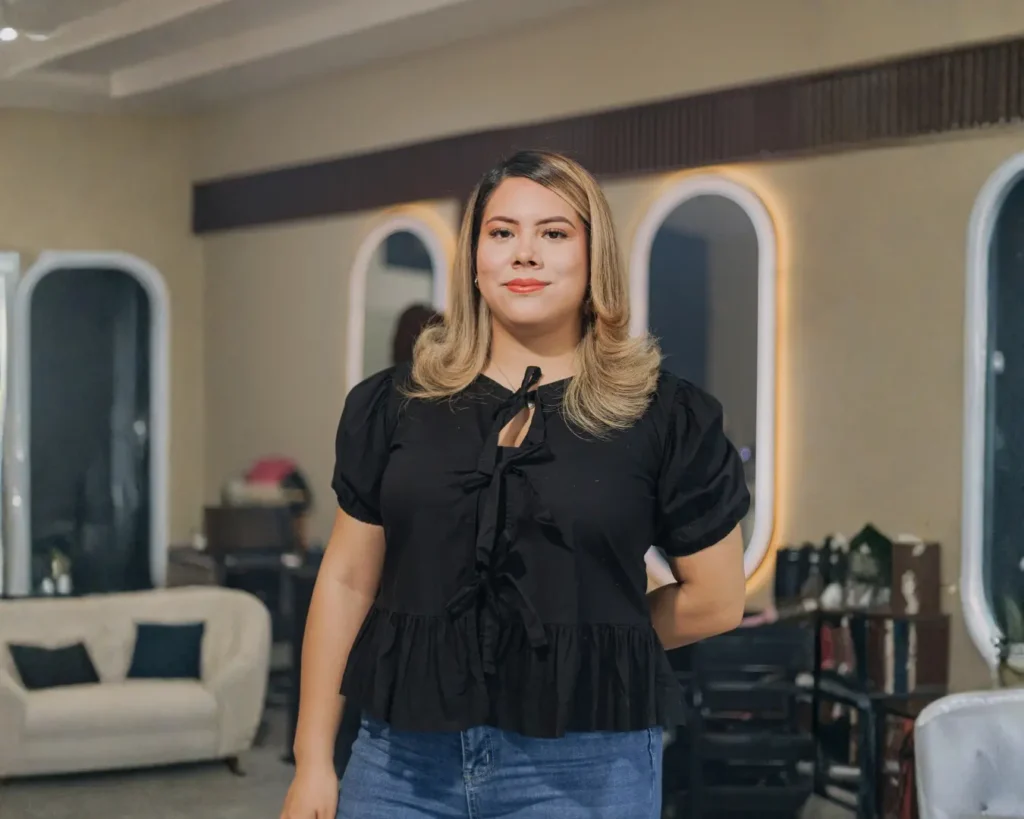
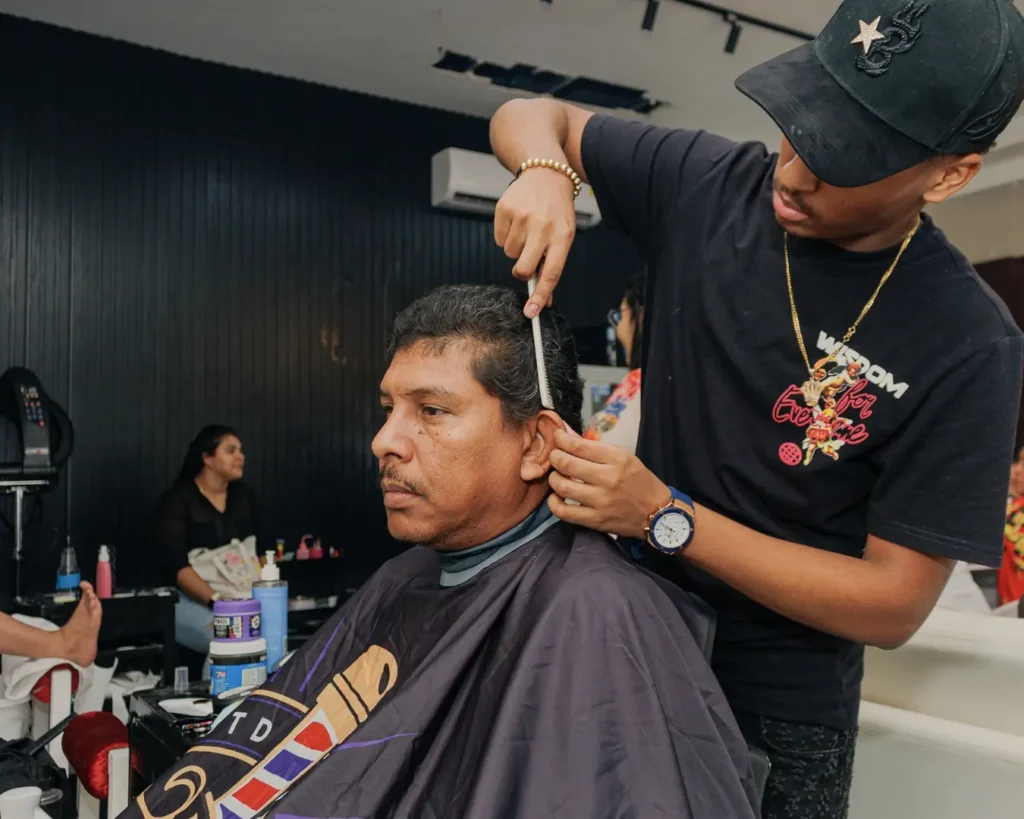
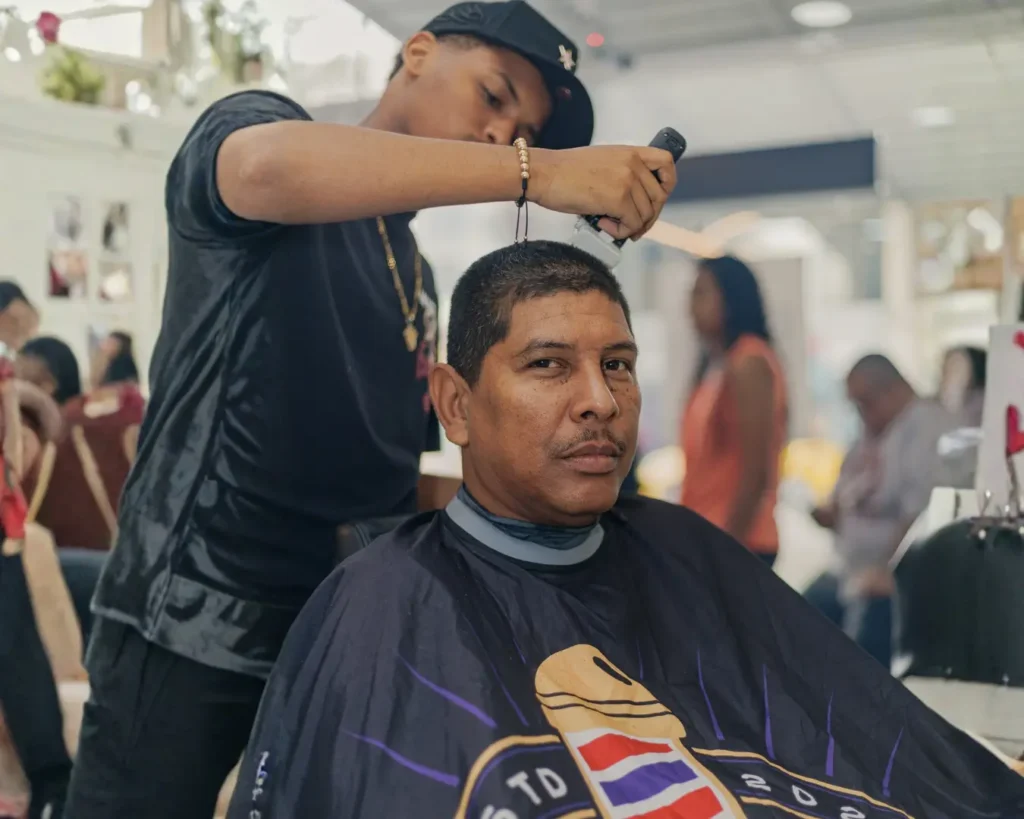
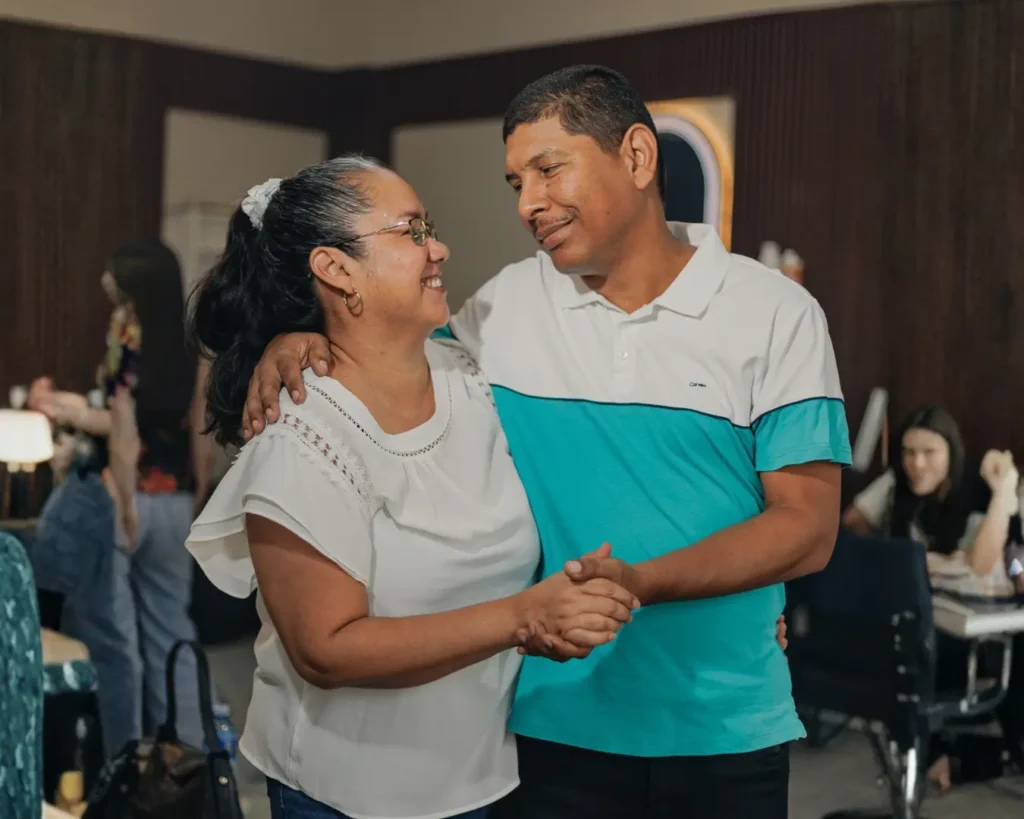
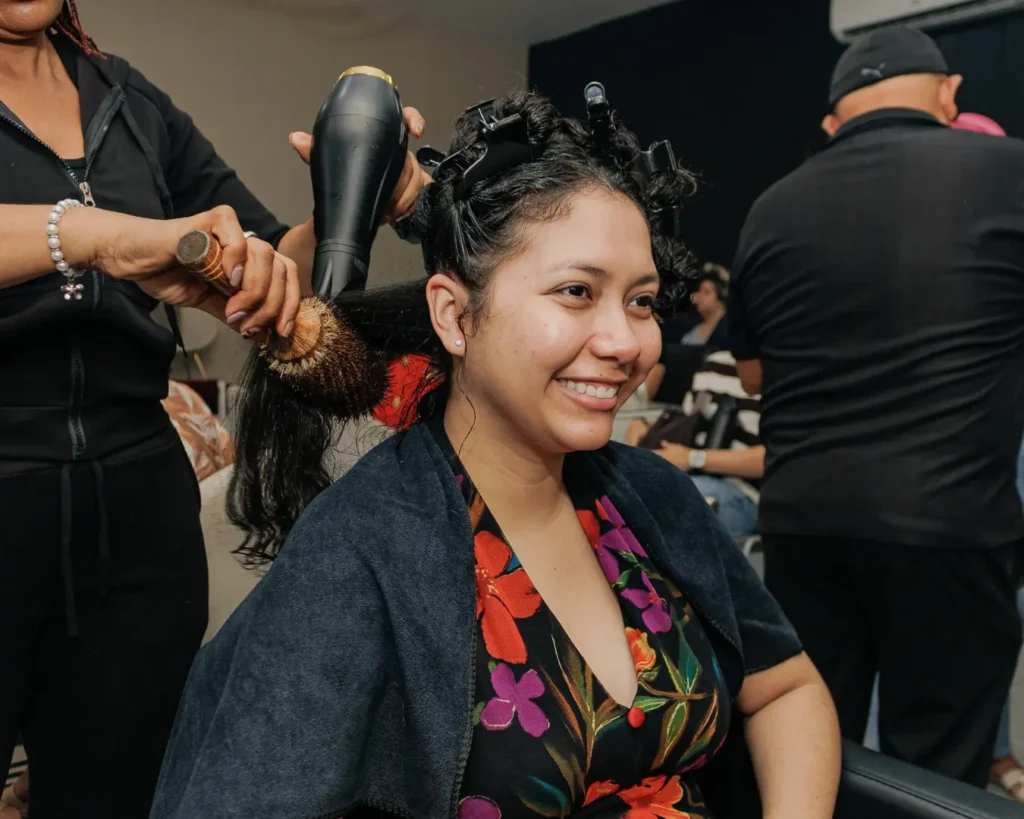
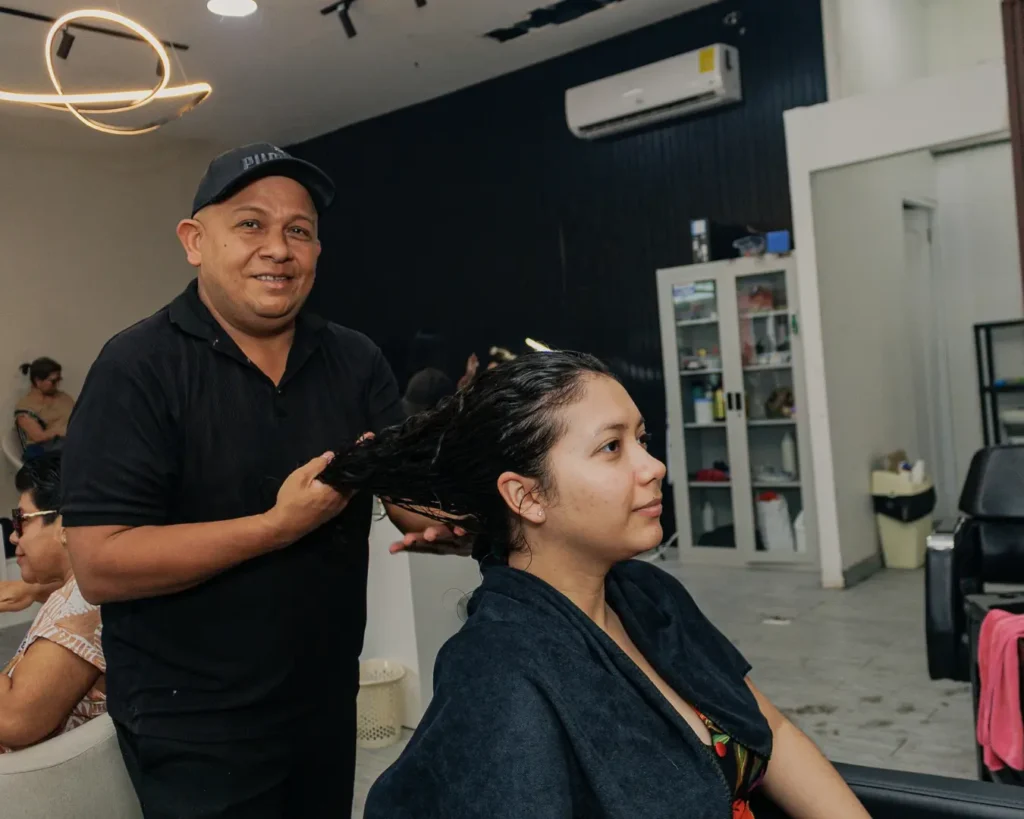
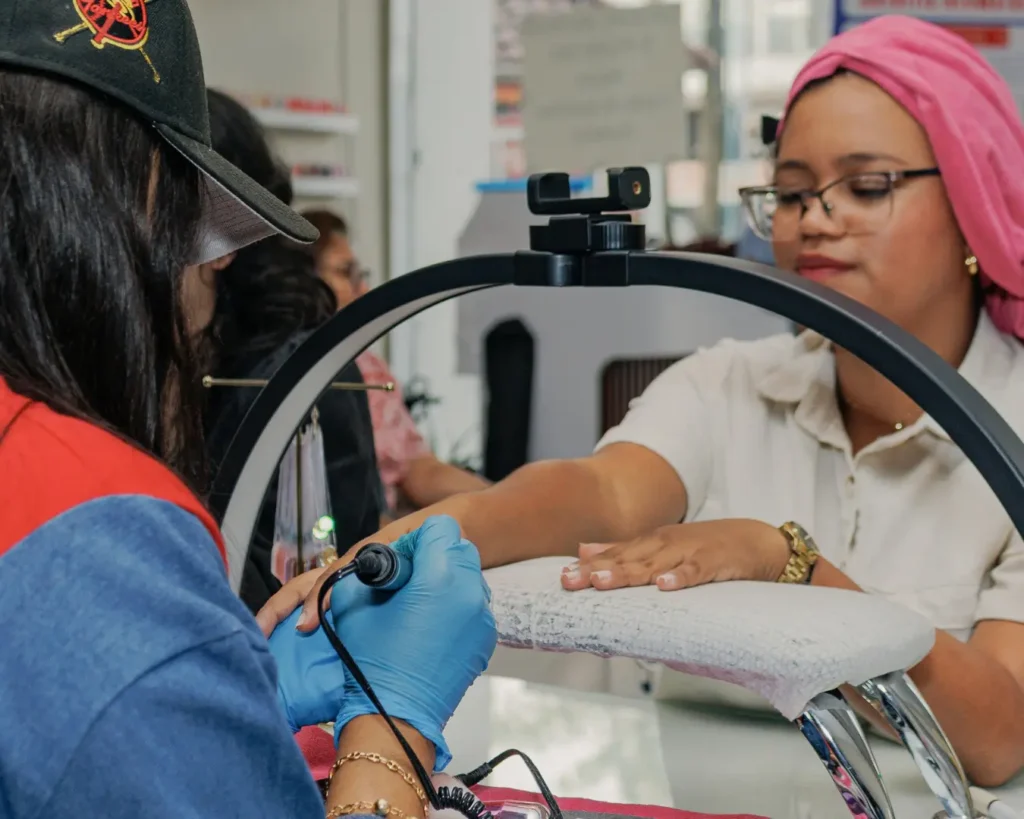
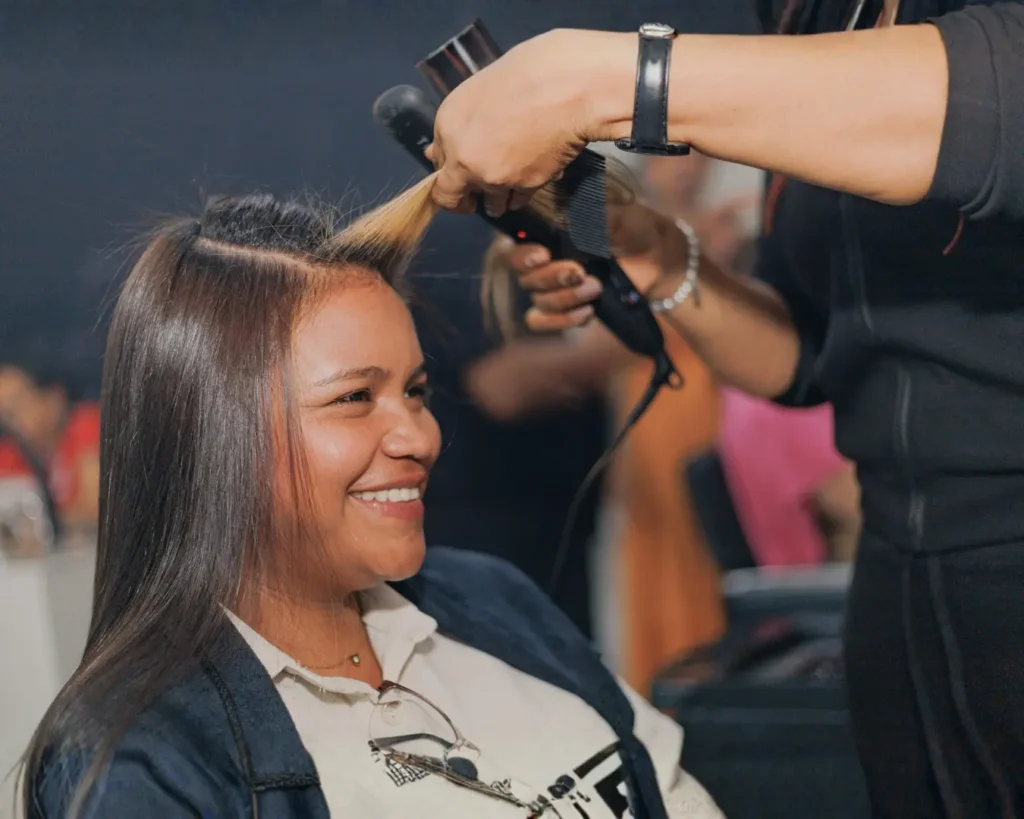
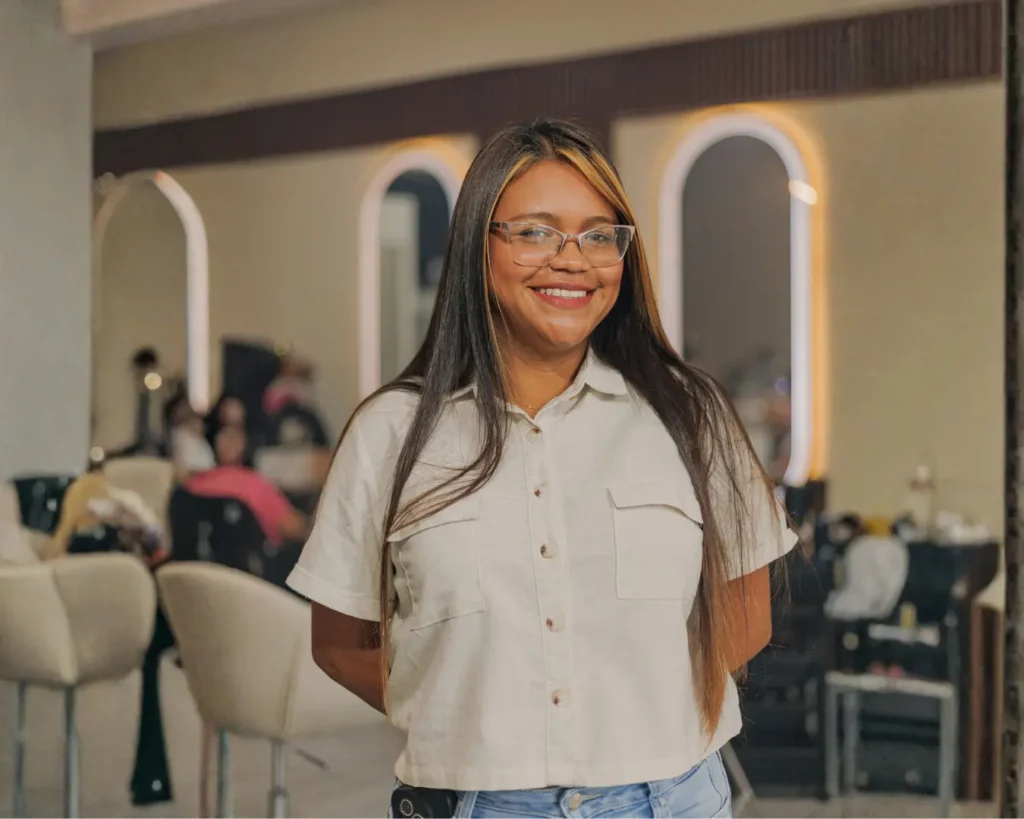
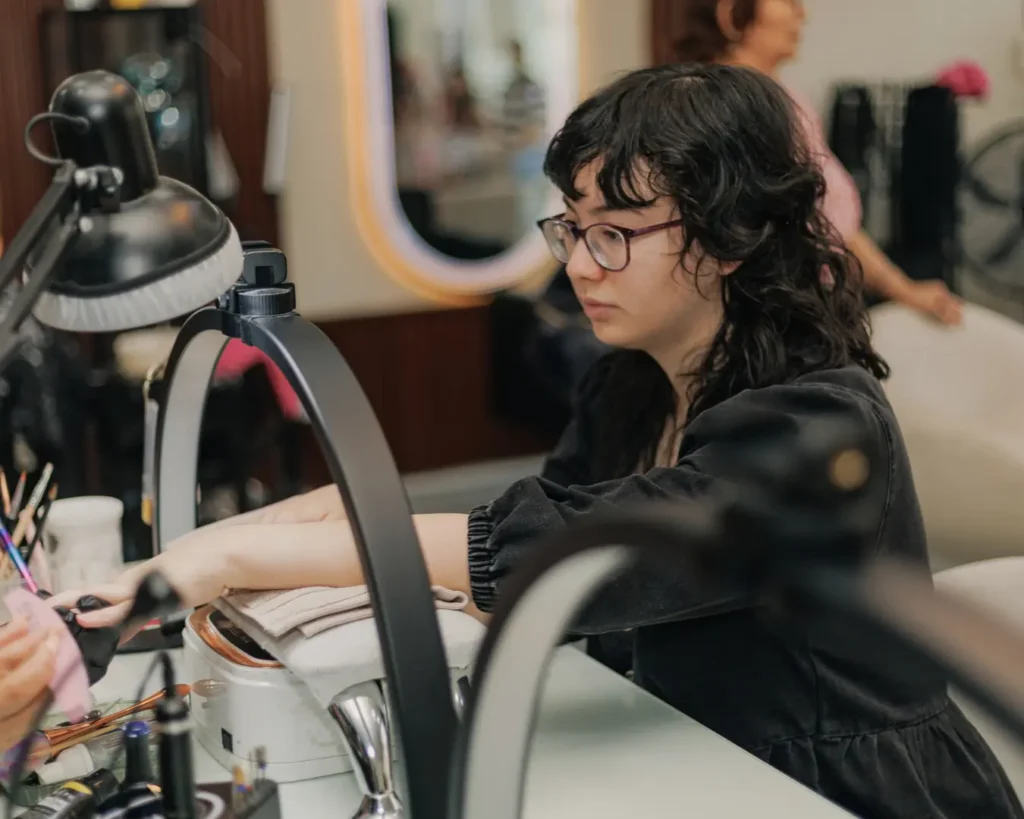
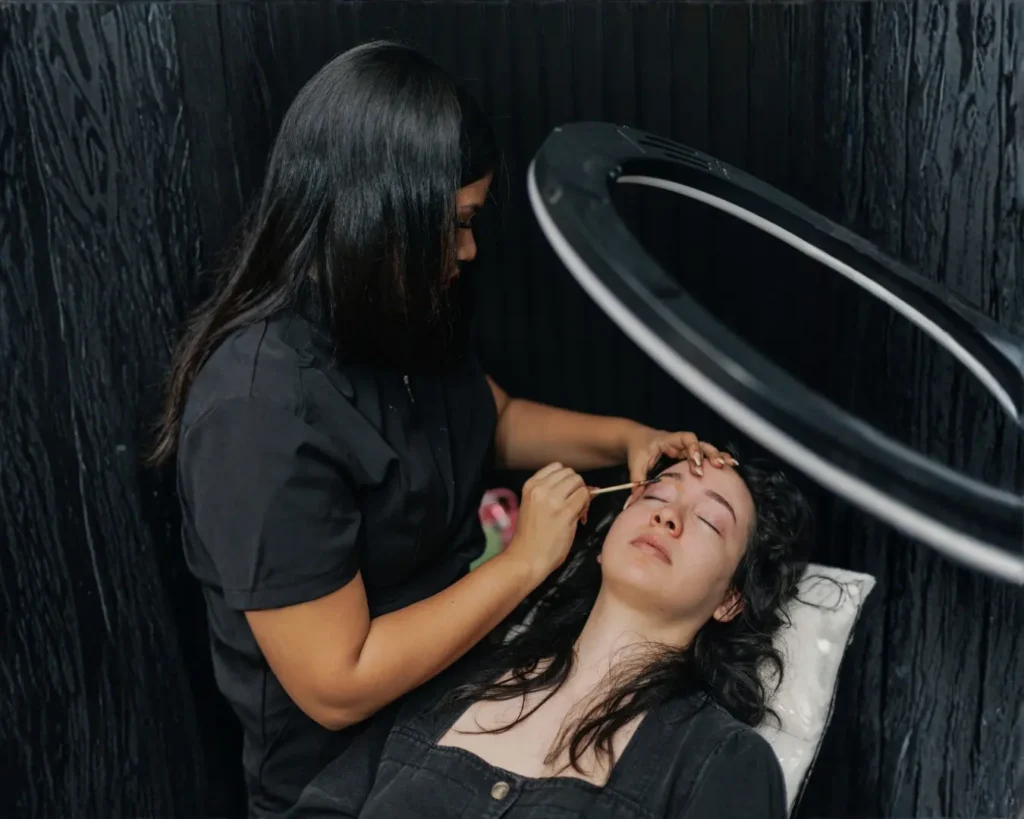
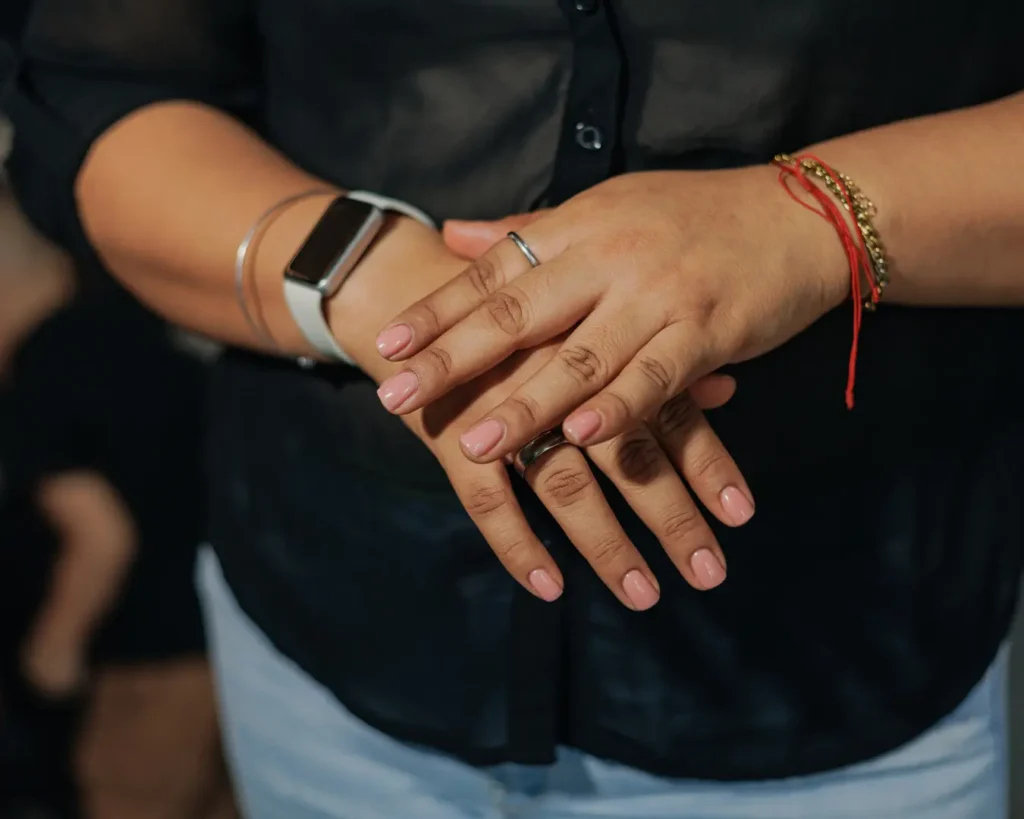
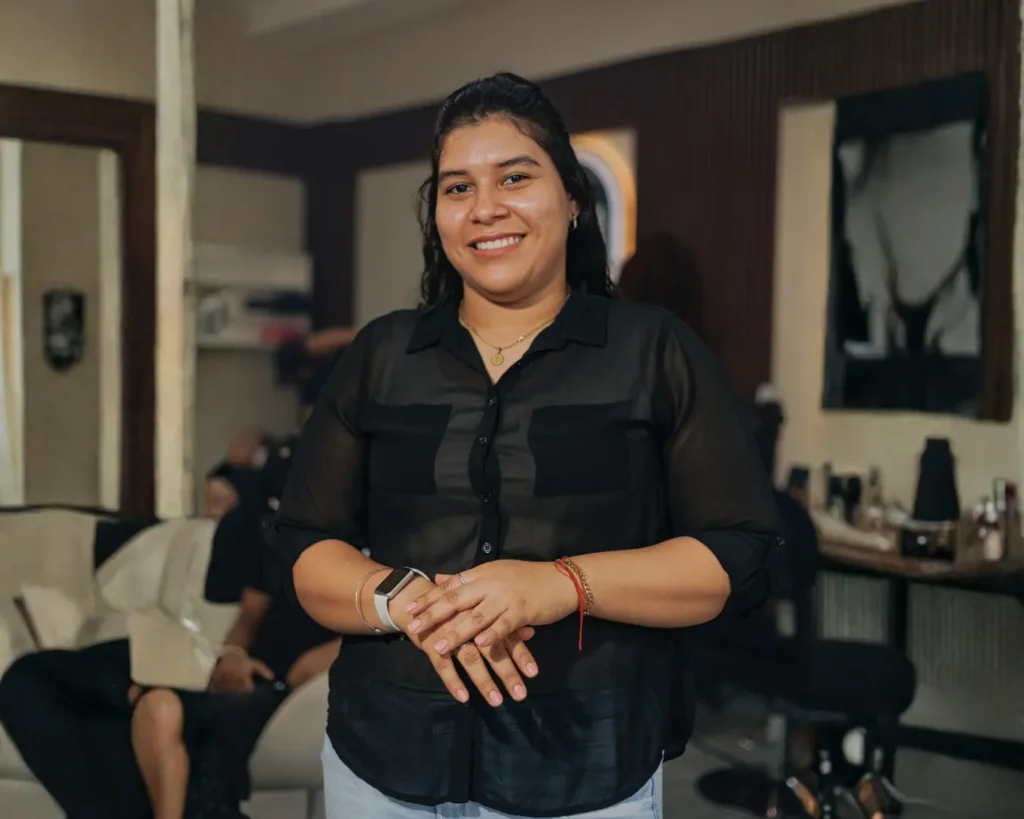
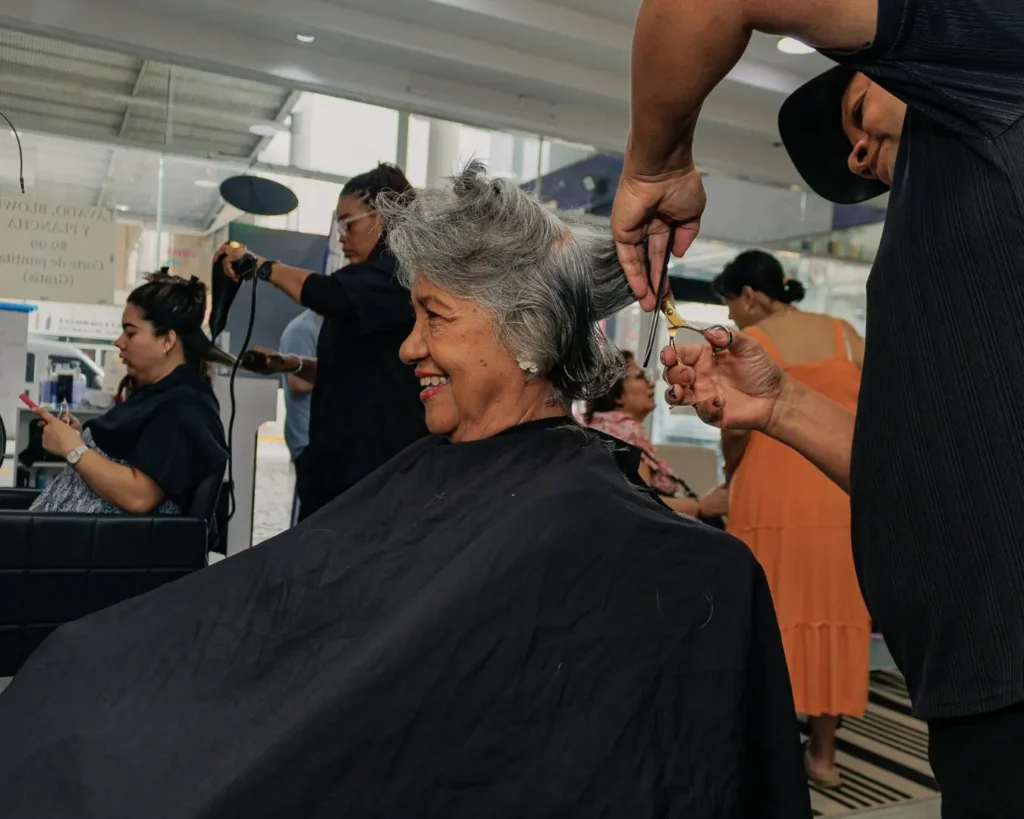
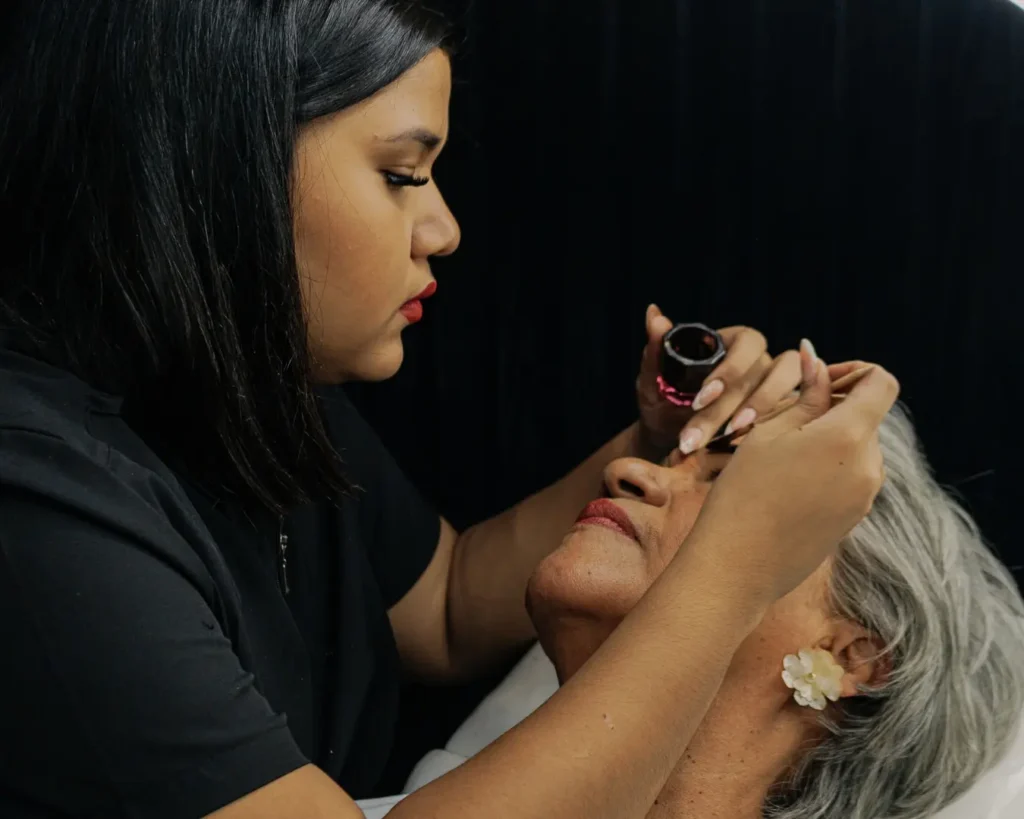
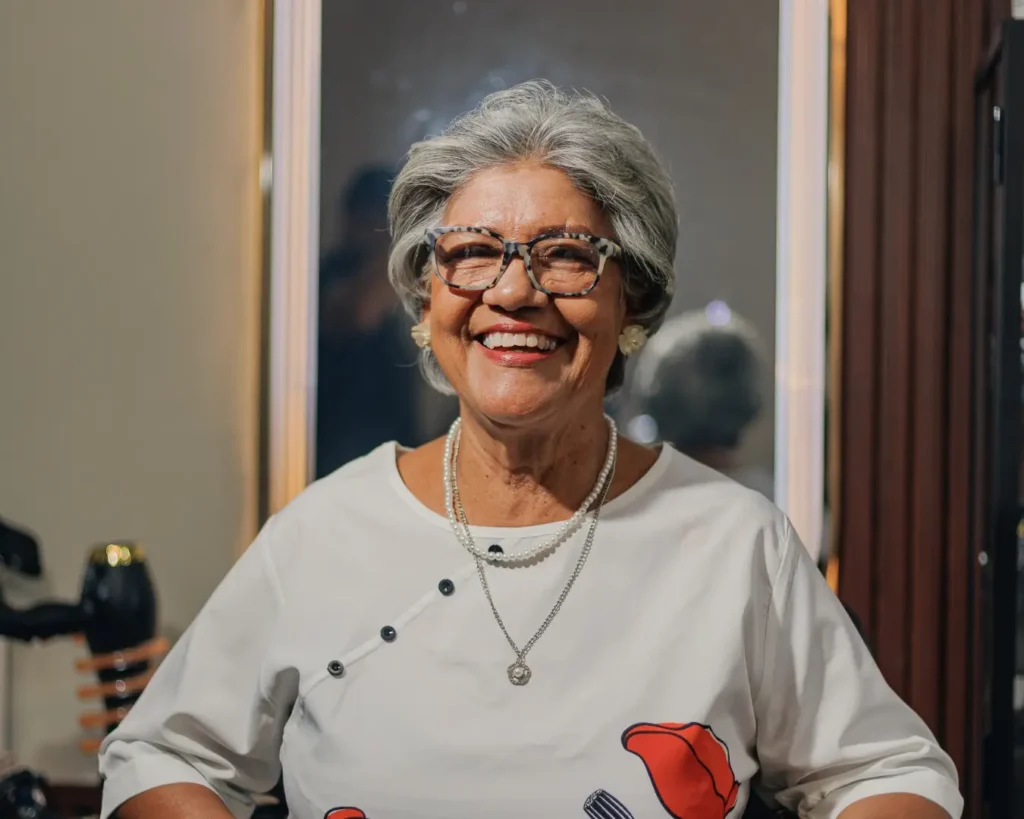
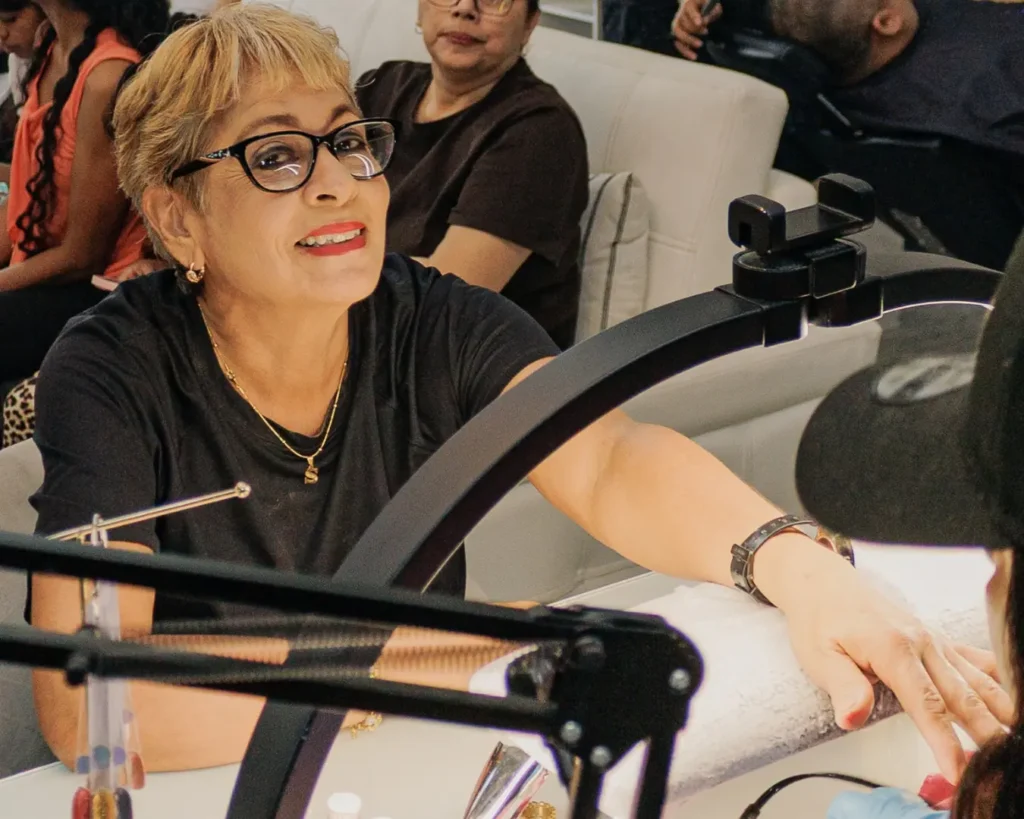
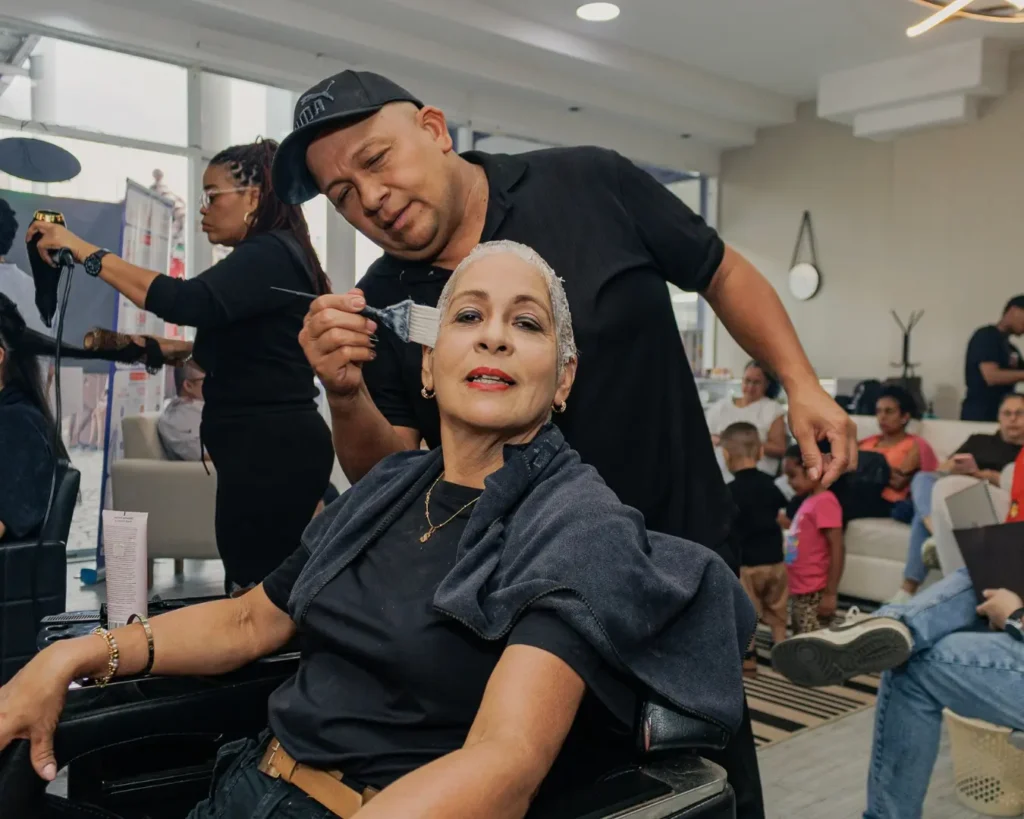
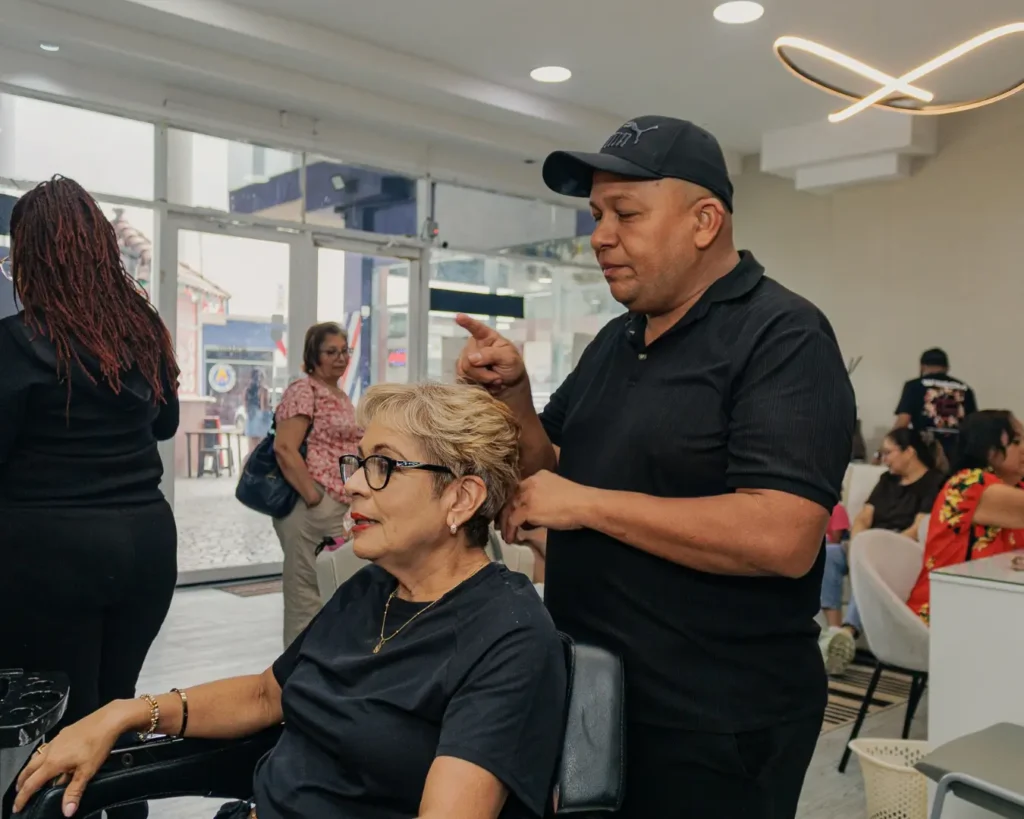
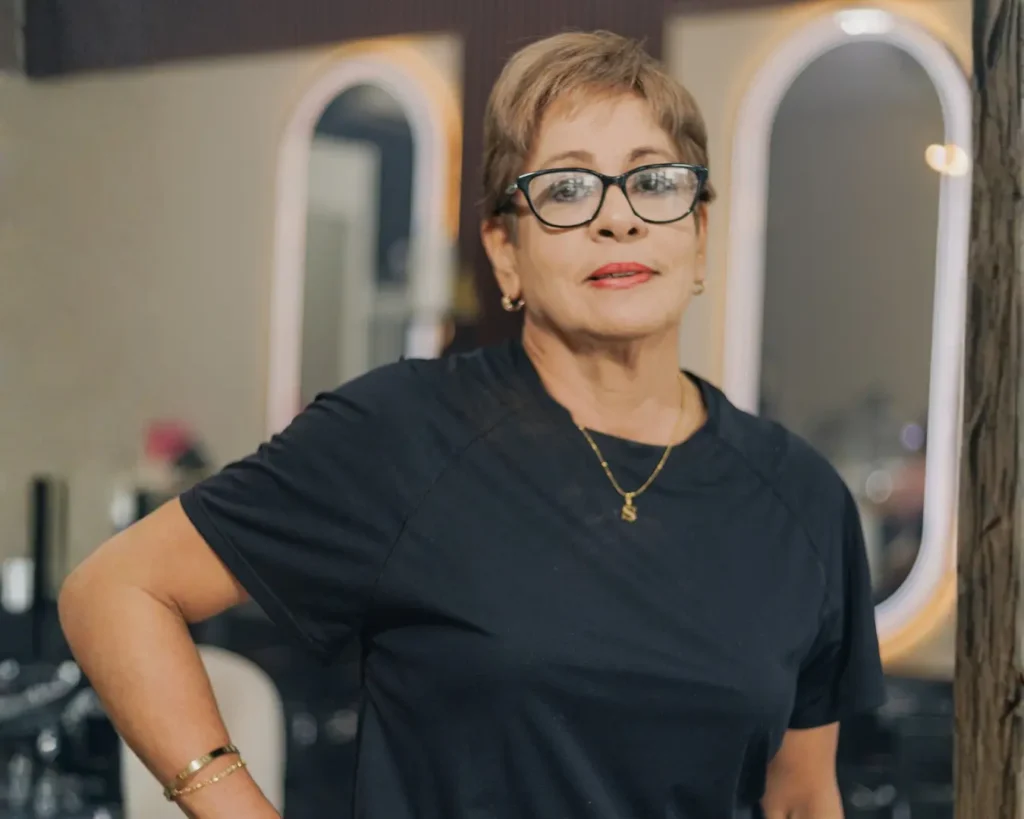
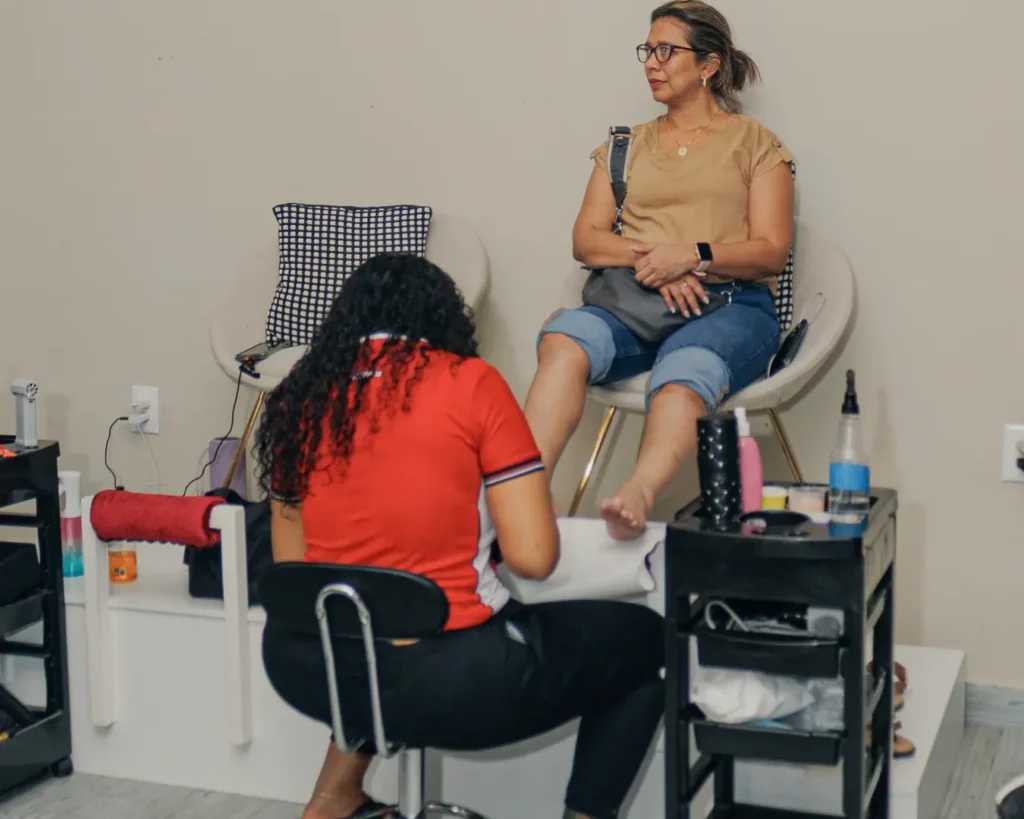
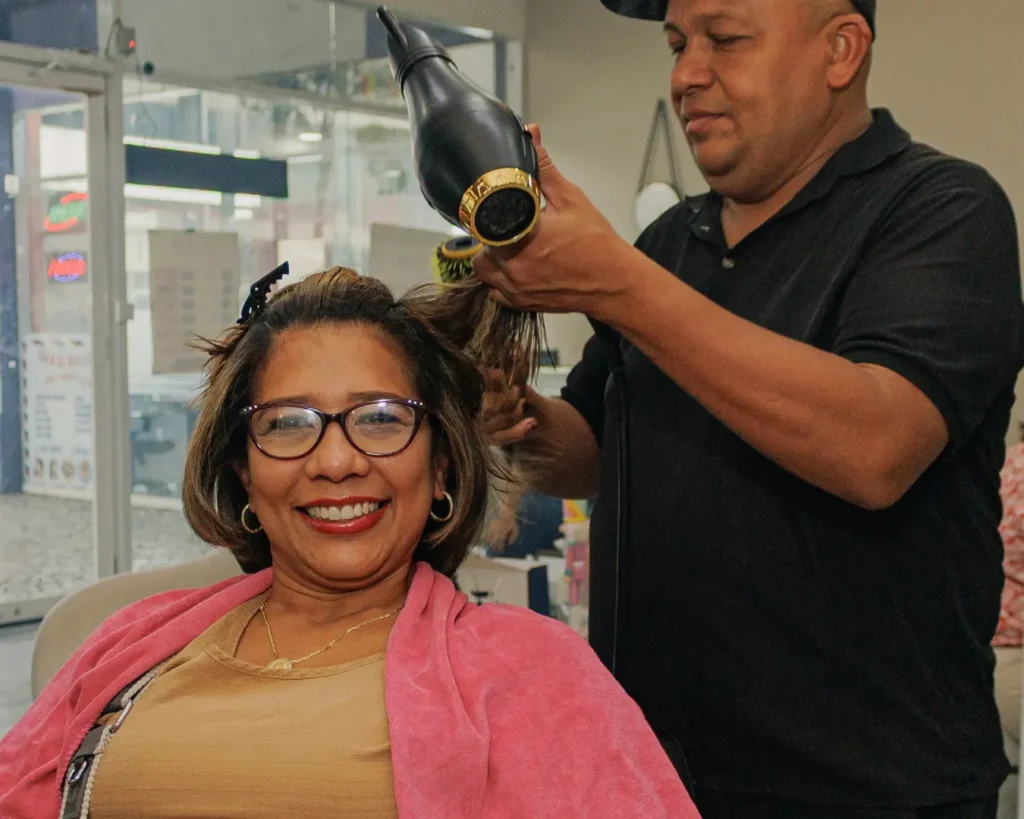
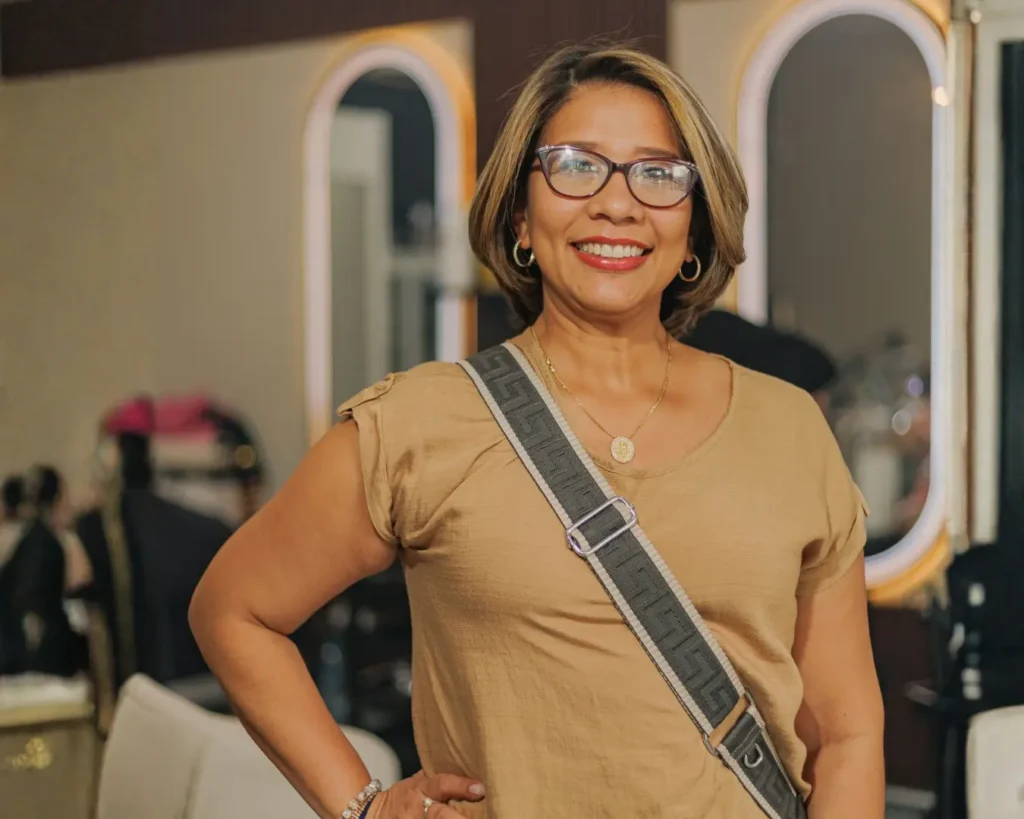
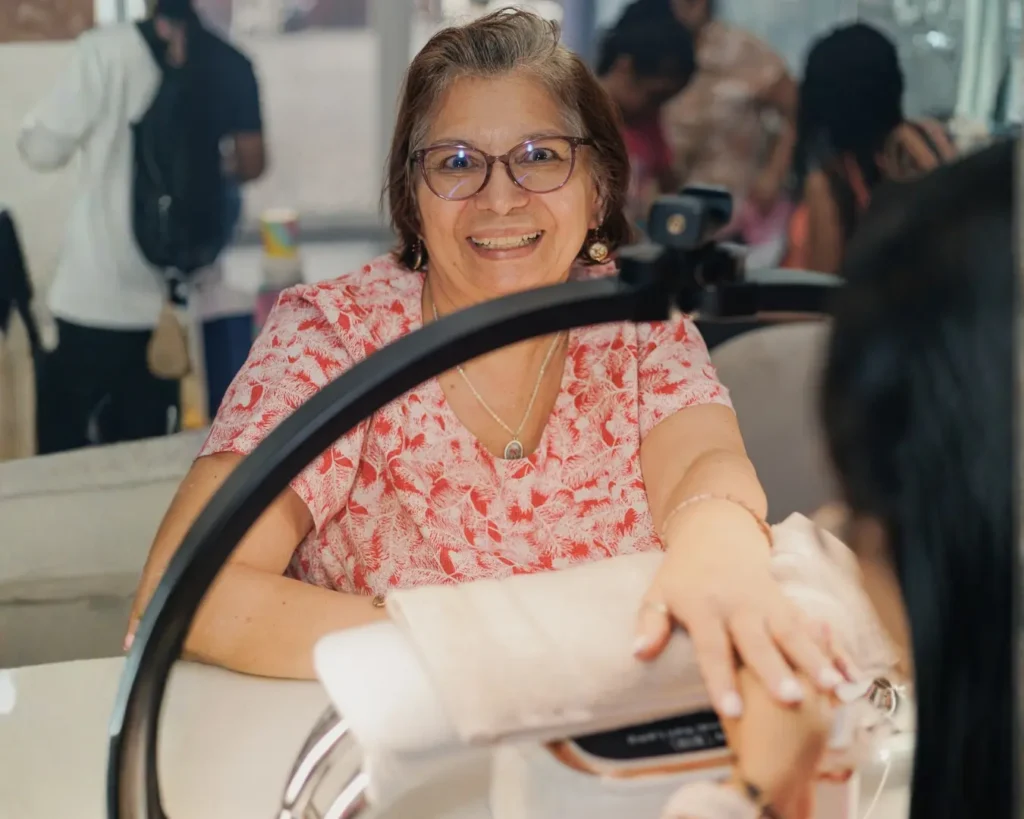
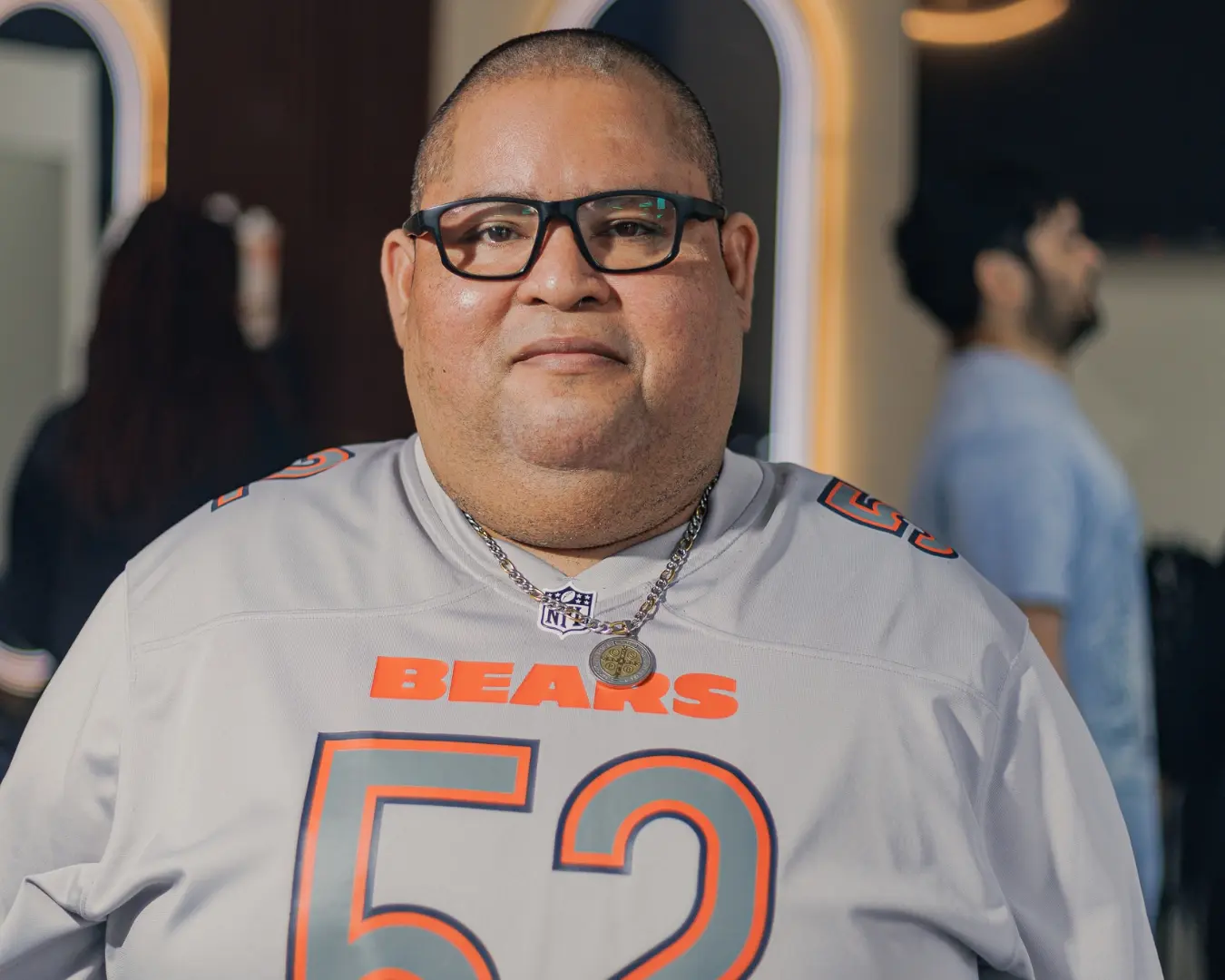
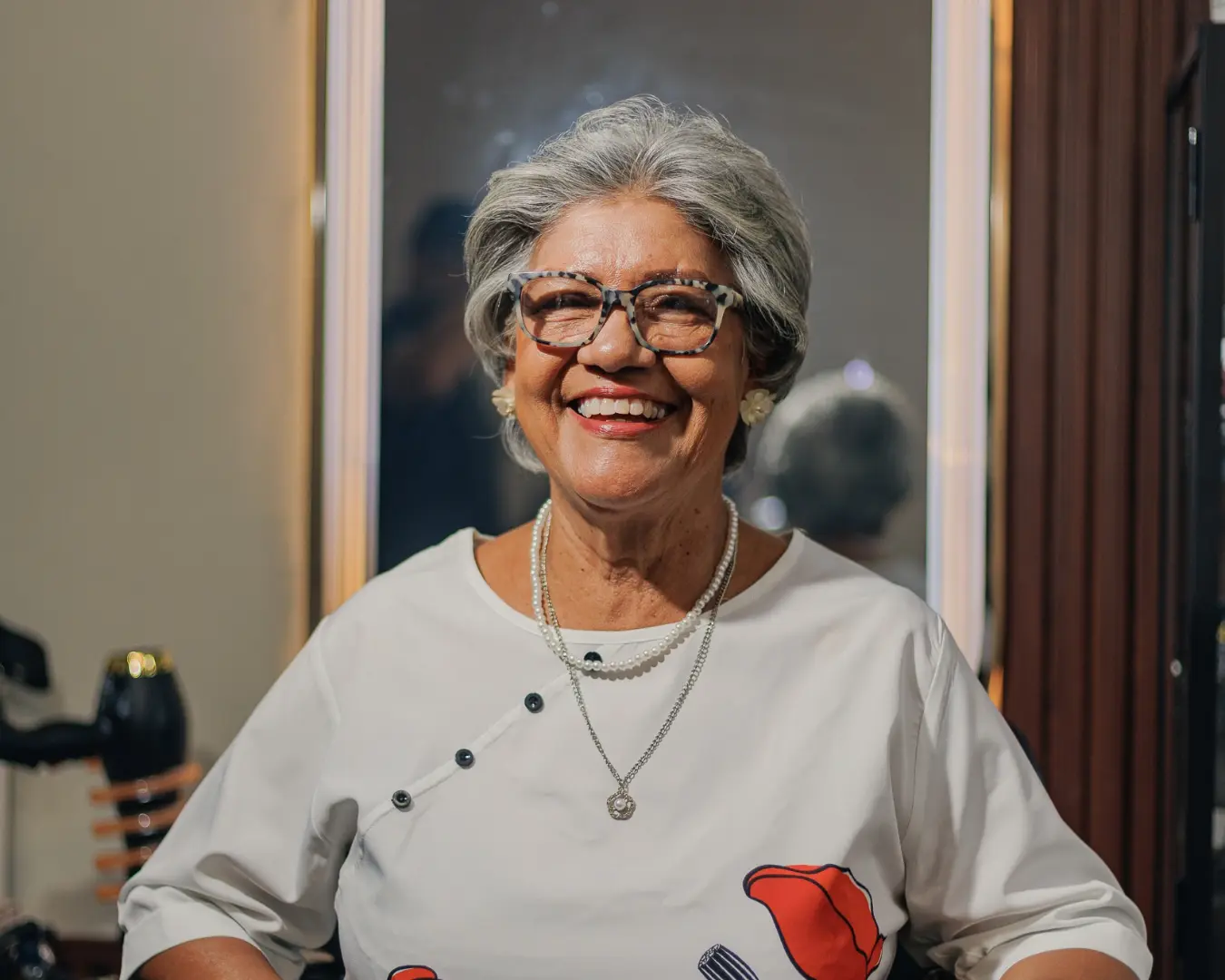
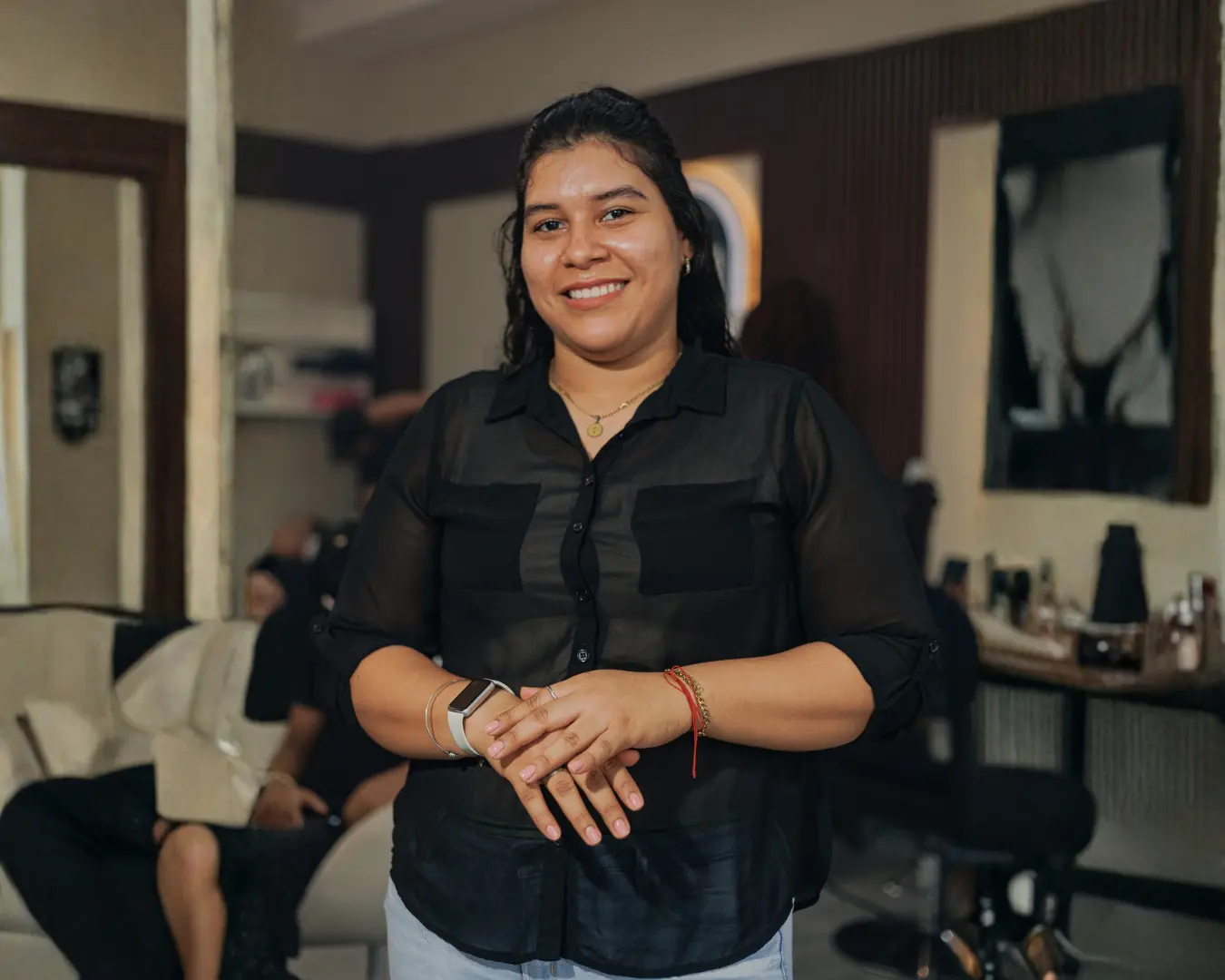
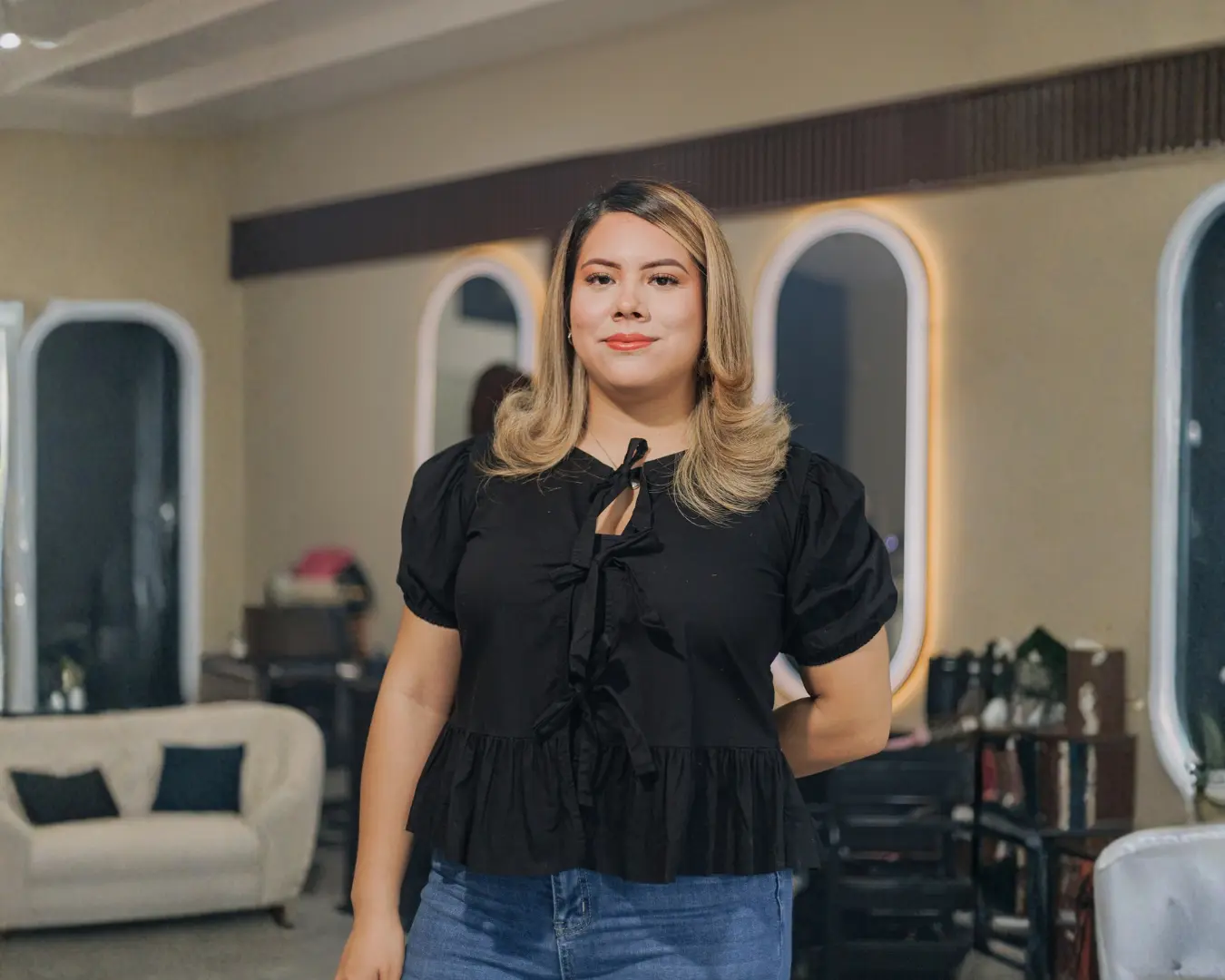
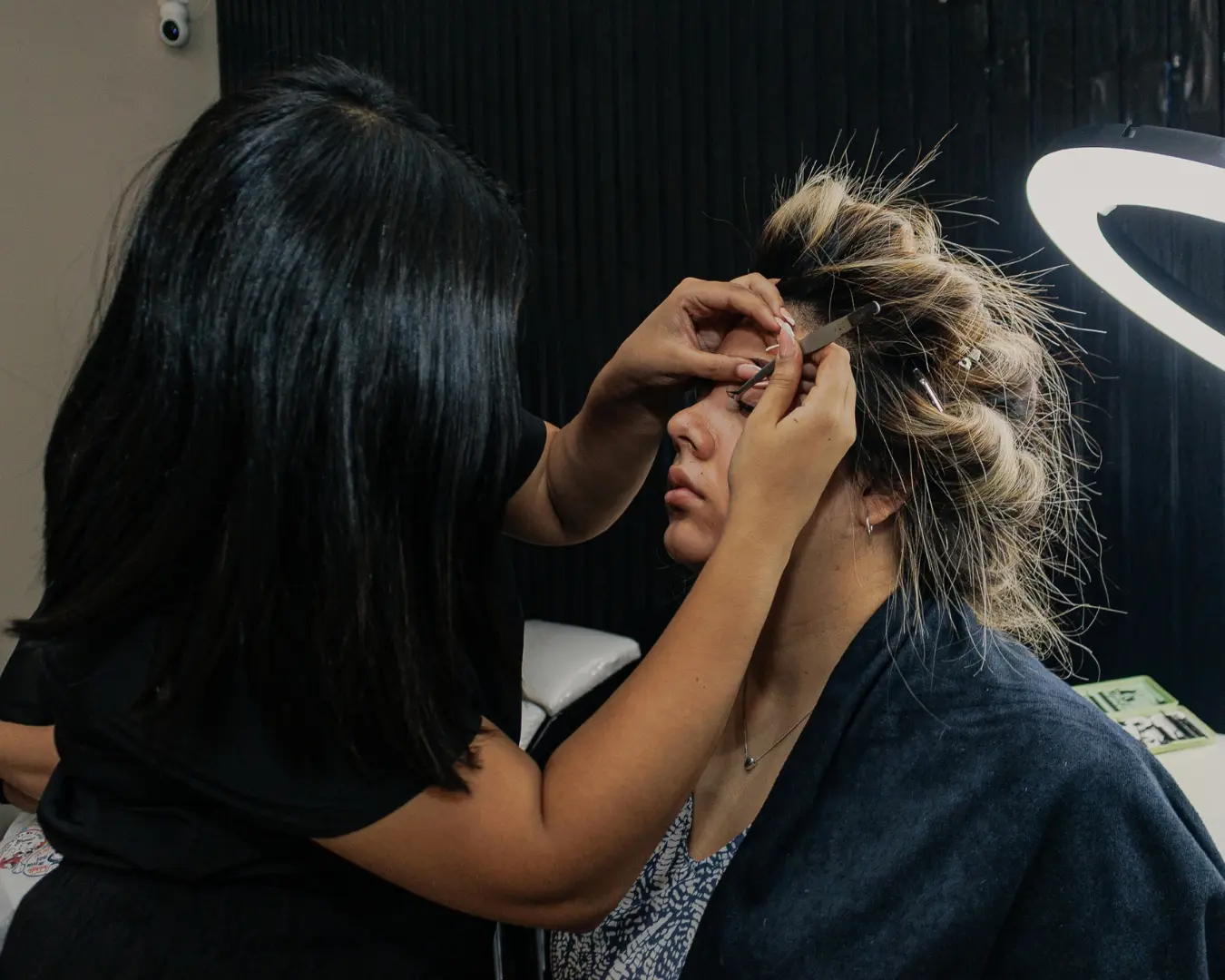
Ten caregivers (7 women, 3 men) spent a morning at the Glam beauty salon with five beauty professionals. The men had their beards trimmed and their hair cut. The women had haircuts and, where needed, hair coloring, hair masks, eyebrow shaping, eyelash extensions, professional makeup, manicures and pedicures.
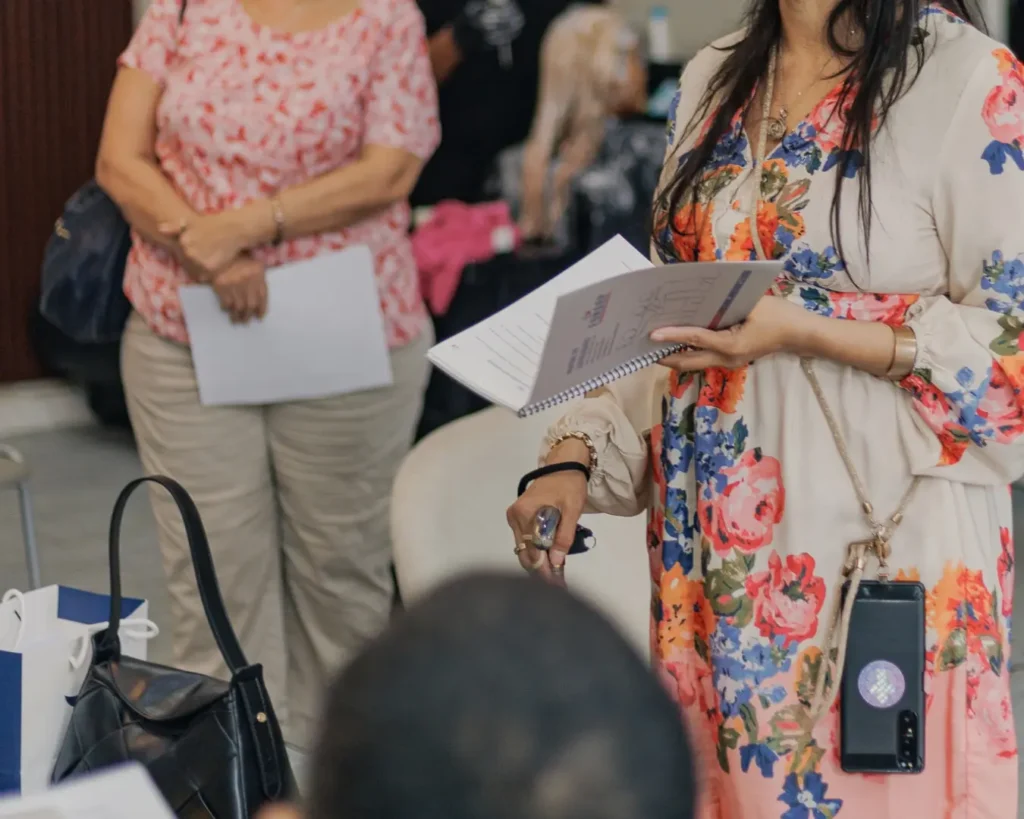
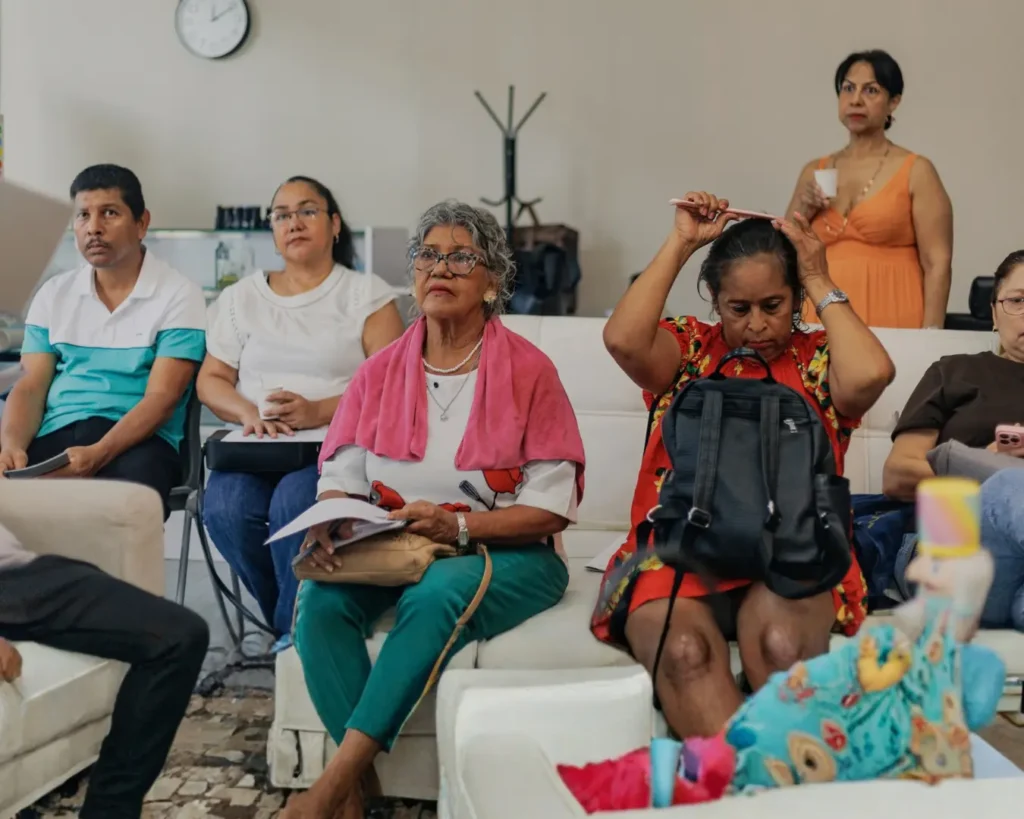
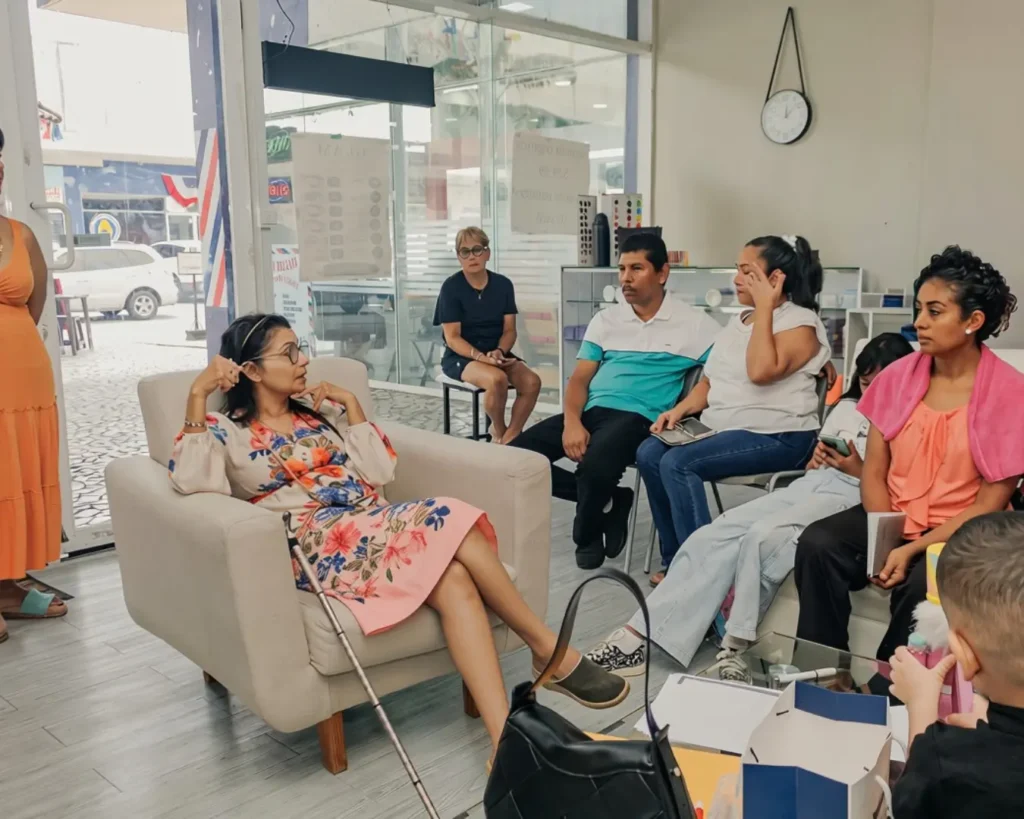
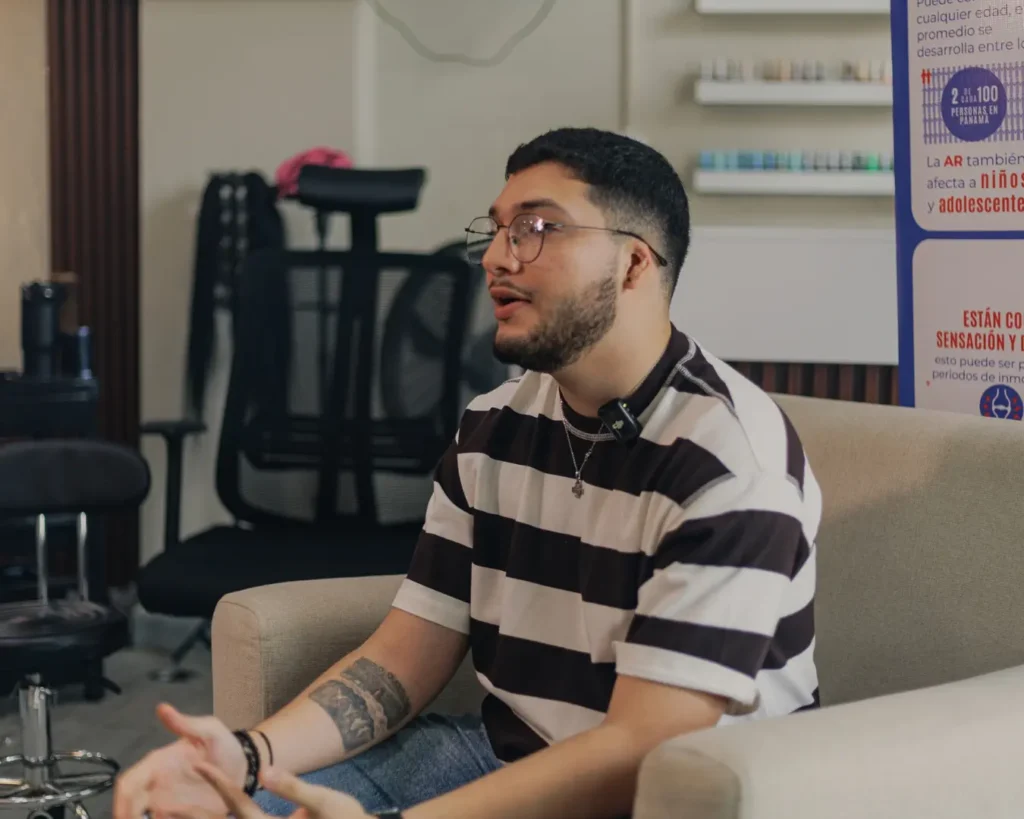
An expert patient gave a short talk on self-care, and the facilitators explained the caregiver’s role and reviewed the ten areas of the caregivers’ manual. Each participant received a self-care guide created by psychologists and reviewed by rheumatologists.
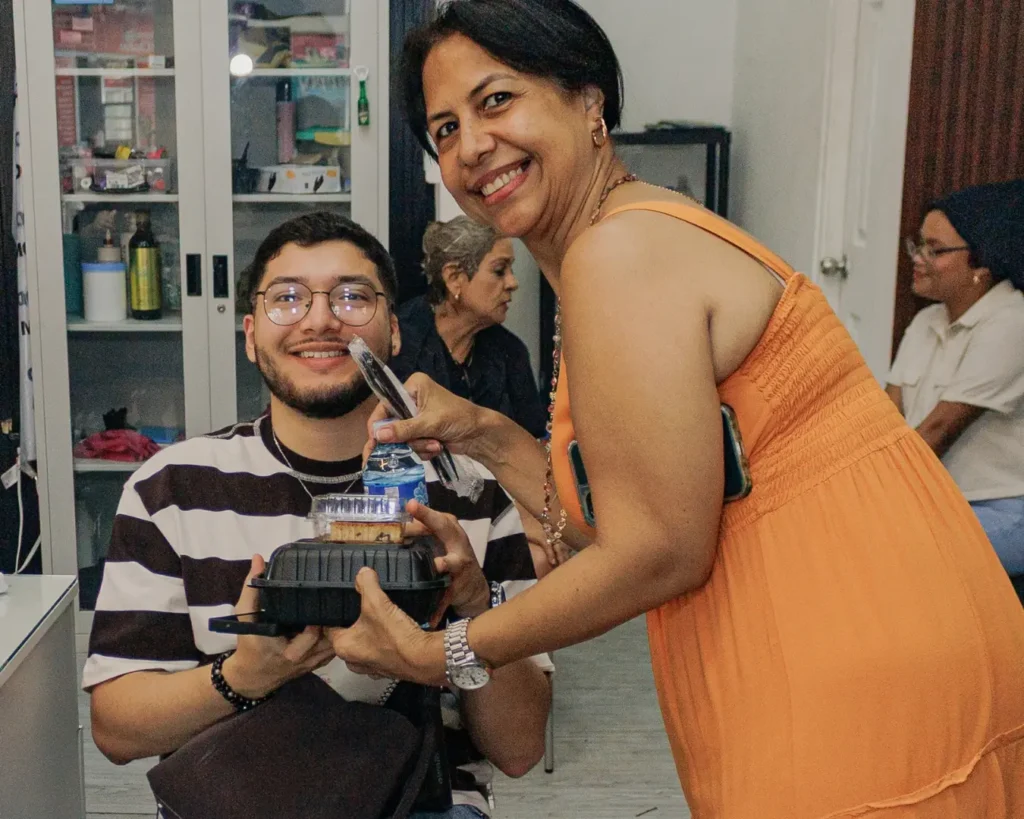
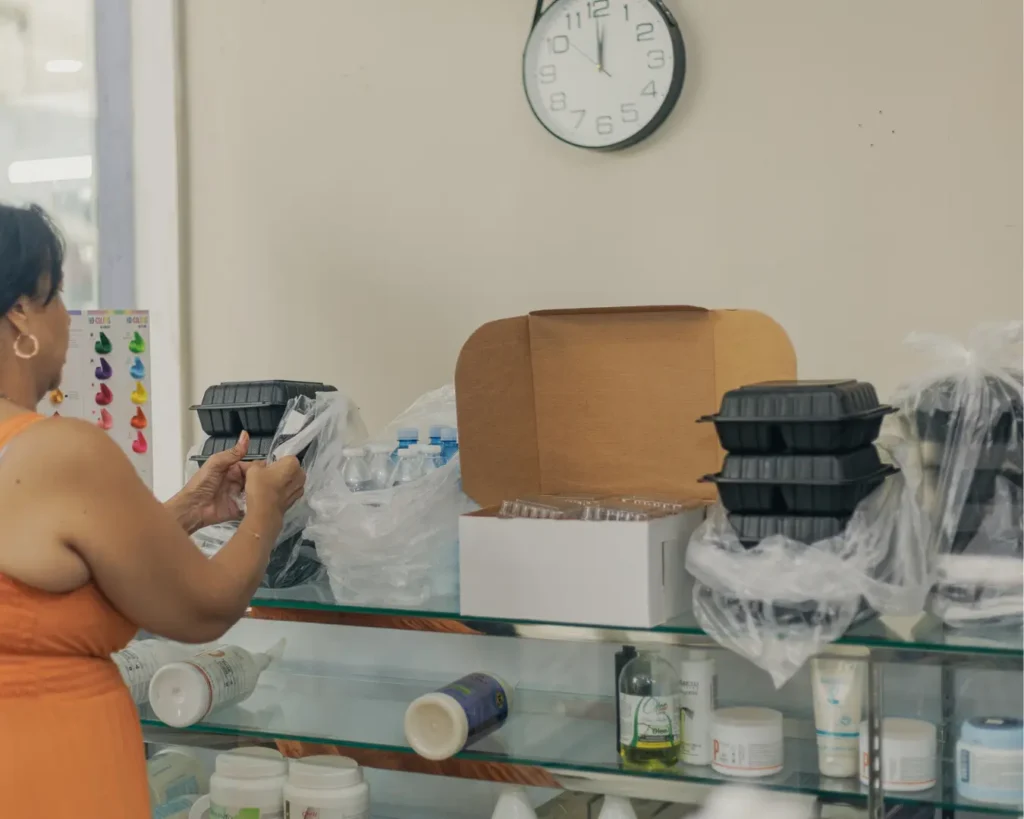
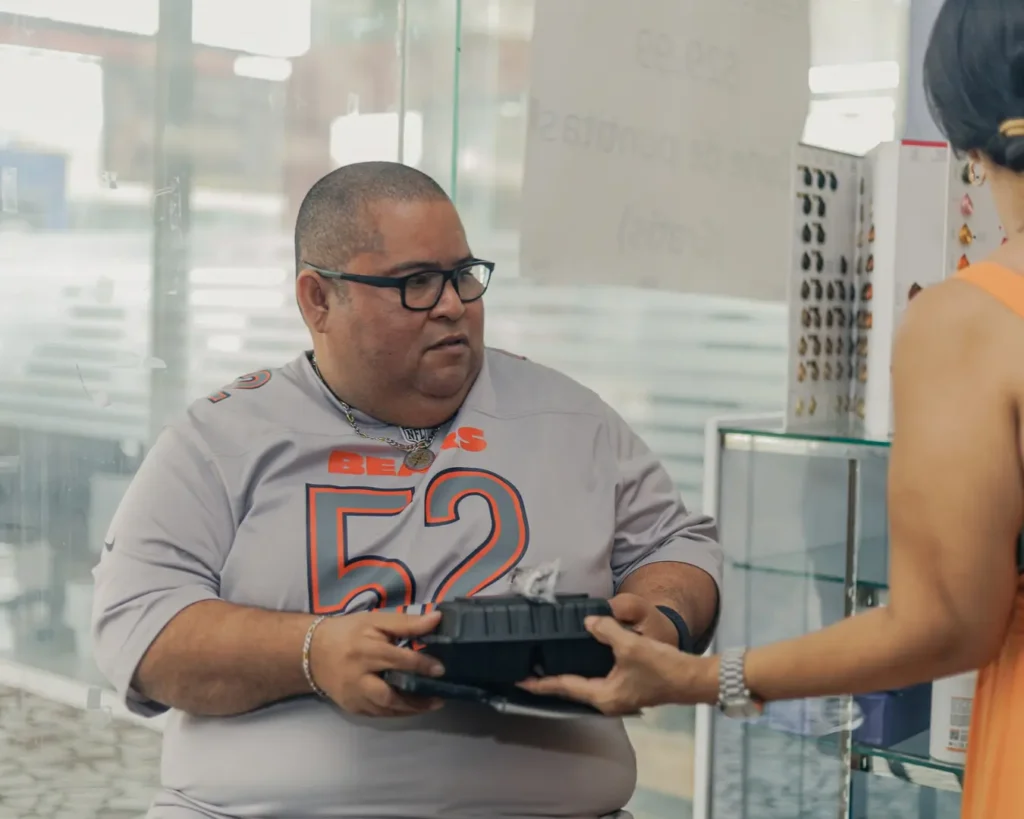
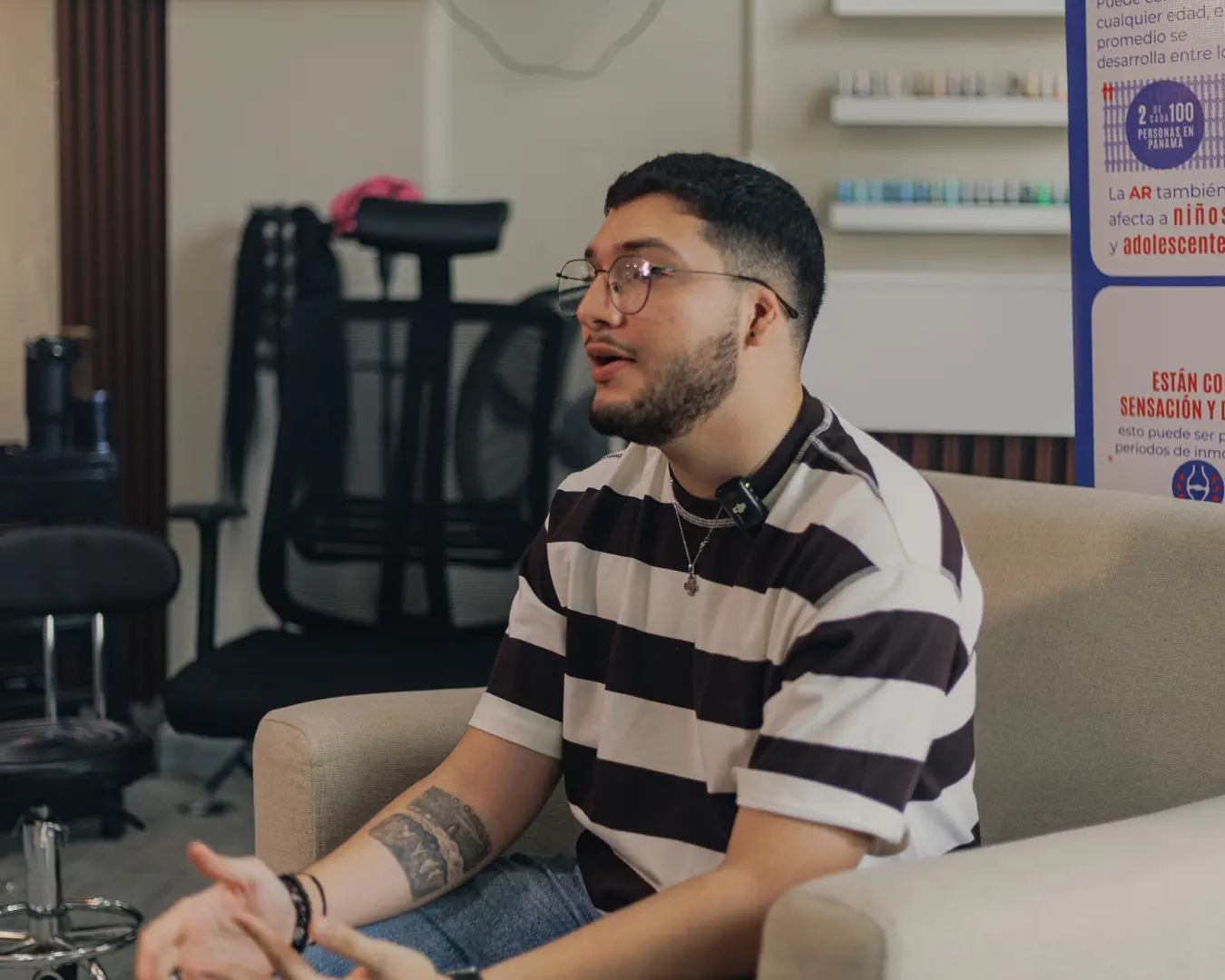
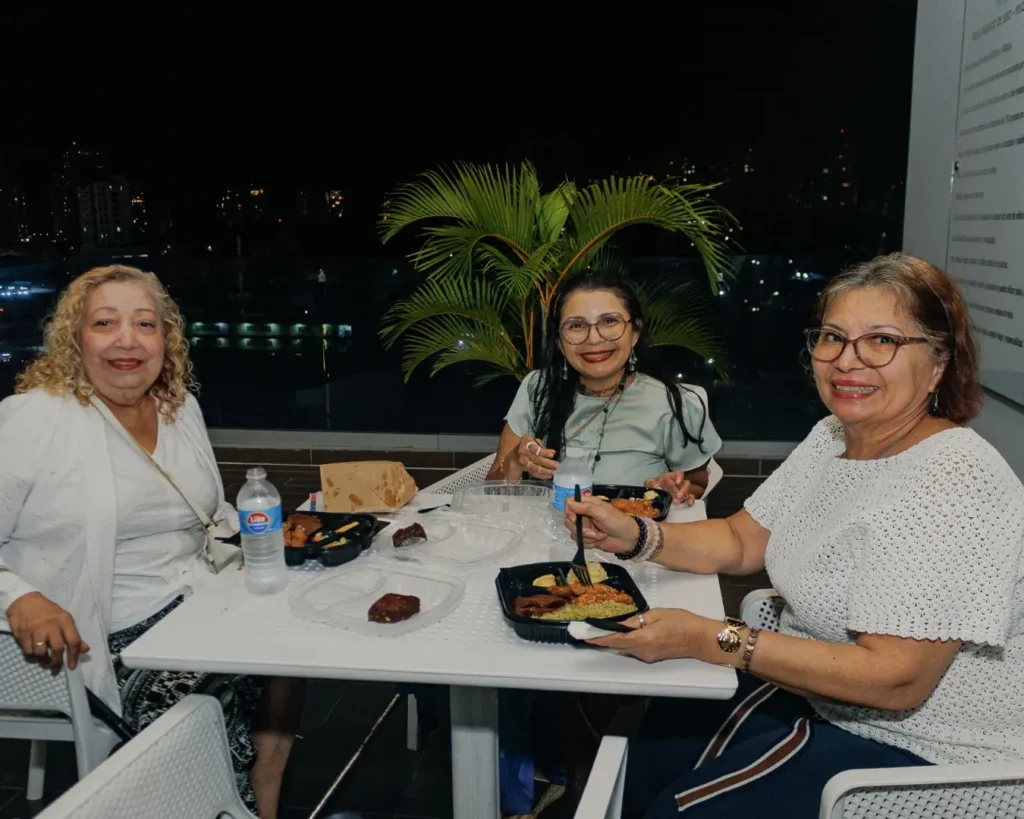
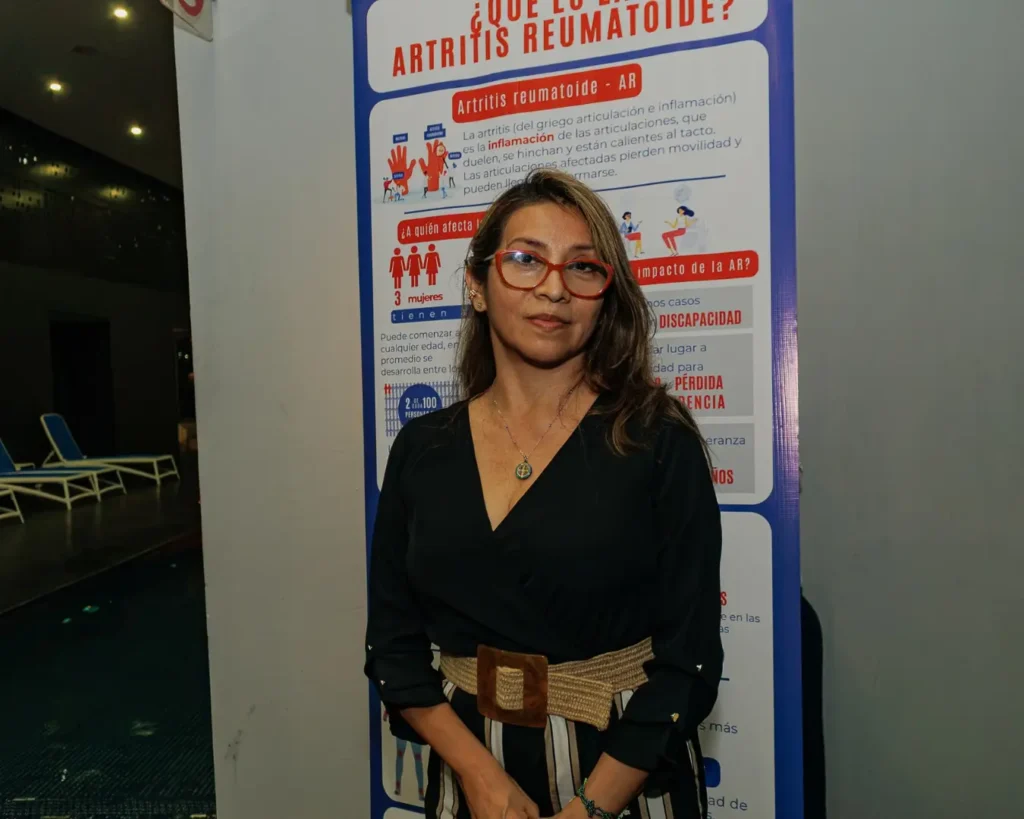
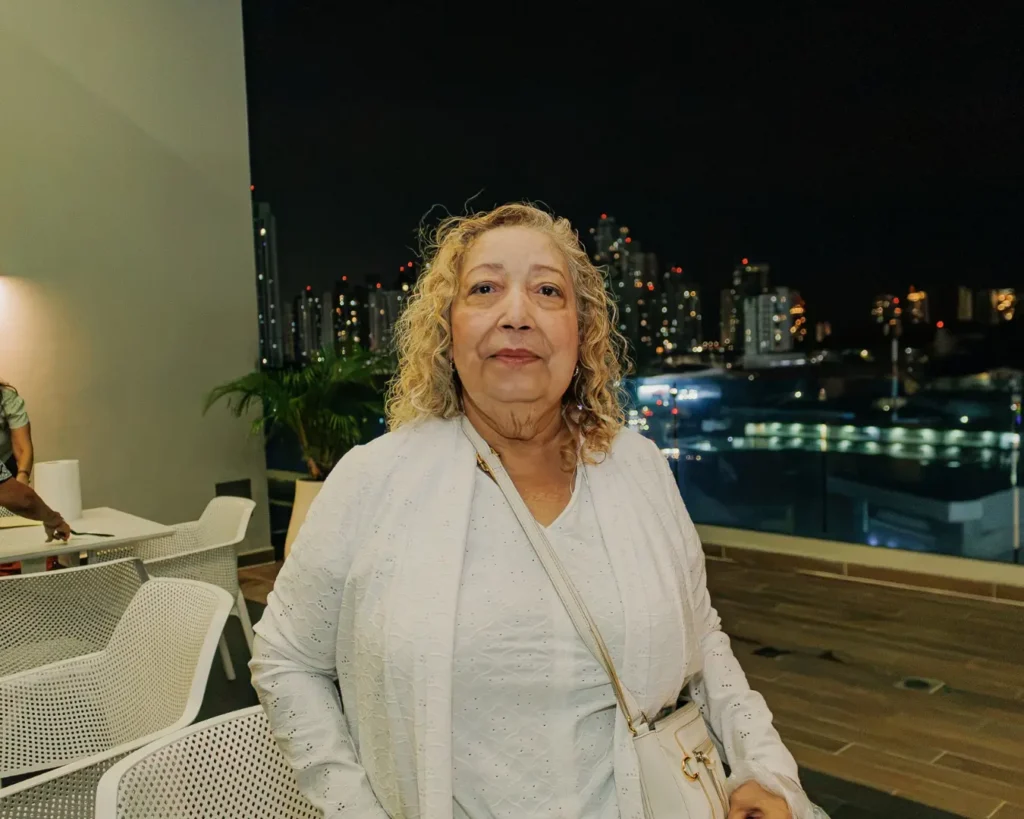
A packed meal was included. A professional portrait was taken of each participant, and some recorded their testimonials. The session draws on the EULAR self-management and lifestyle recommendations mentioned above, adapting their emphasis on education, goal setting and support for caregivers.
What did we achieve?
Before the session, none of the 10 caregivers described their role in a way that included their own well-being.
Afterwards, 4 did. Eight out of 10 already said they should take care of themselves, but 4 of them added “I don’t know how” or “I don’t do it”; after the session, all 10 agreed without reservation. One caregiver wrote: “I learned that if I’m not well, I won’t be able to care for my family member.”
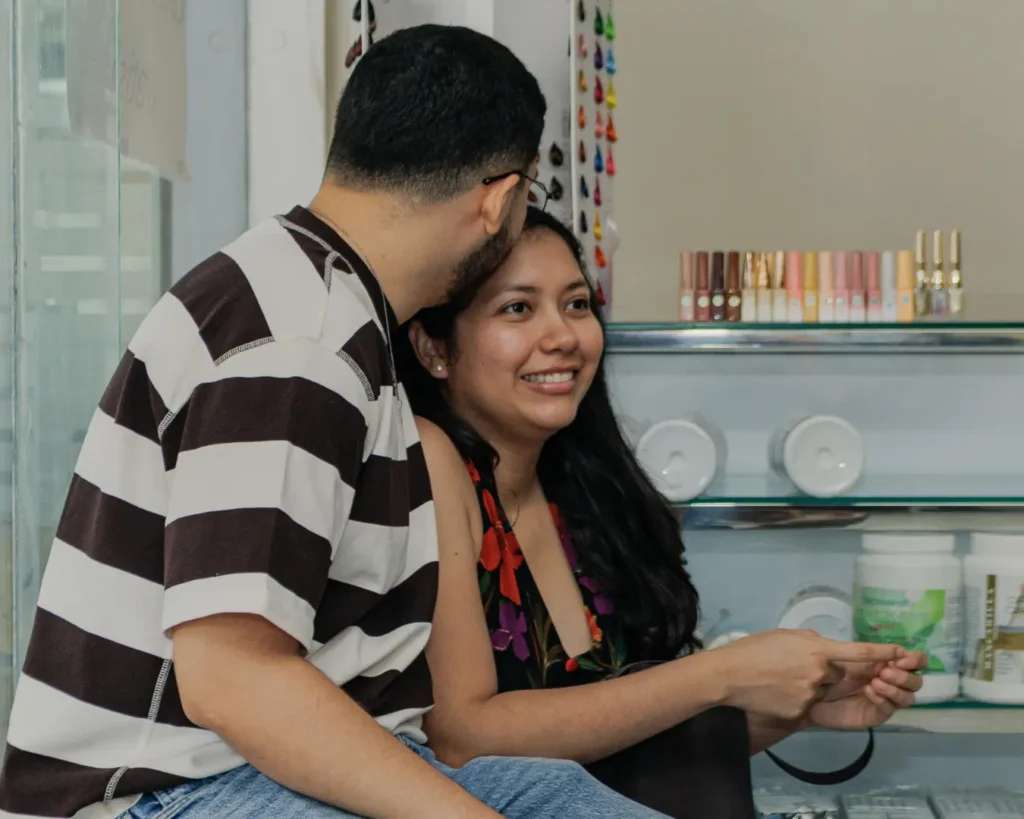
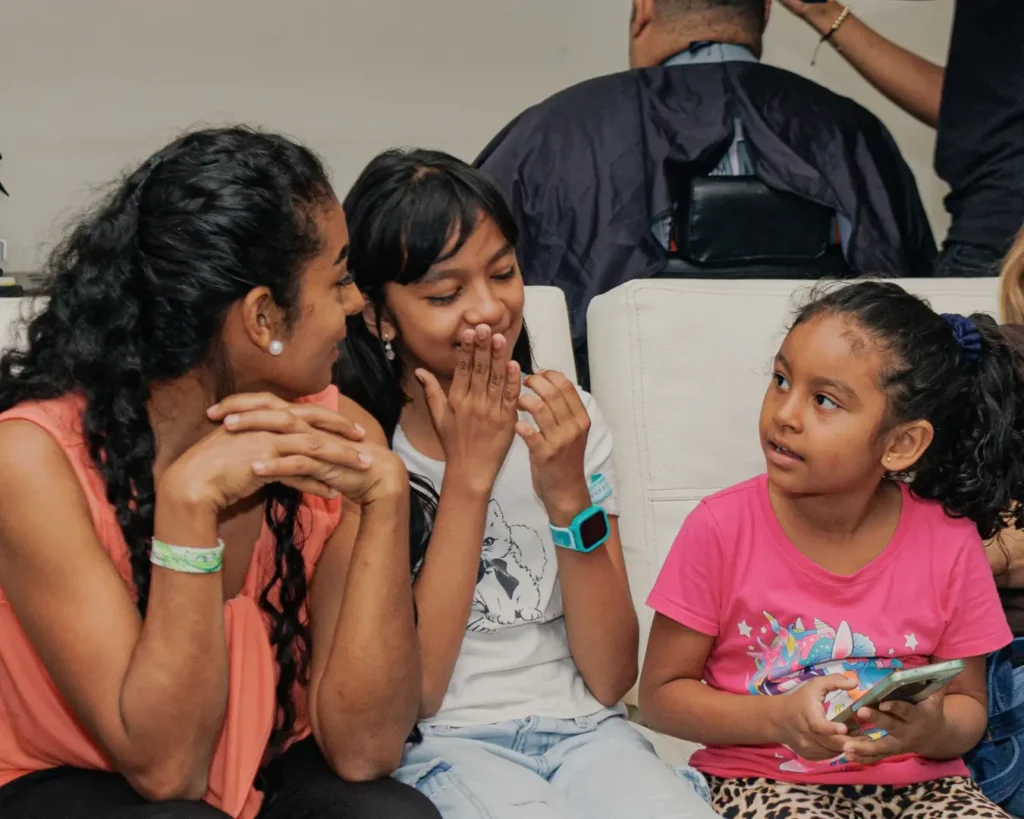
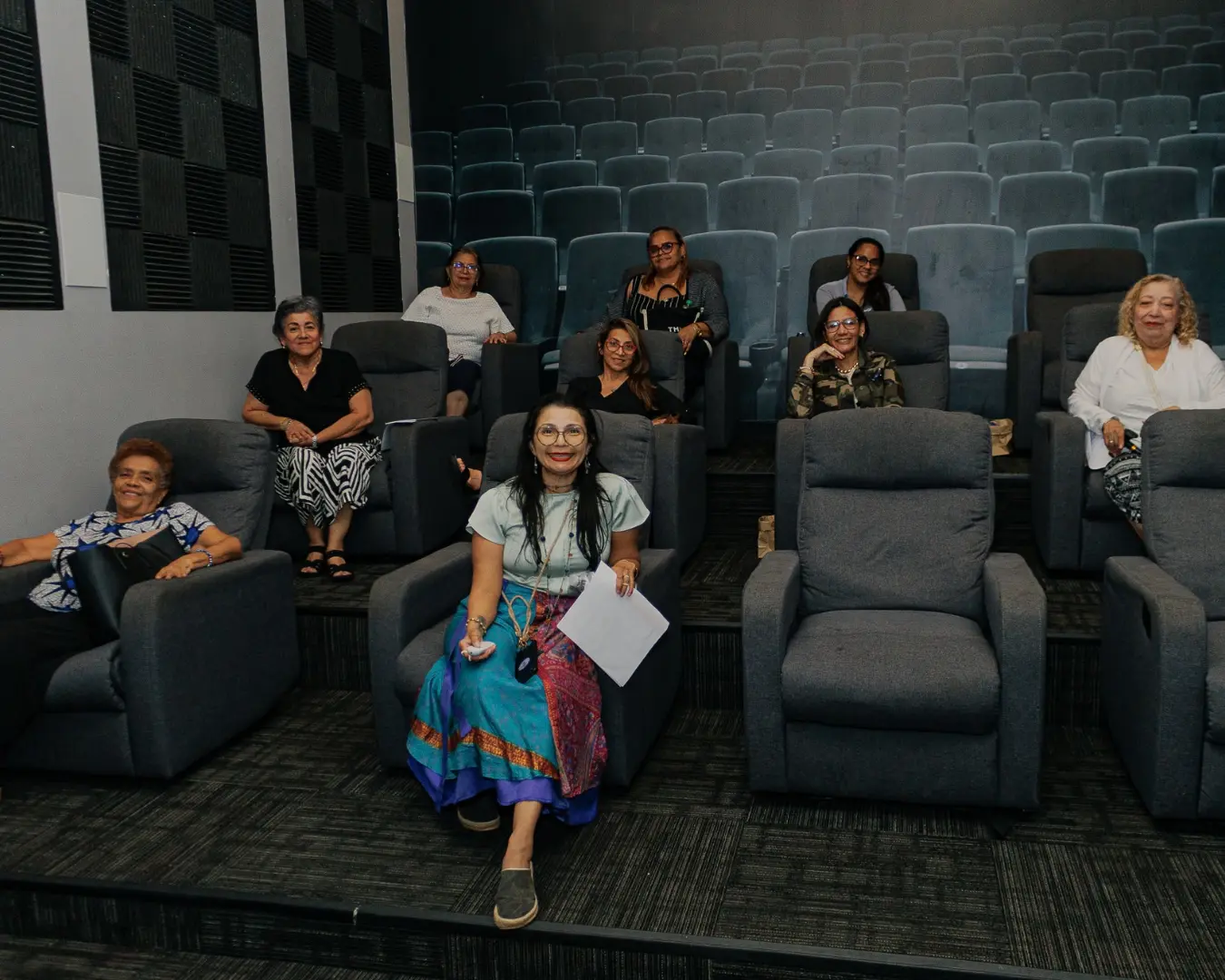
The most beautiful part was the huge smiles at the end of the activity.
References
- Nikiphorou E, et al. (2021). 2021 EULAR recommendations for the implementation of self-management strategies in patients with inflammatory arthritis. Ann Rheum Dis 80(10):1278-1285. https://doi.org/10.1136/annrheumdis-2021-220249
- The burden of care for informal caregivers of patients with rheumatoid arthritis. https://research.utwente.nl/en/publications/the-burden-of-care-for-informal-caregivers-of-patients-with-rheum-3/
- Association of the Commitments and Responsibilities of the Caregiver Within the Family to the Disease Activity in Patients With Rheumatoid Arthritis: A Report From Turkey Arch Rheumatol 2018;33(2):213-220. https://doi.org/10.5606/ArchRheumatol.2018.6427
- Effectiveness of interventions for informal caregivers of people with end-stage chronic illness. Systematic Reviews (2024). https://eprints.whiterose.ac.uk/id/eprint/217899
- Encinas-Monge et al. (2024). Interventions to Relieve the Burden on Informal Caregivers of Older People with Dementia. Nursing Reports 14(3). https://doi.org/10.3390/nursrep14030187
Testimonials

Event video
Creative dreams
Painting workshop
Living with a rheumatic or musculoskeletal disease means living with pain, fatigue and uncertainty. Beyond medication, well-being also depends on how we manage stress and on the activities that give meaning to our day.
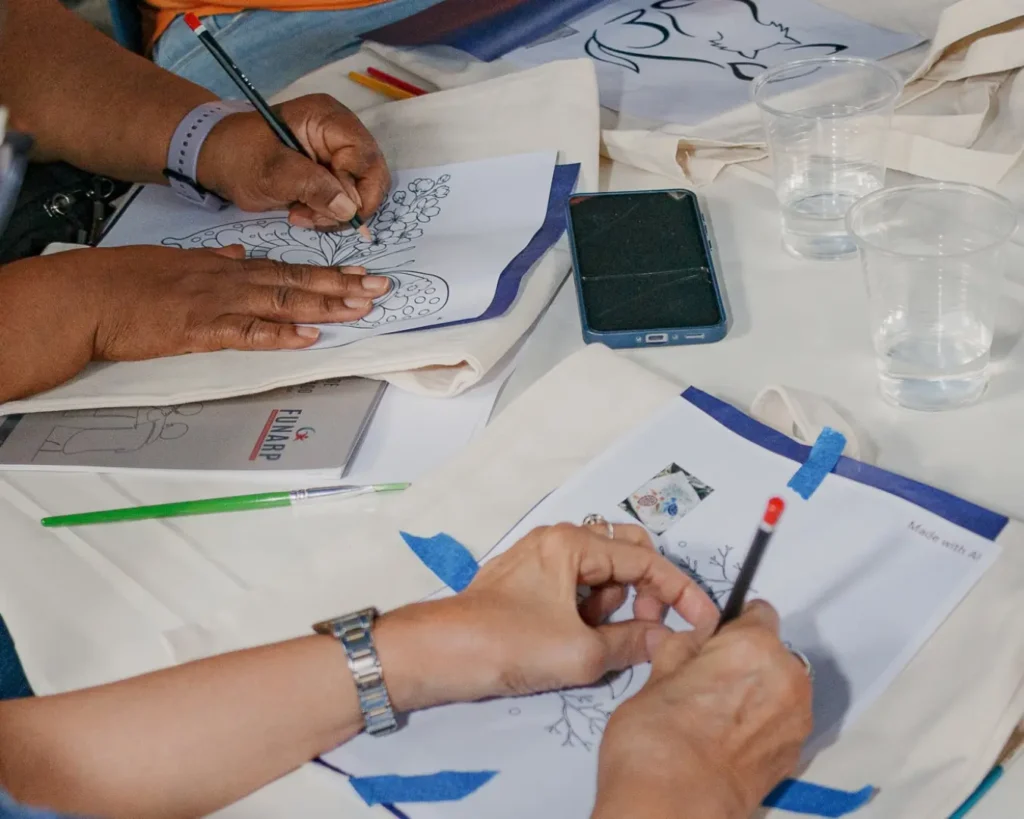
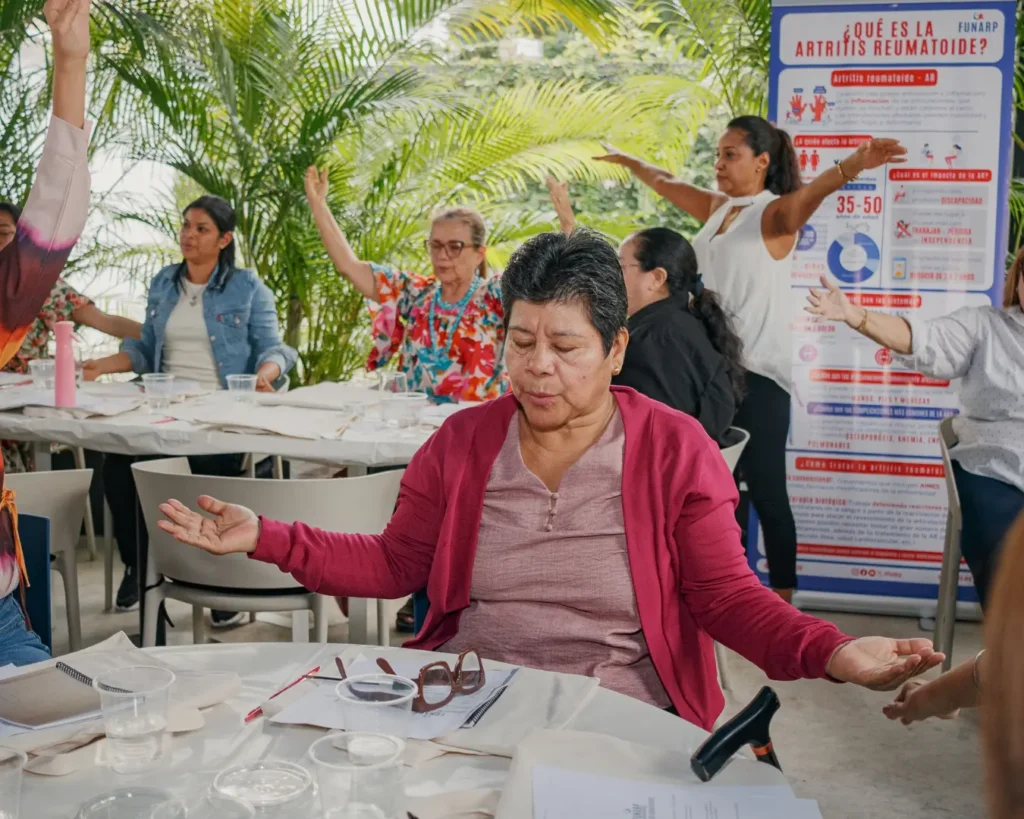
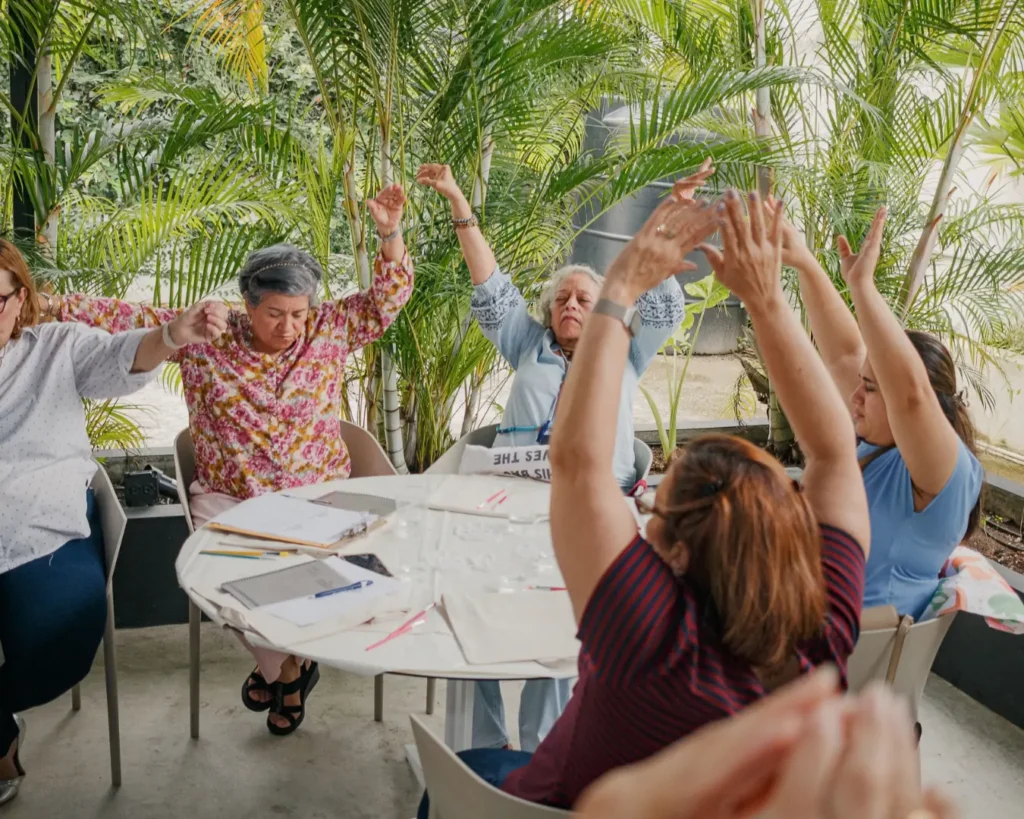
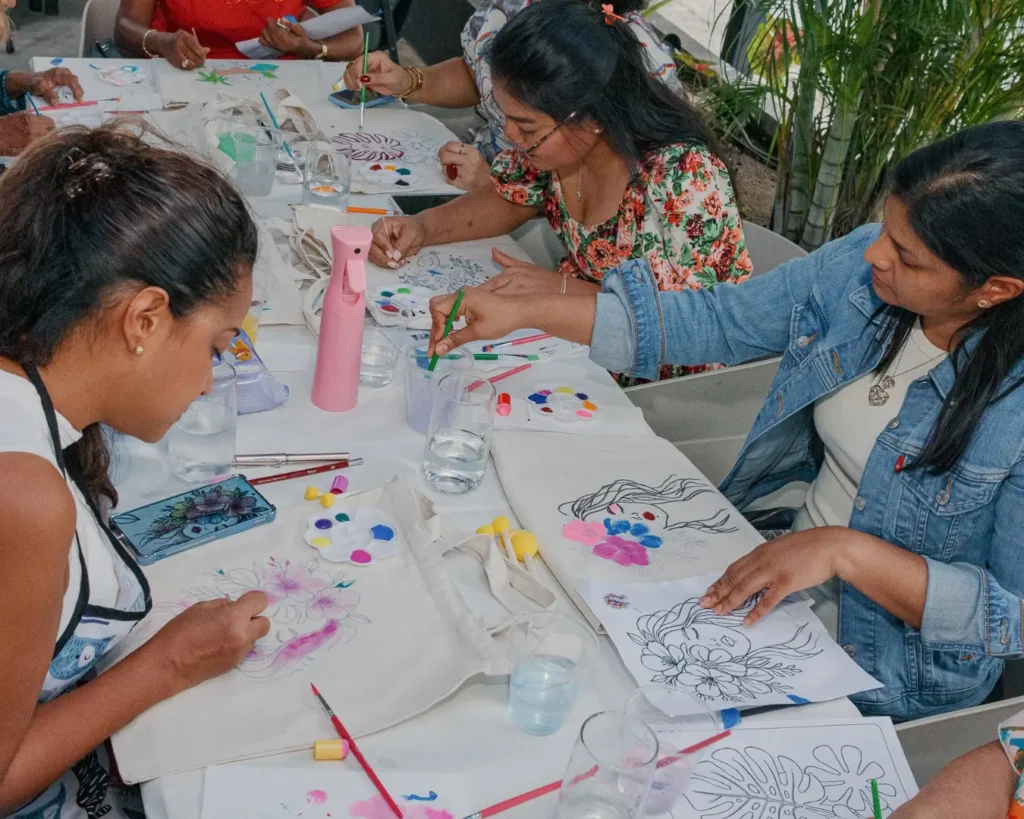
Creativity offers an accessible and enjoyable way to manage chronic pain, always alongside medical treatment and never as a substitute, as the manual itself points out. With this in mind, we organized a painting workshop that combined a medical talk, a guided meditation and a group creative experience, so participants could learn how hobbies influence well-being and pain perception, and leave with a concrete technique to add to their routine.
Why is it needed?
Before the session, none of the 10 caregivers described their role in a way that included their own well-being.
Afterwards, 4 did. Eight out of 10 already said they should take care of themselves, but 4 of them added “I don’t know how” or “I don’t do it”; after the session, all 10 agreed without reservation. One caregiver wrote: “I learned that if I’m not well, I won’t be able to care for my family member.”
The most beautiful part was the huge smiles at the end of the activity.
How did we do it?
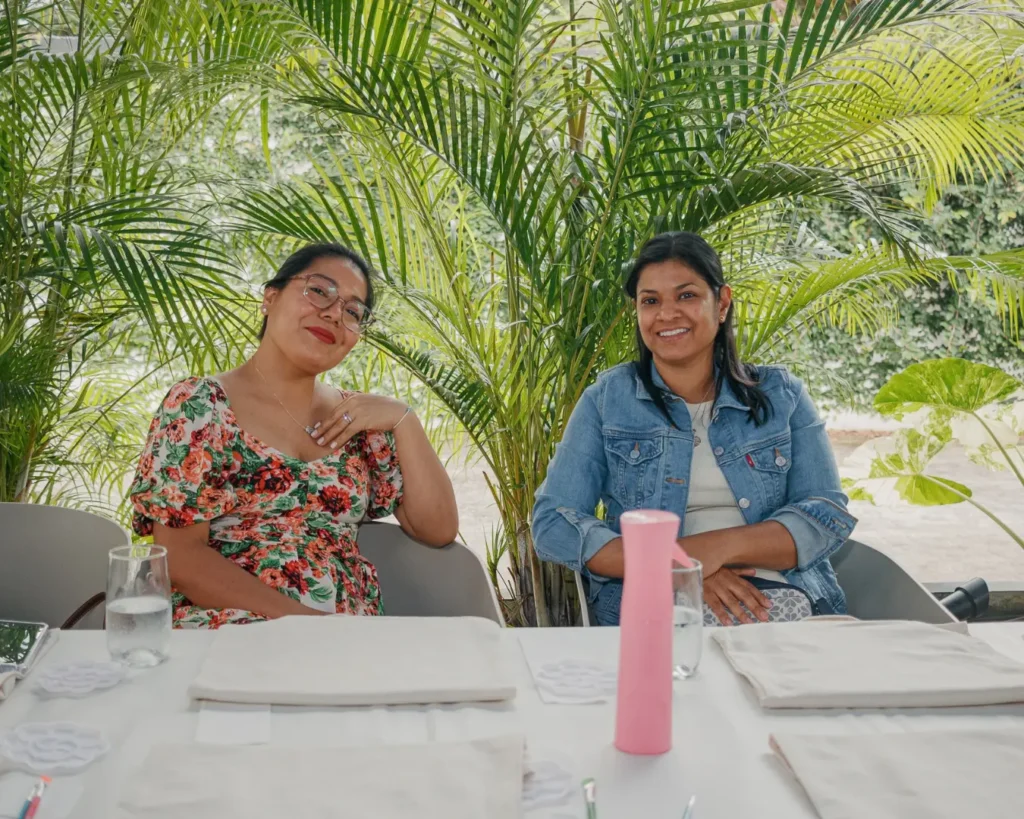
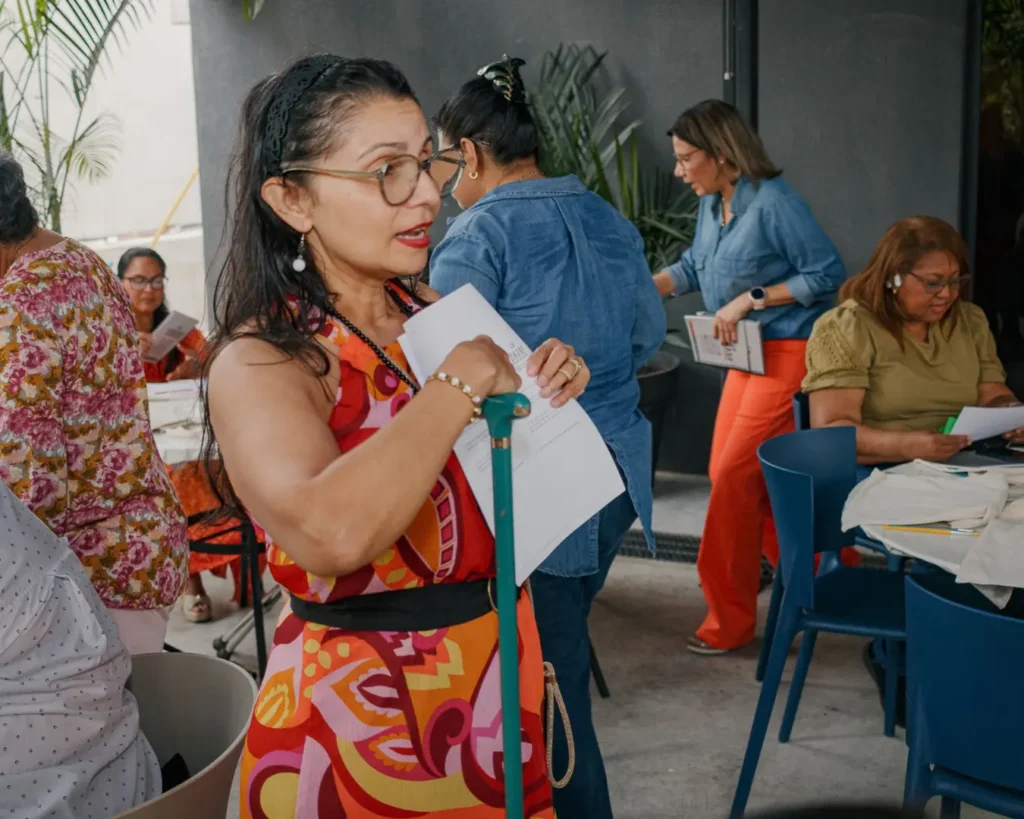
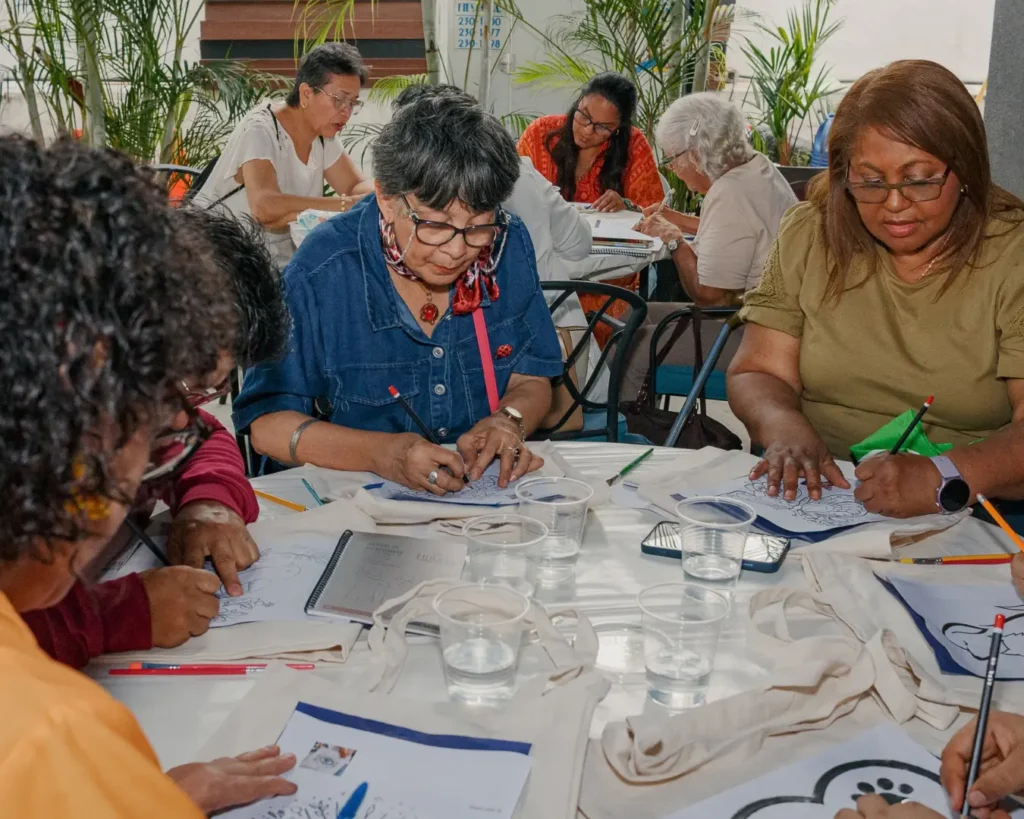
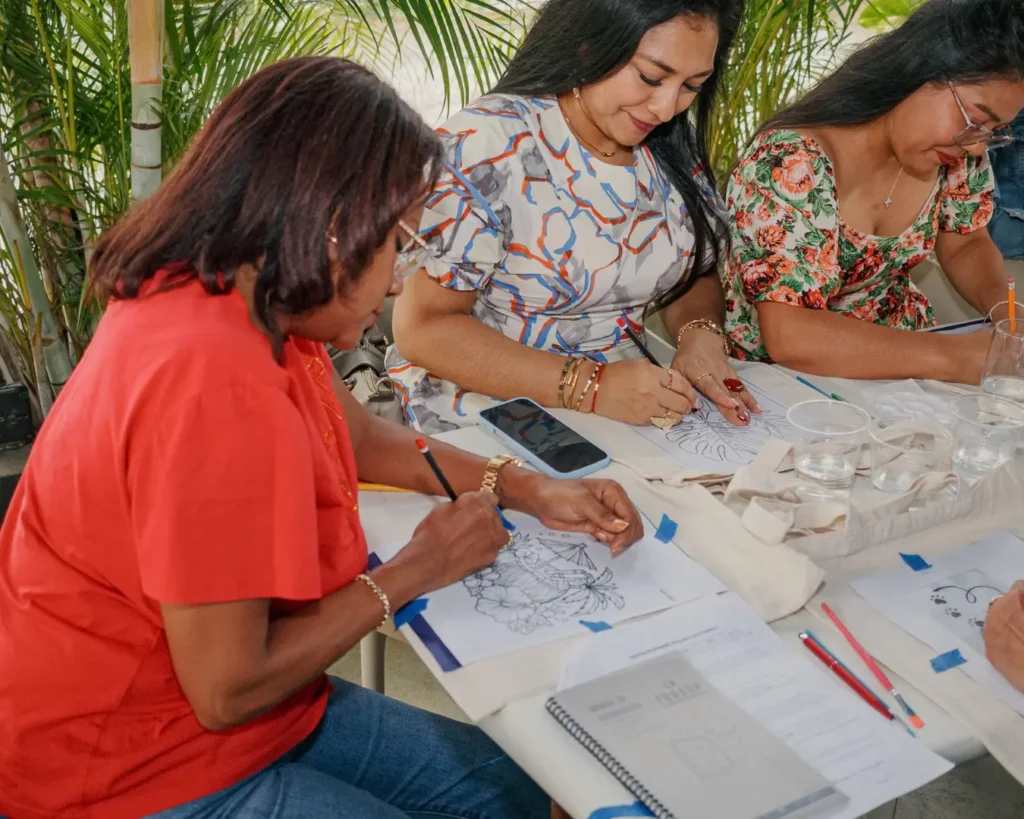
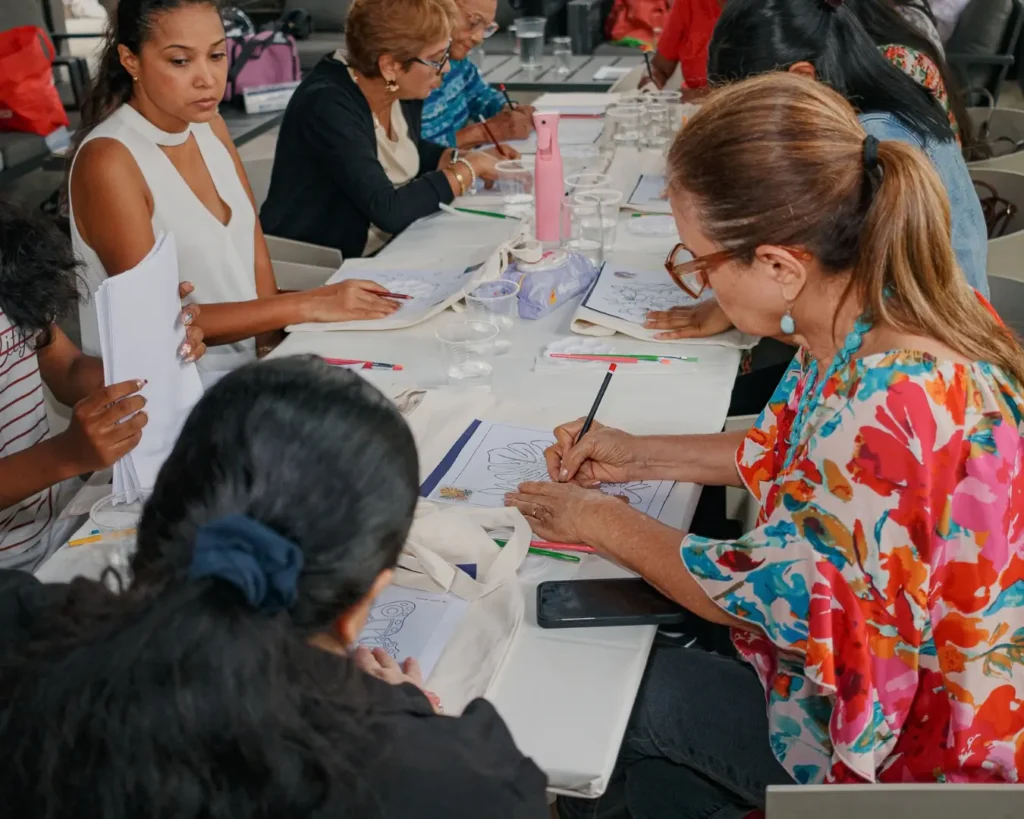
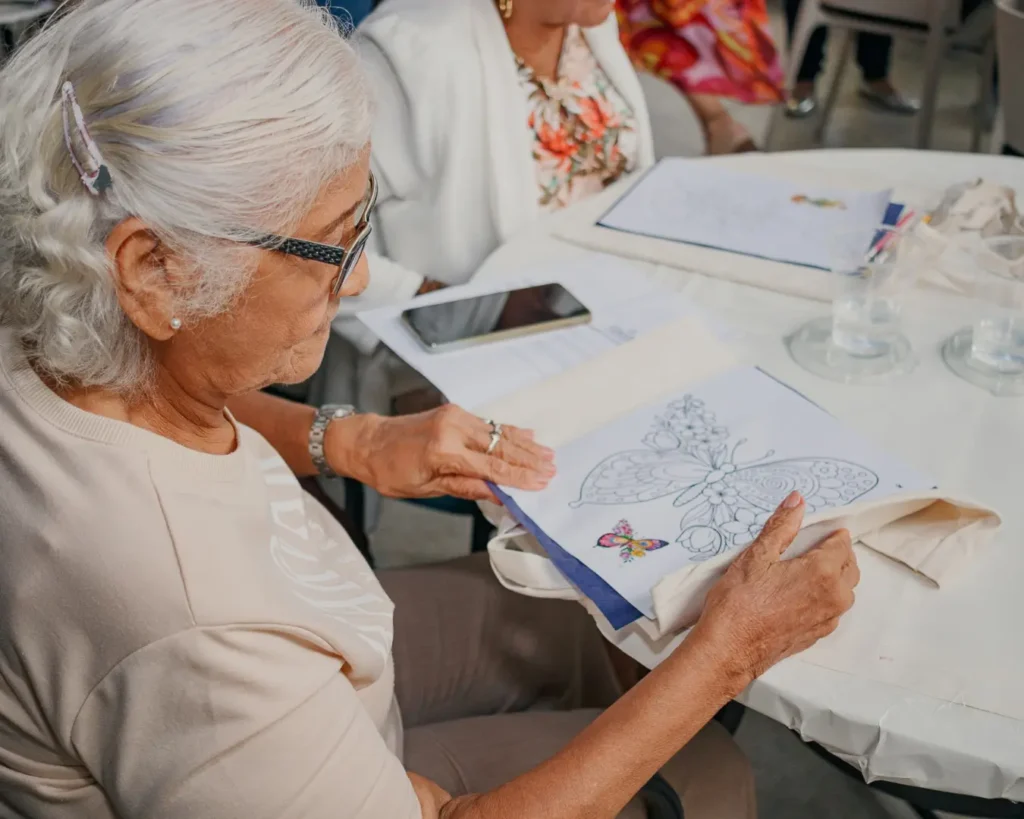
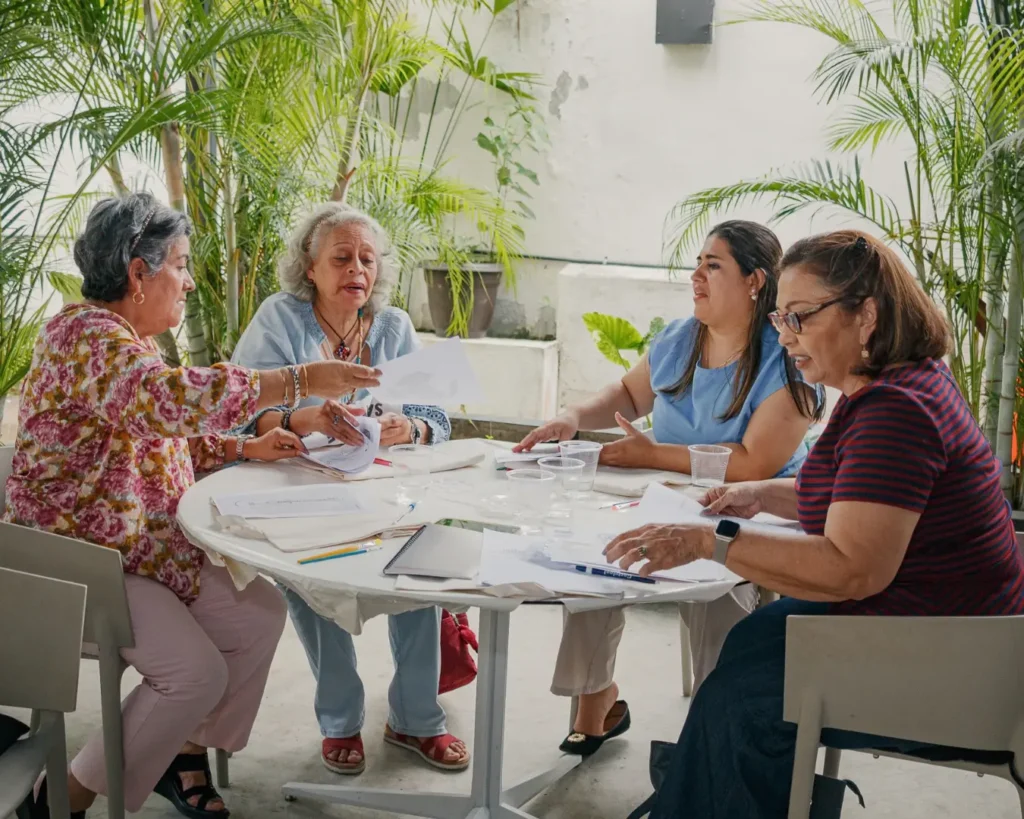
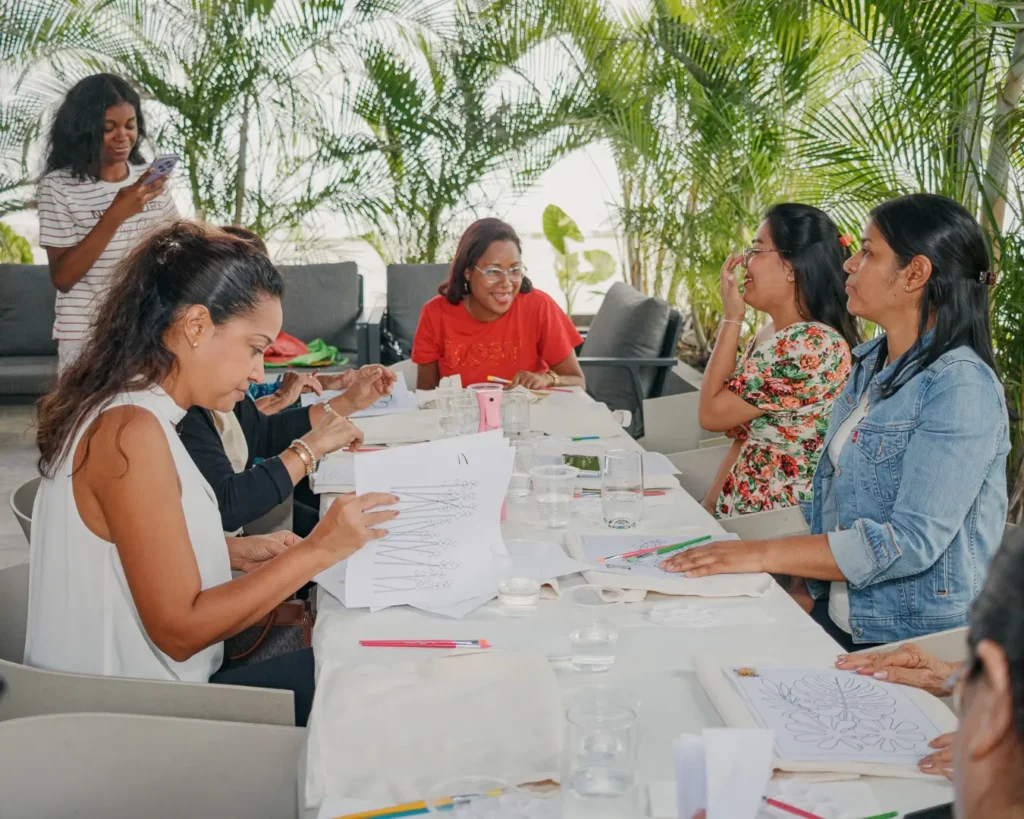
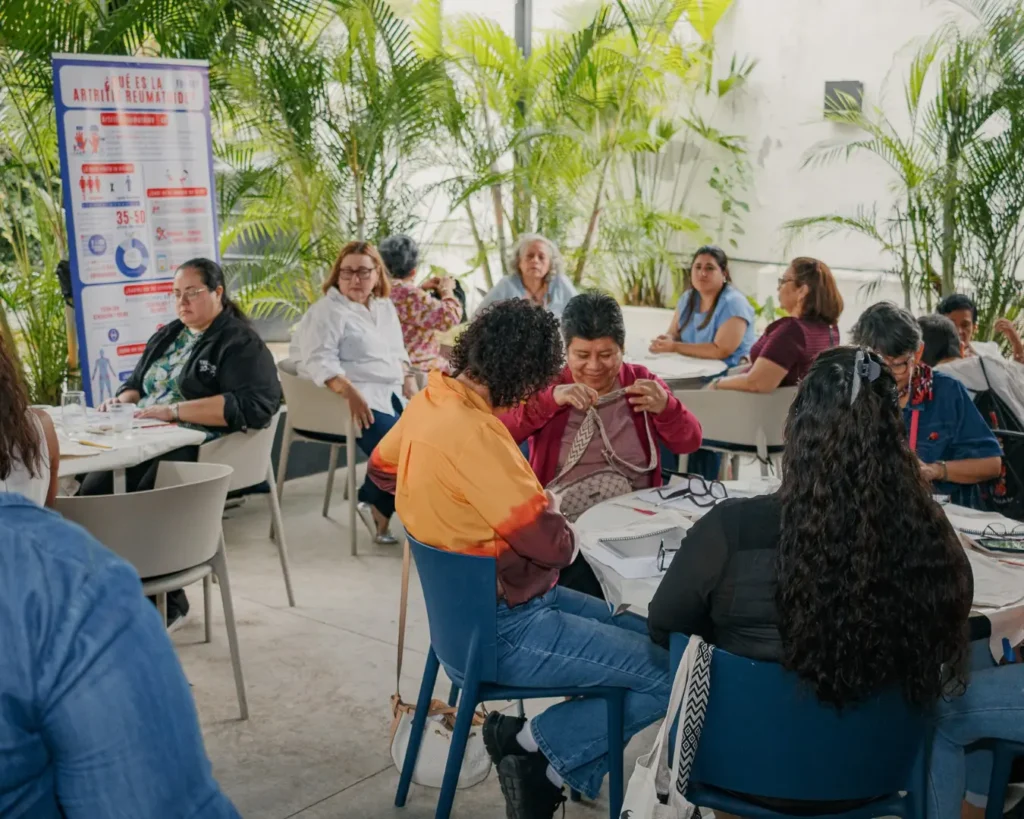
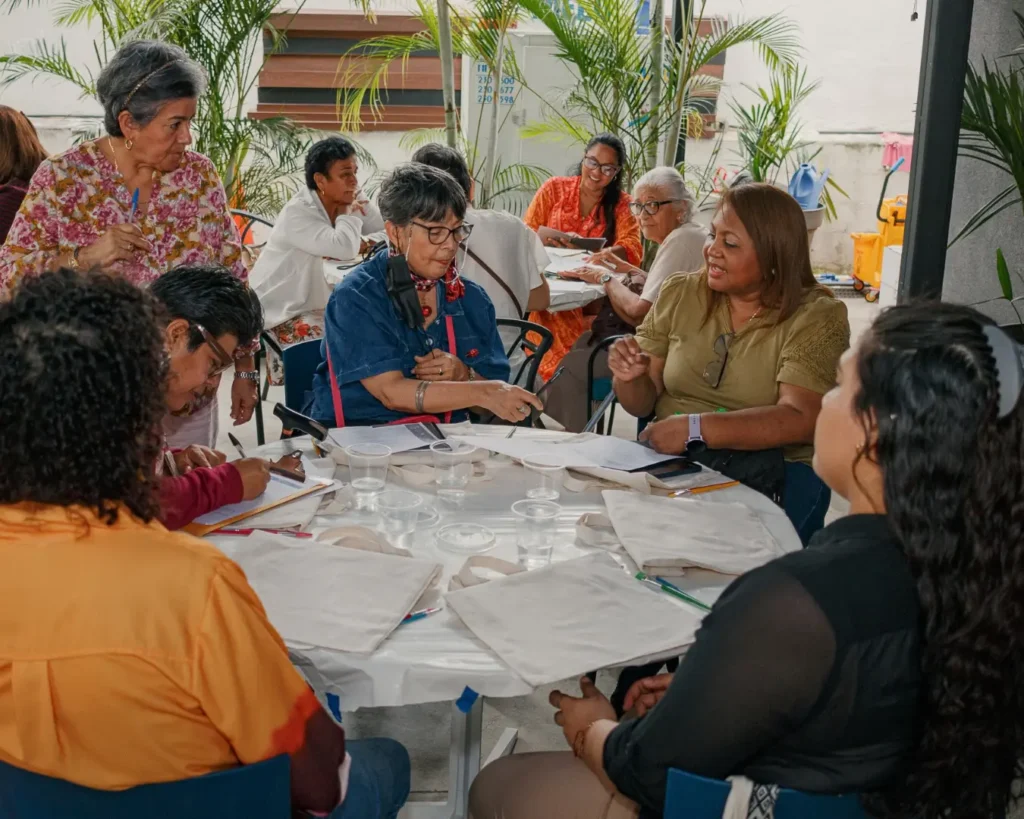
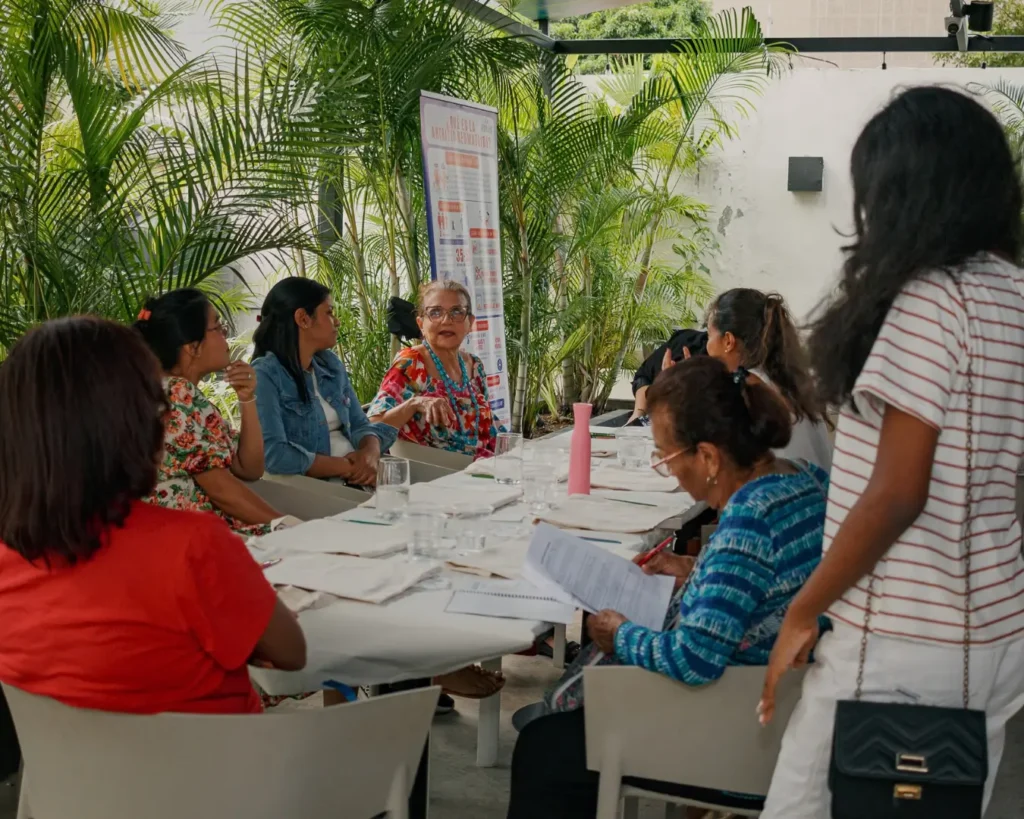
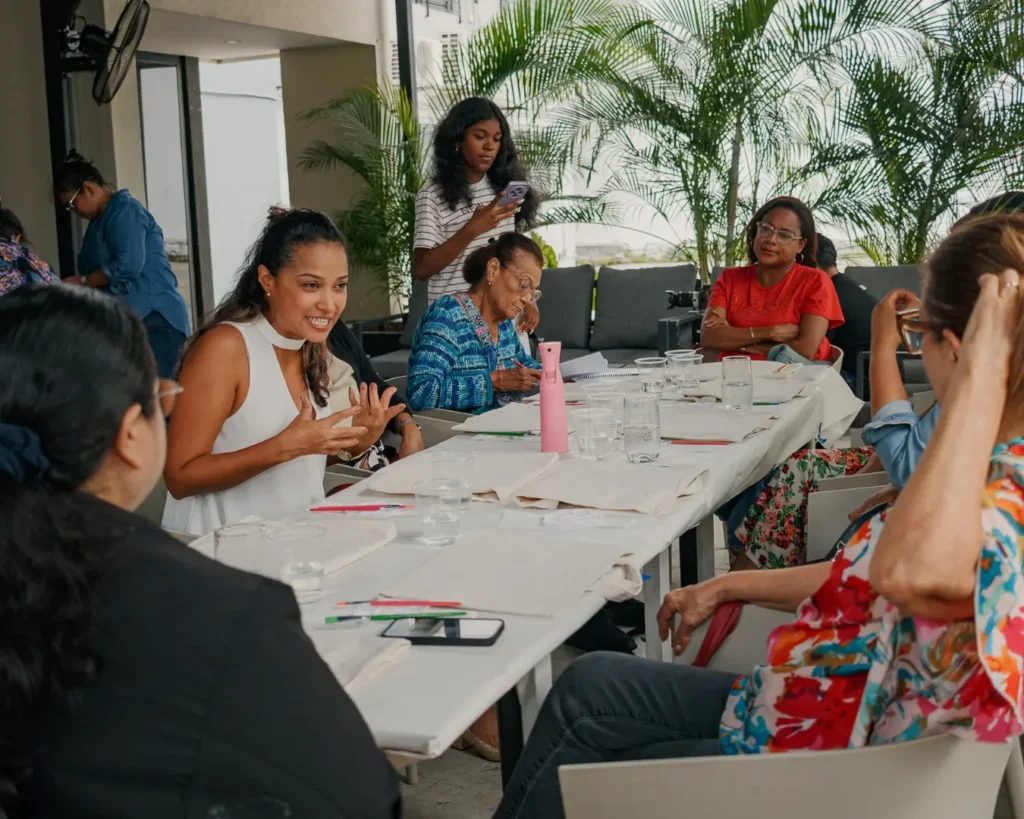
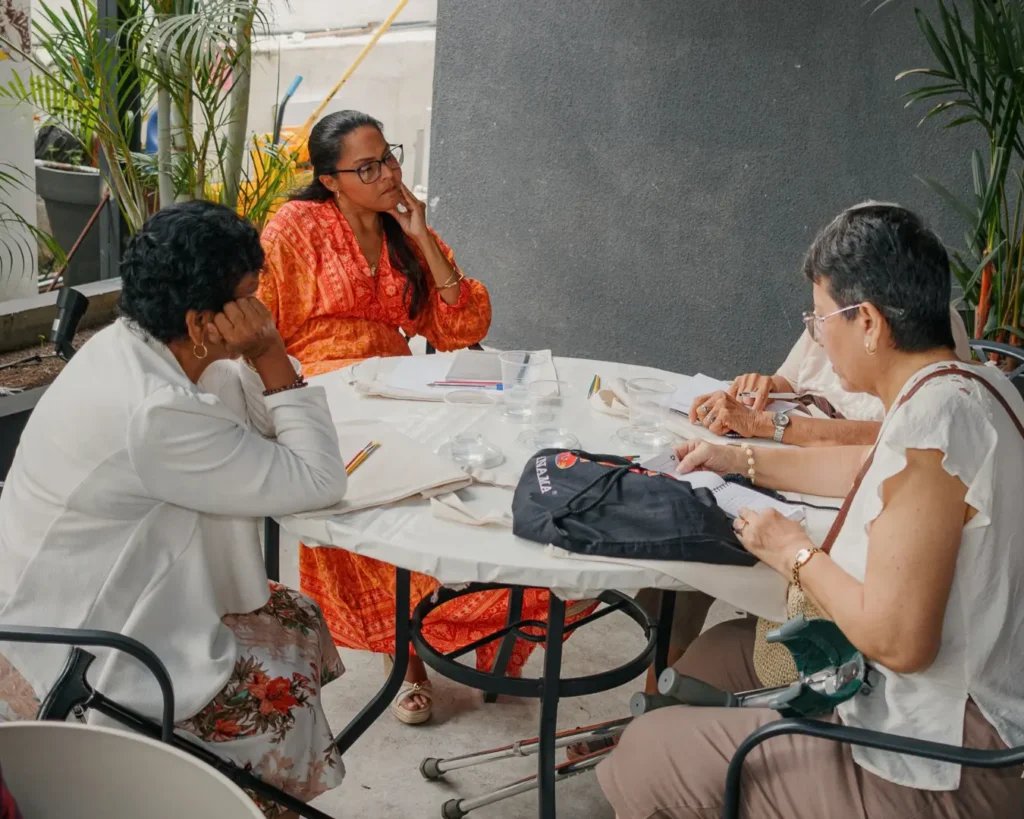
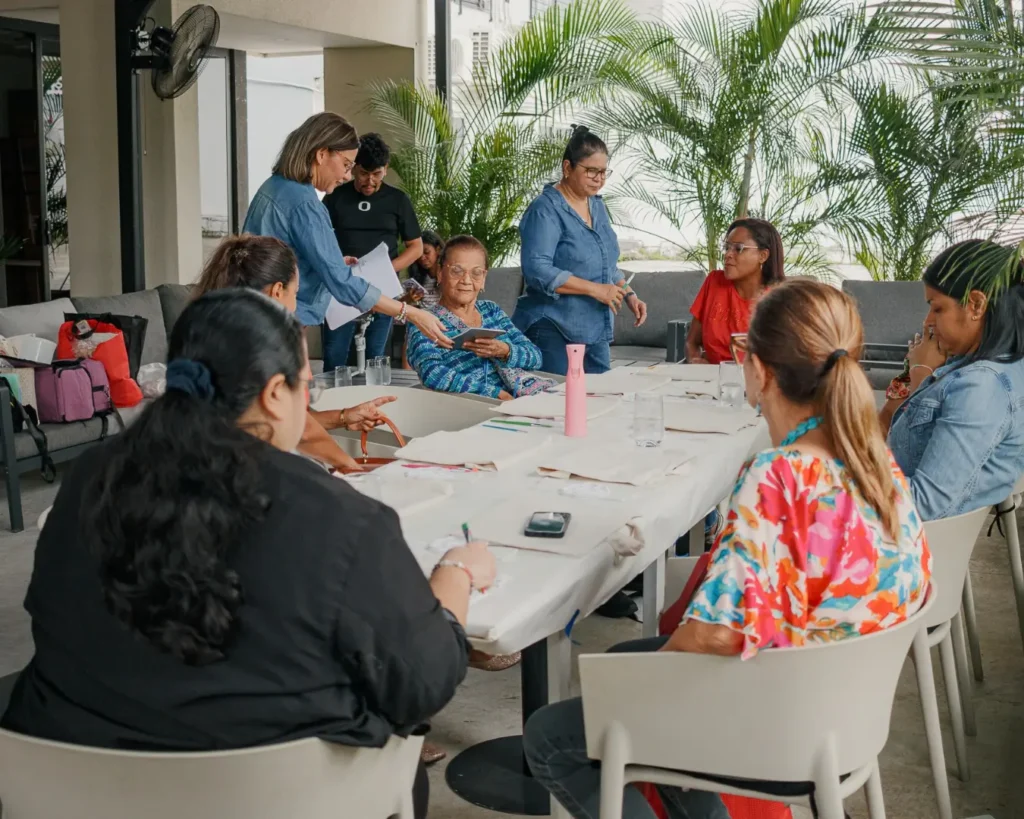
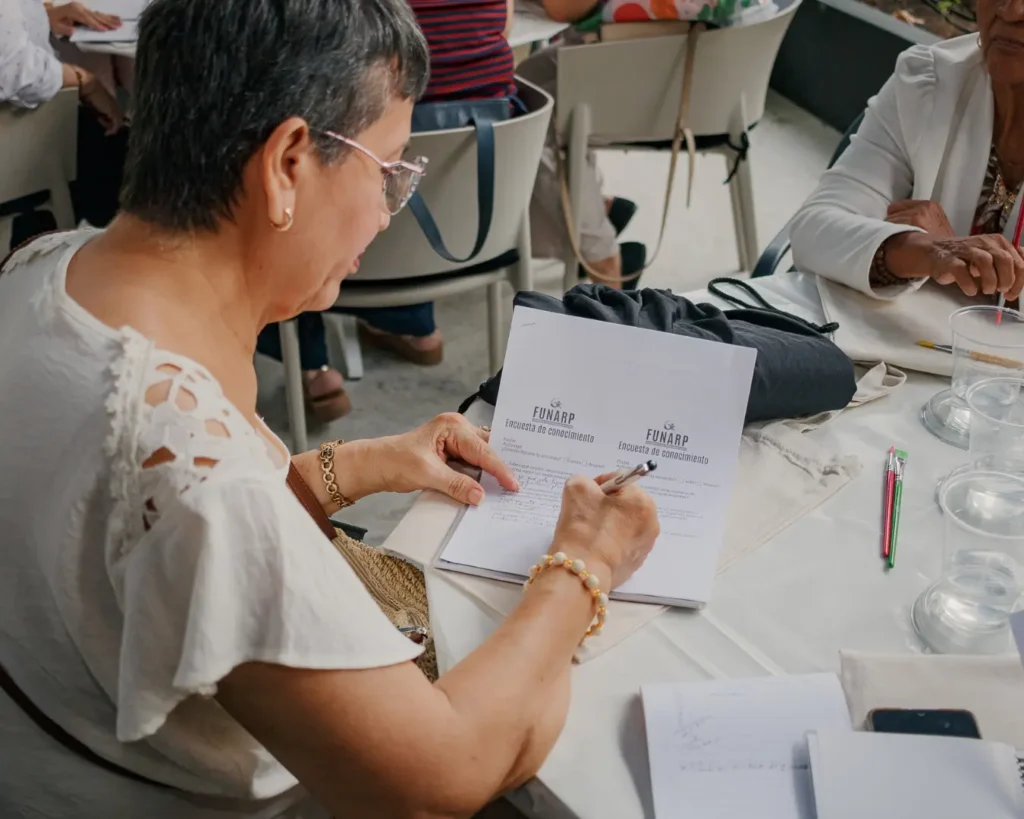
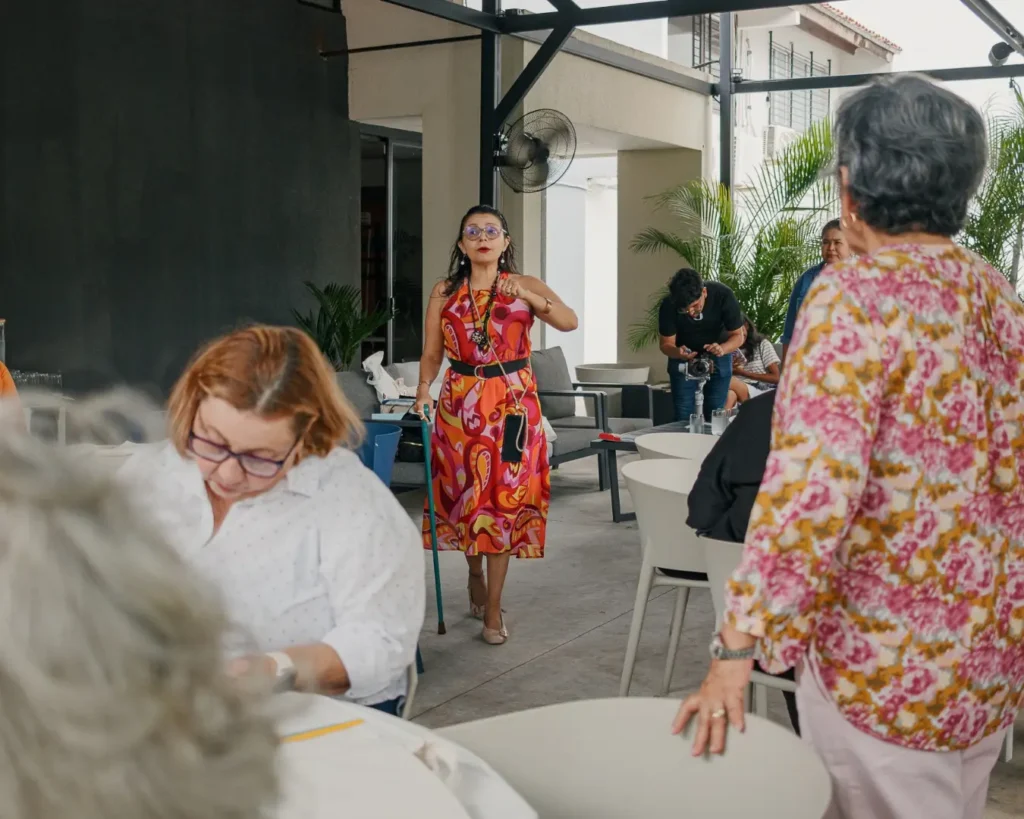
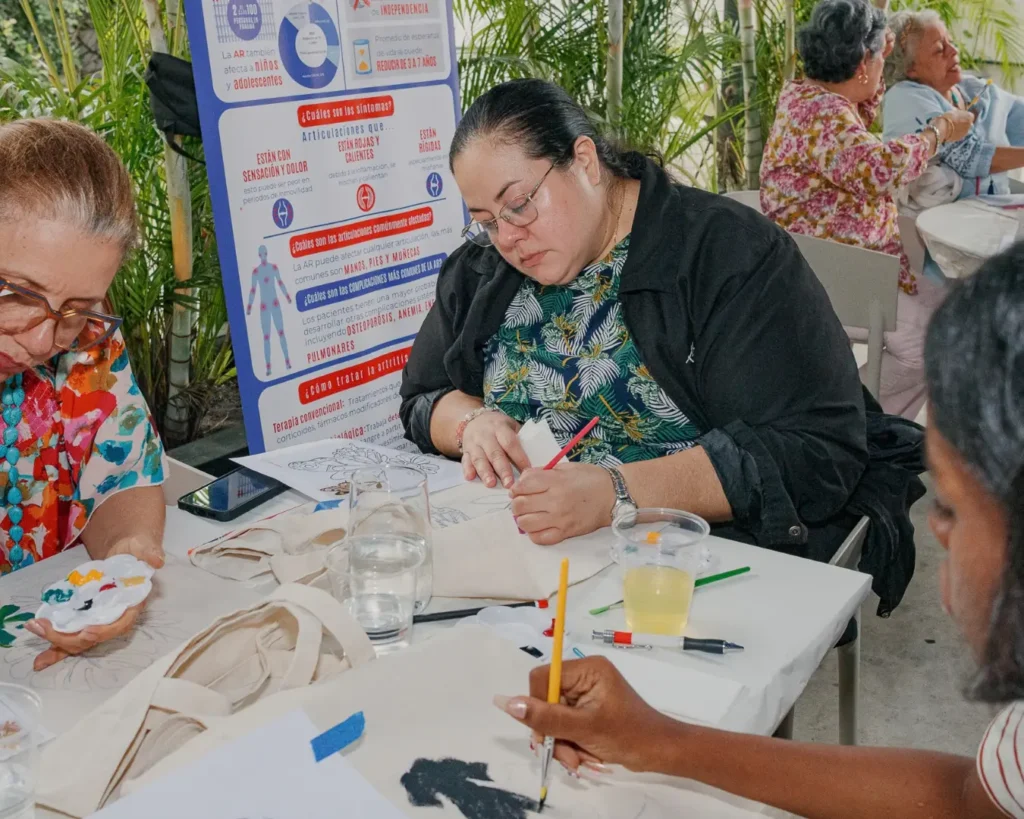
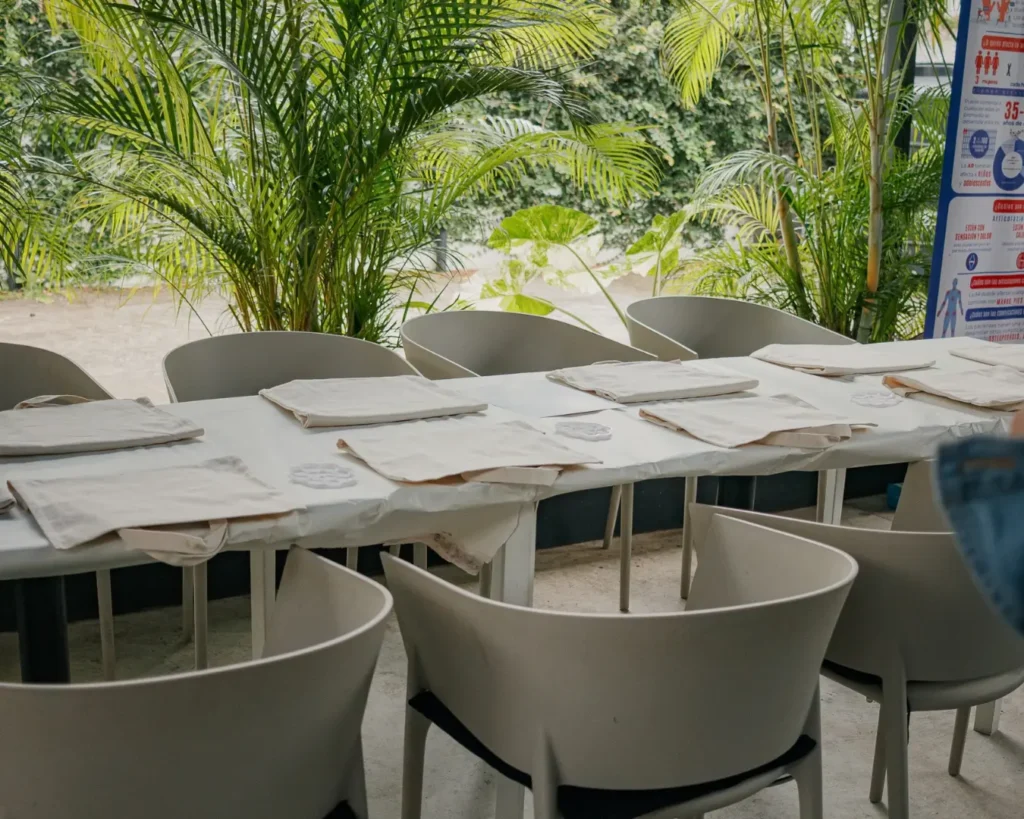
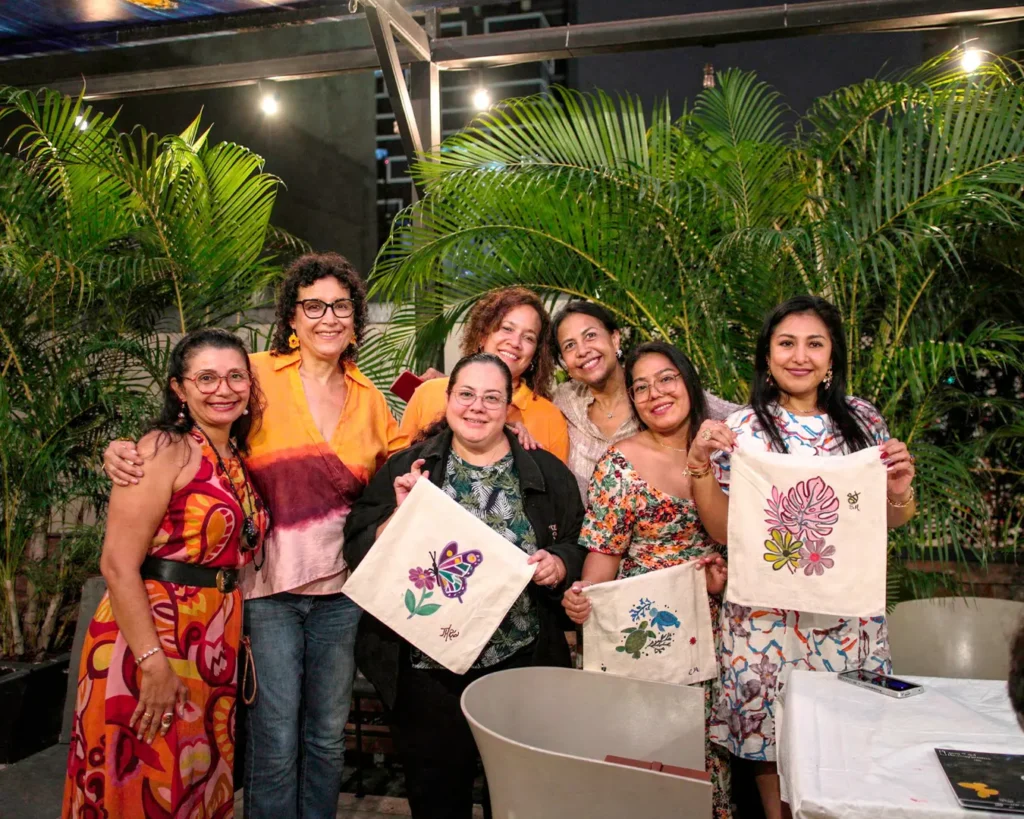
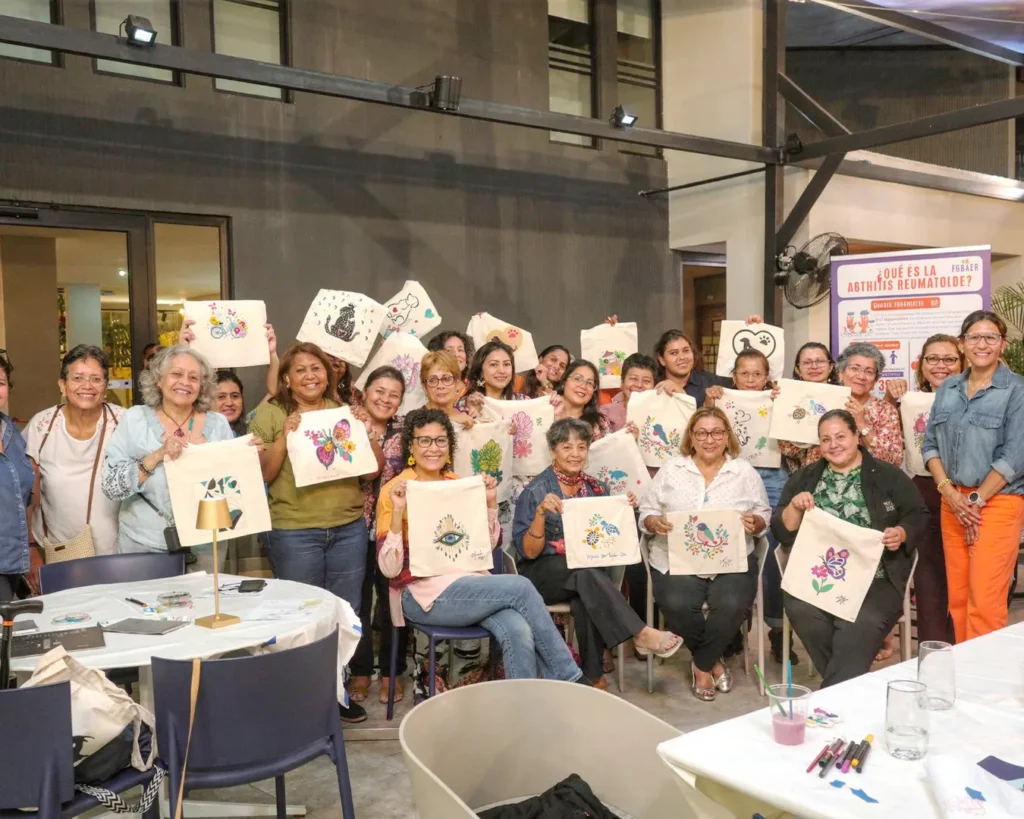
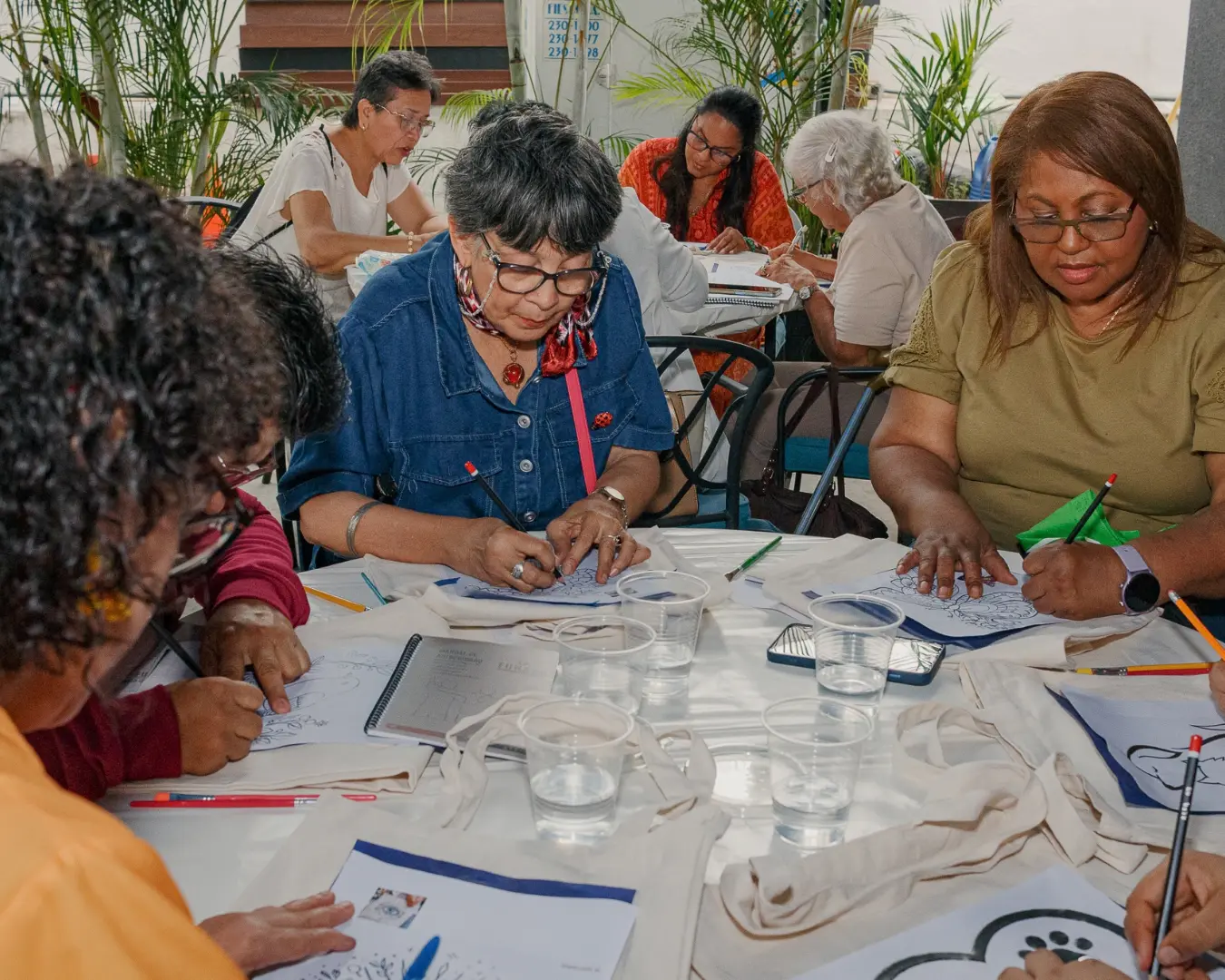
On September 5, we invited 25 patients to paint with a local artist and a physician specializing in cardiometabolic medicine and wellness, at Sonarama restaurant. The participants had attended the World RA Day 2025 activity, where they shared their personal and group dreams.
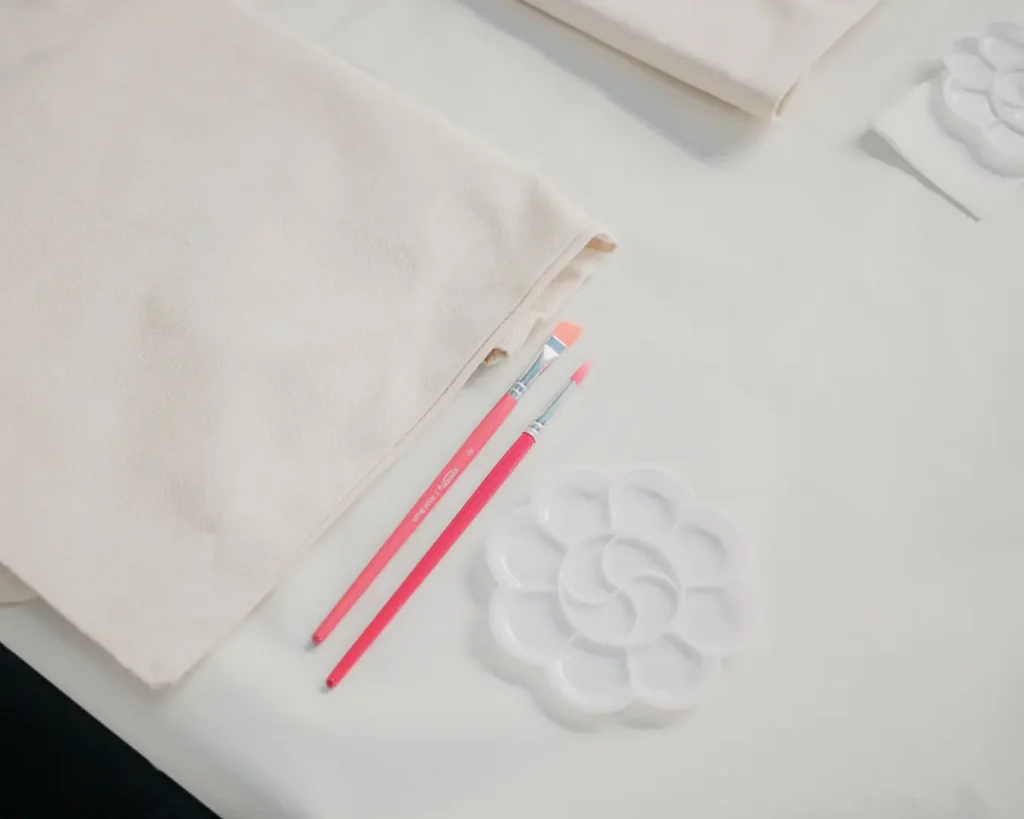
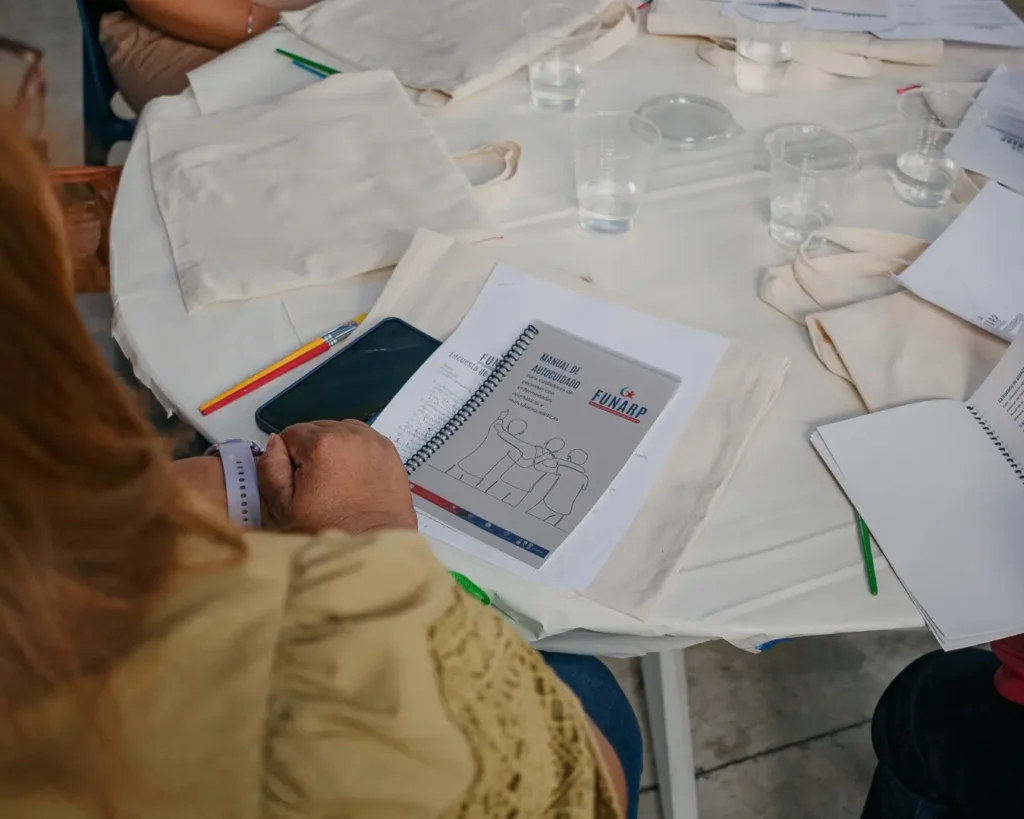
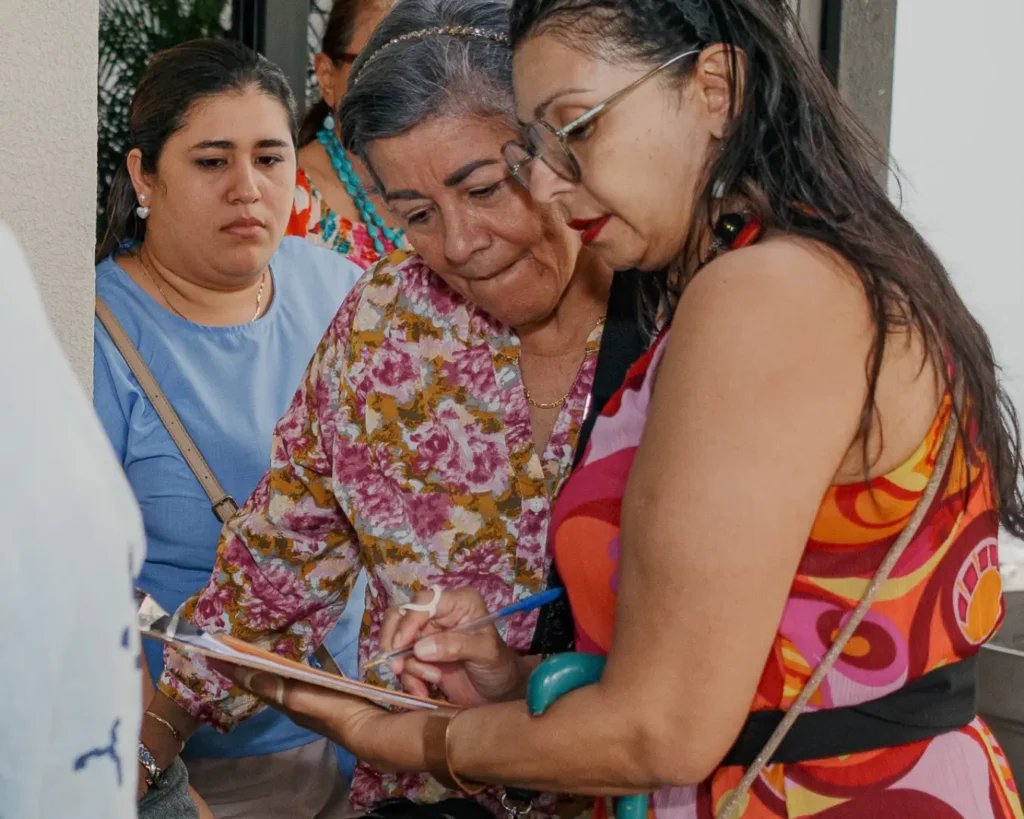
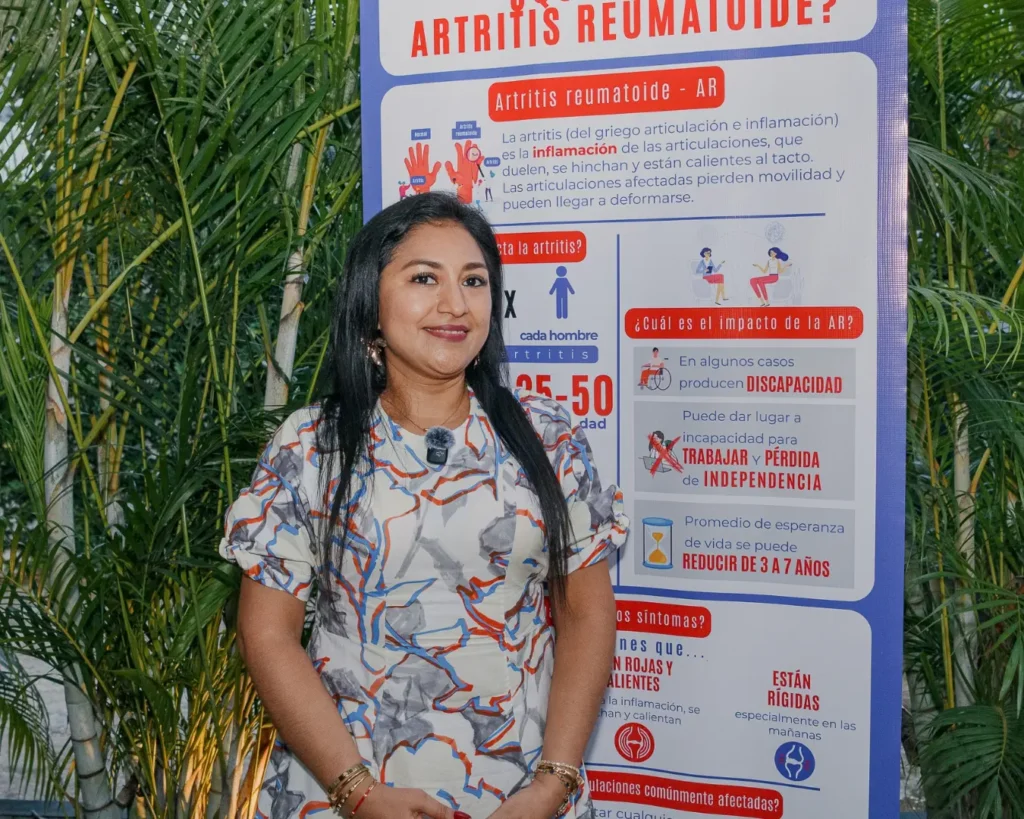
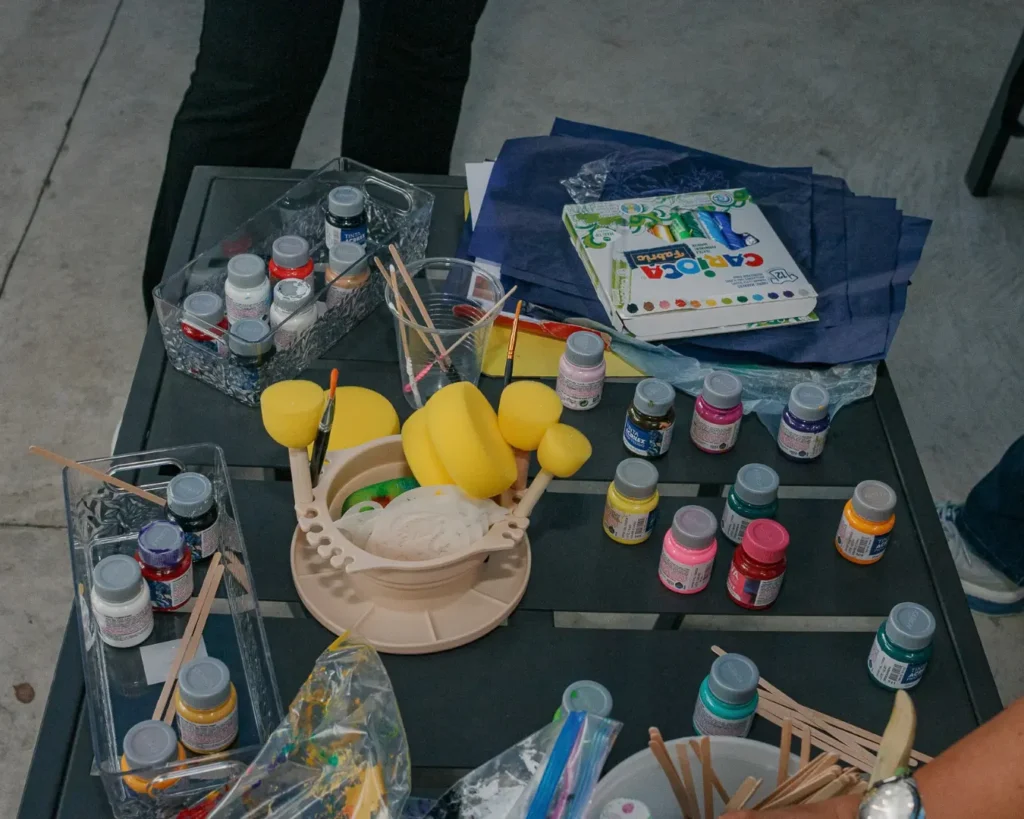
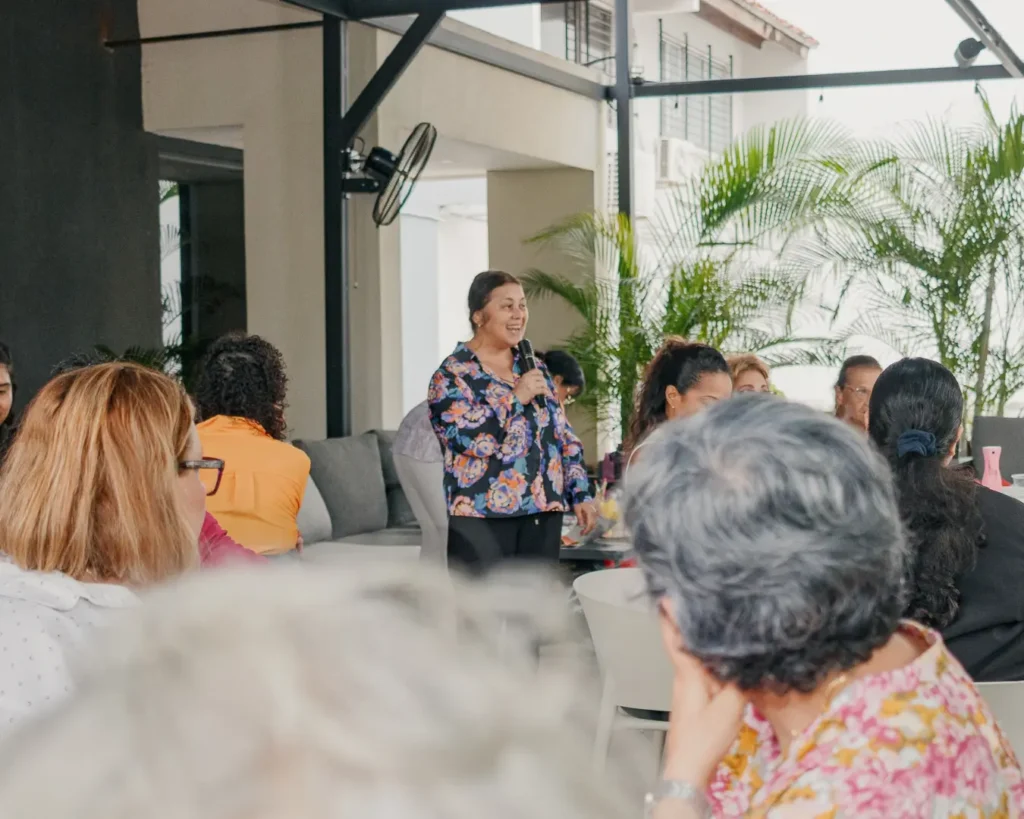
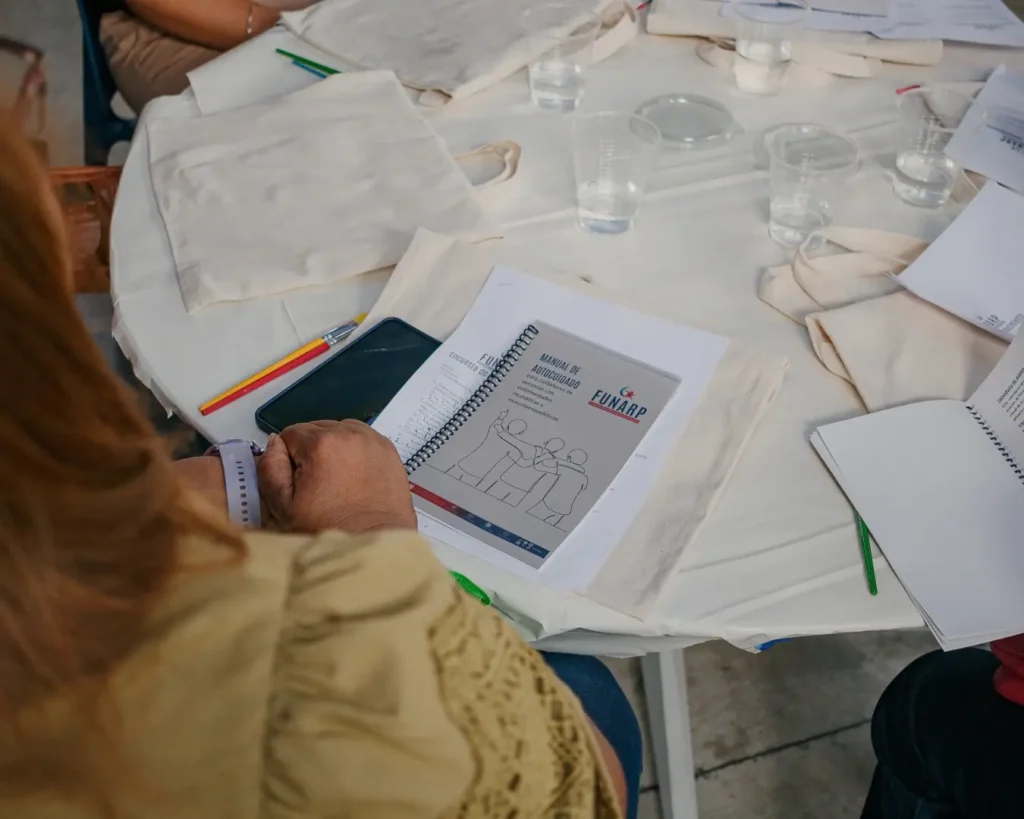
Dr. Sindy Cárdenas gave a short talk on how hobbies and creative activity affect well-being and help people perceive pain better. The instructor, Paola Tognarelli, began the painting session with a short guided meditation. Participants received the patients’ manual, and each chose what to paint on a cloth bag.
Everything was documented by audio and video professionals, several participants gave their testimonials, and a snack was served at the restaurant.
What did we achieve?
Ten patients completed both surveys. Awareness that hobbies benefit their disease rose from 2 out of 10 to 10 out of 10, and the ability to name a concrete technique also rose from 2 out of 10 to 10 out of 10. After the workshop, 7 out of 10 named painting or drawing, 4 named physical activity and 3 named meditation.
We loved seeing tired, stressed faces turn into smiles.
References
- Raudenská J, et al. Arts Therapy and Its Implications in Chronic Pain Management: A Narrative Review. Pain Ther. 2023. https://pmc.ncbi.nlm.nih.gov/articles/PMC10616022
- Federal University of São Paulo (PI: Baptista AS). Assessment of Art Therapy Program for Women with Fibromyalgia: RCT. ACR abstract: https://acrabstracts.org/abstract/assessment-of-art-therapy-program-for-women-with-fibromyalgia-randomized-controlled-blinded-study/ — registration: https://clinicaltrials.gov/study/NCT01586637
- Khedekar S, et al. Use of art as therapeutic intervention for enhancement of hand function in patients with rheumatoid arthritis: a pilot study. Indian J Rheumatol. 2017. https://doaj.org/article/55a01e1bba644220af9971adc48b8829
- Mooney MA. Art Therapy for Relief of Physical and Existential Pain in Women Diagnosed with Rheumatoid Arthritis. Master’s thesis. https://era.library.ualberta.ca/items/892743c8-8d9a-4fe2-996c-17504f751509 (only 5 participants and not peer-reviewed; the pilot reduced pain, but the evidence is very weak)
Gallery
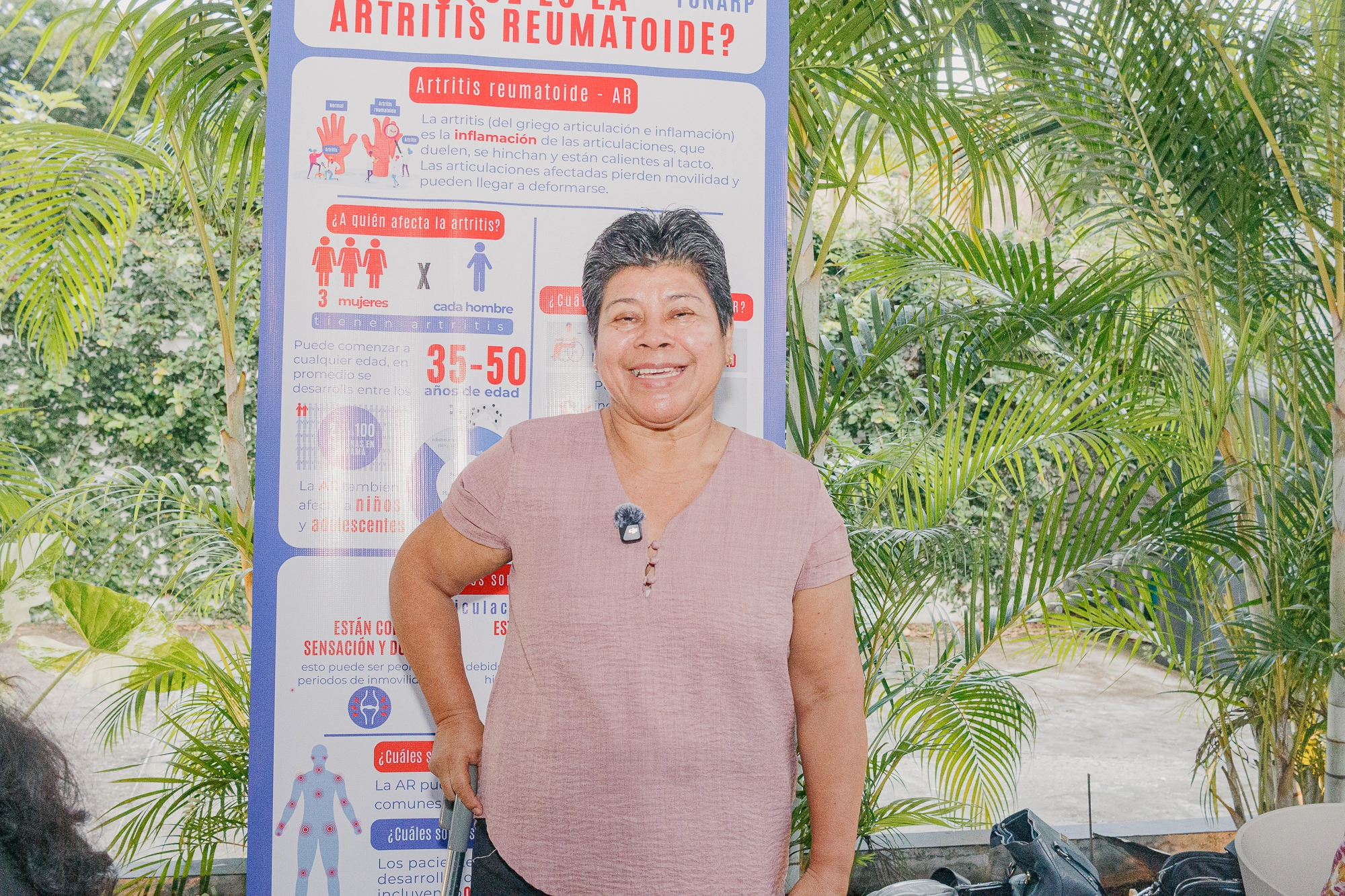
Testimonials
Event video
Dreams of inclusion
Gallery
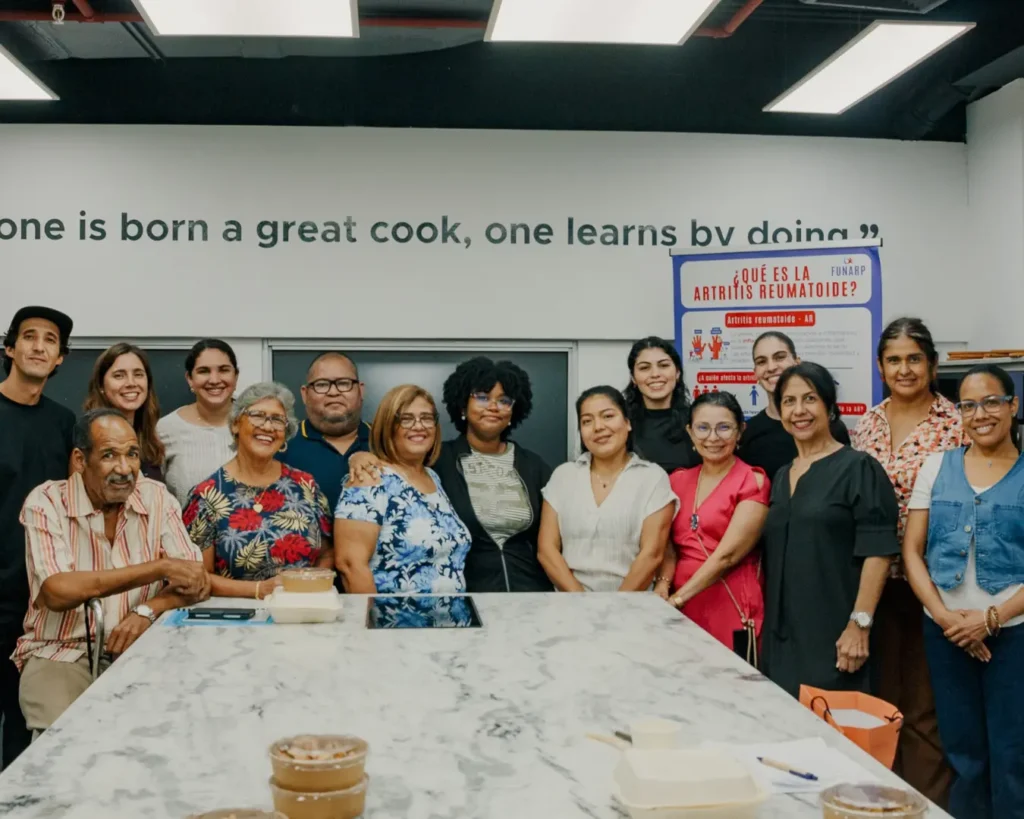
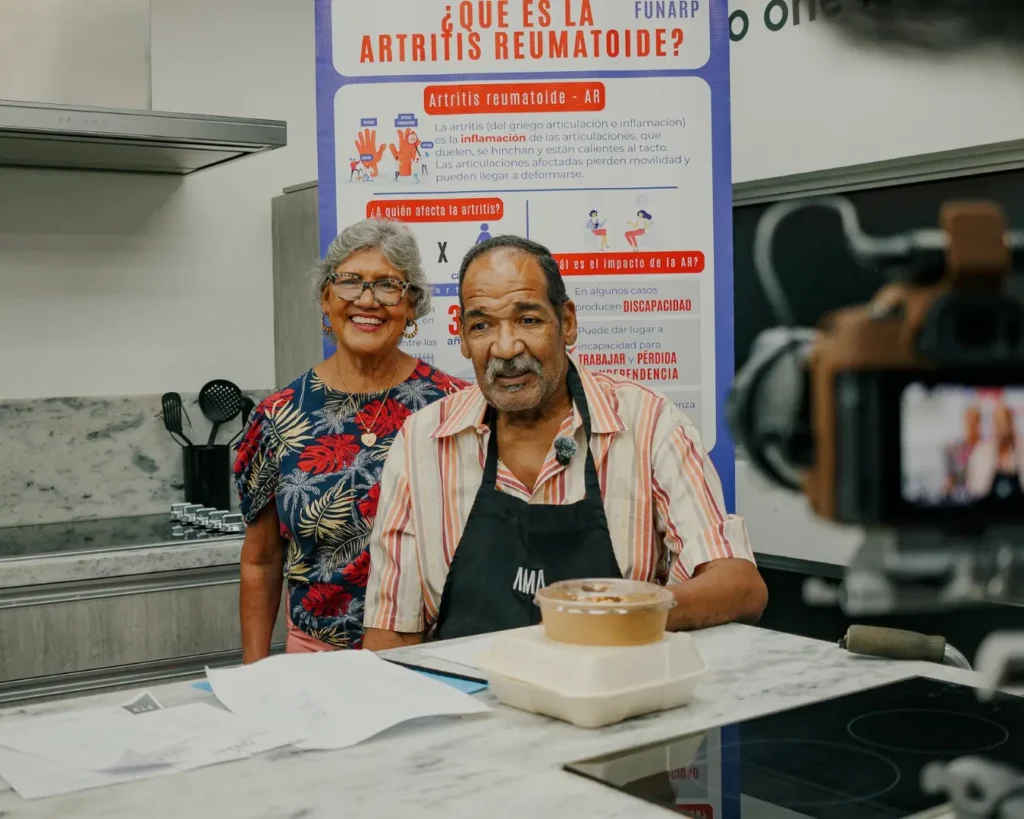
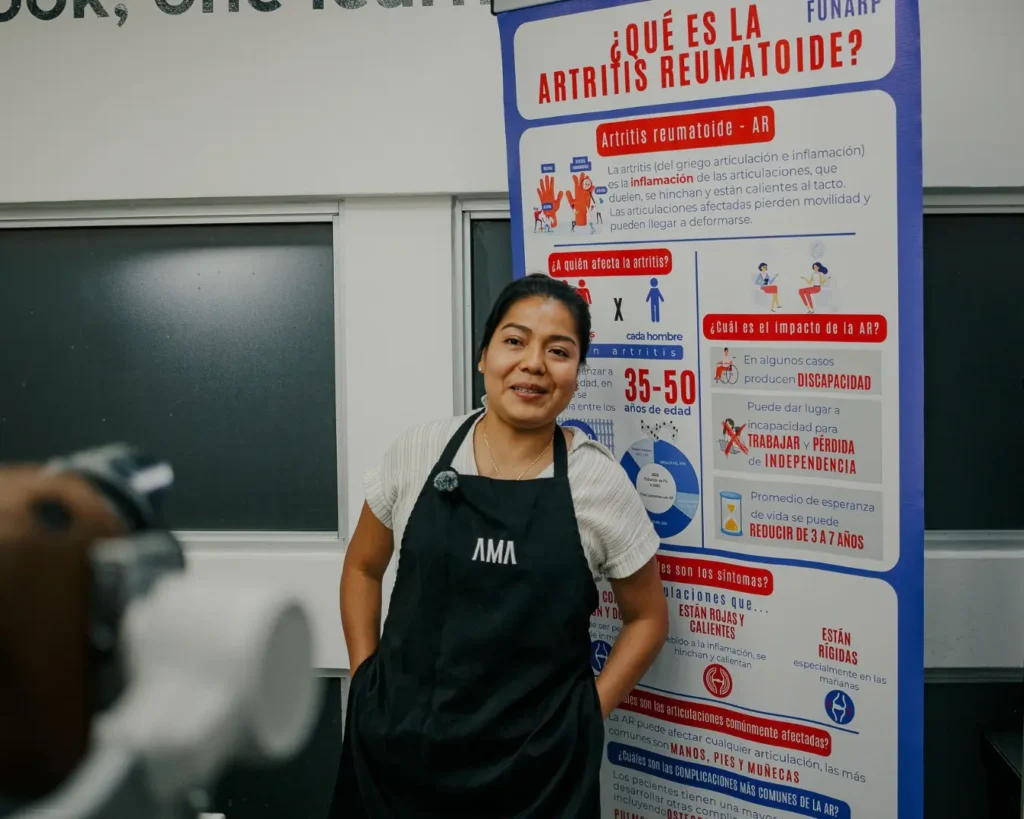
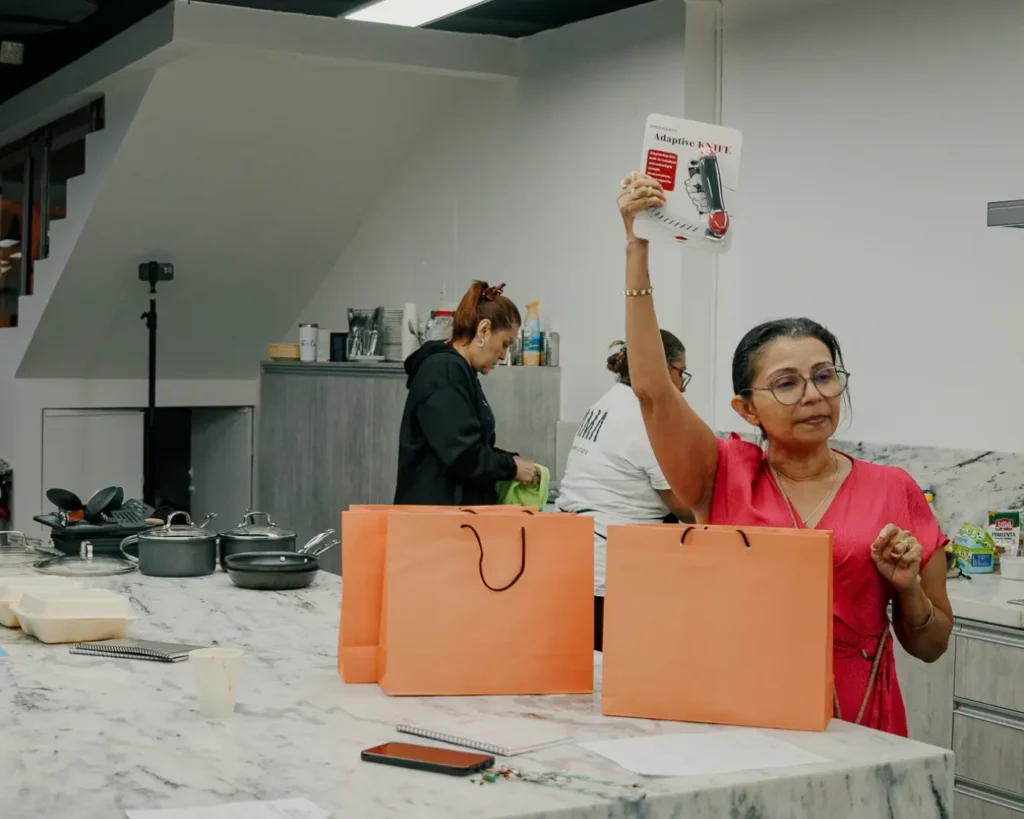
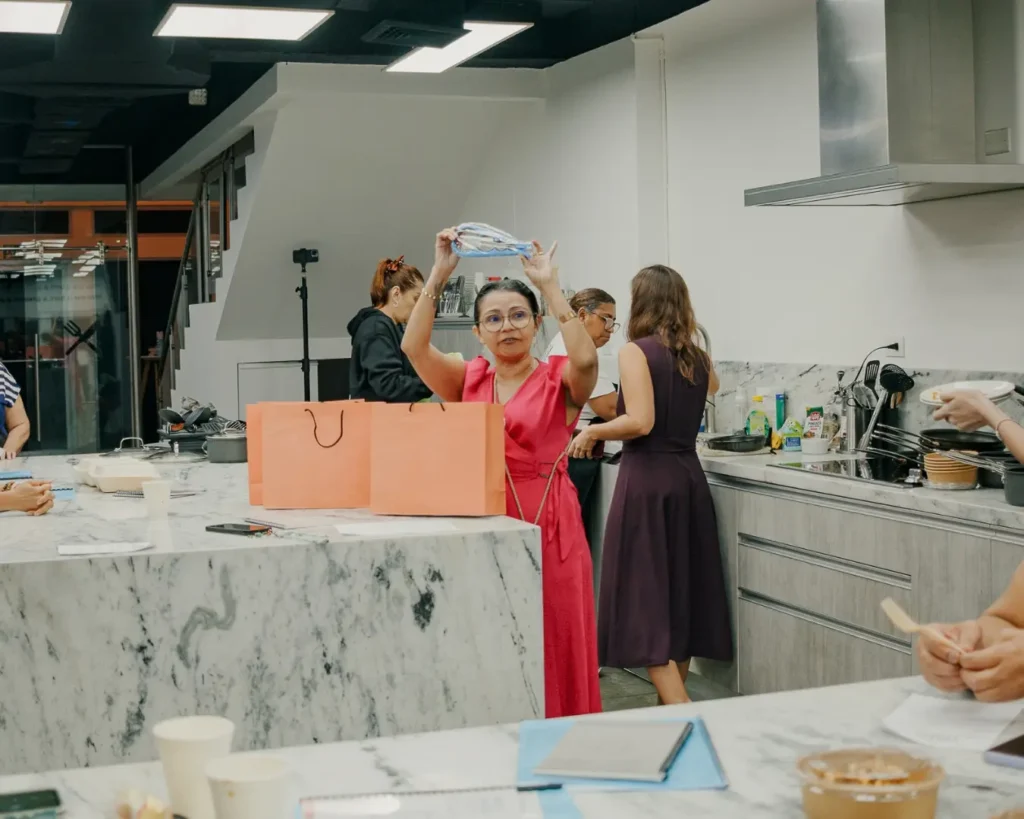
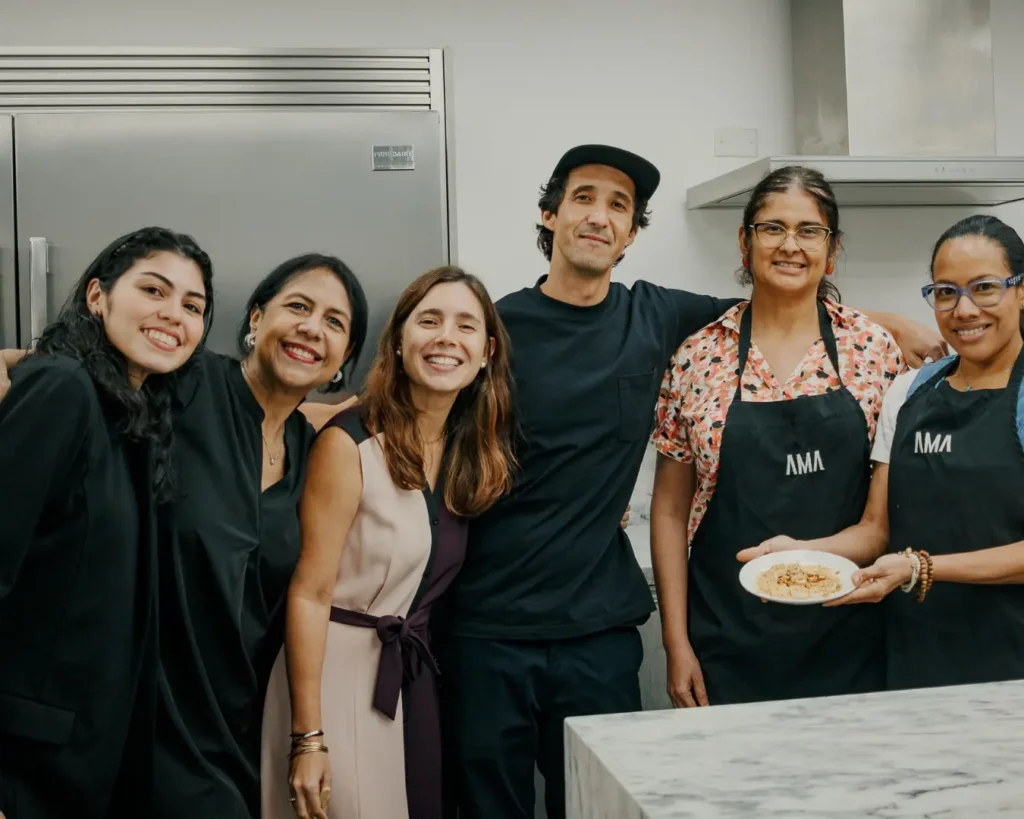
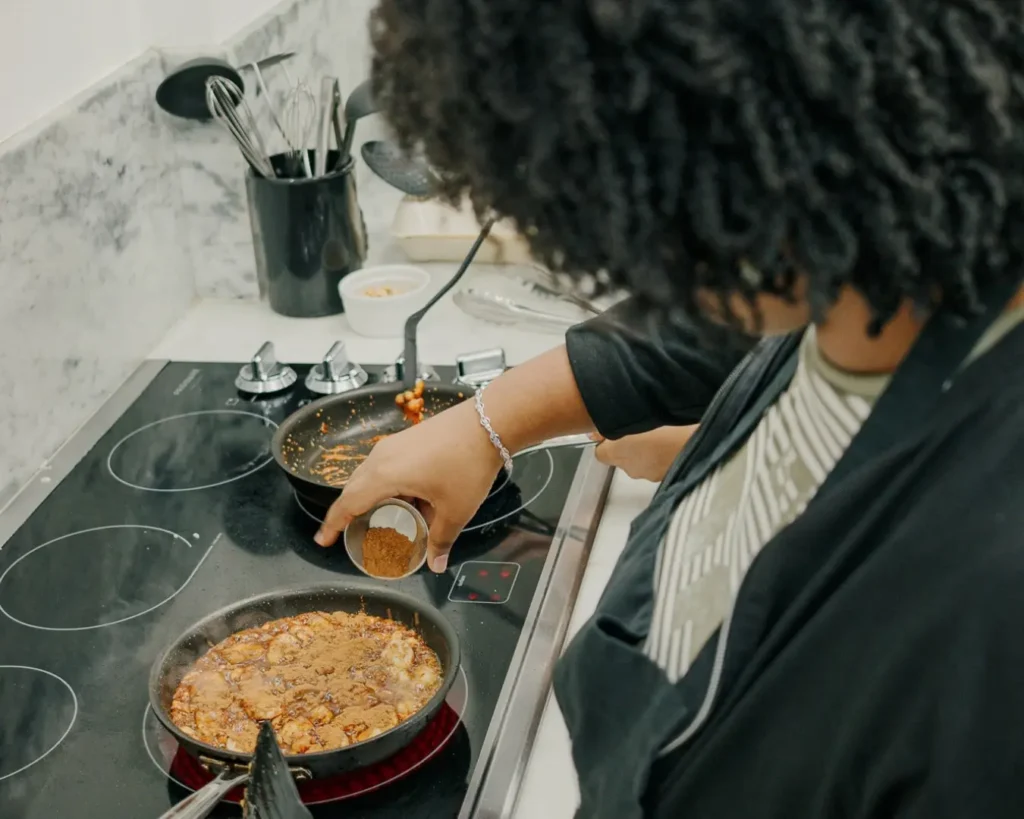
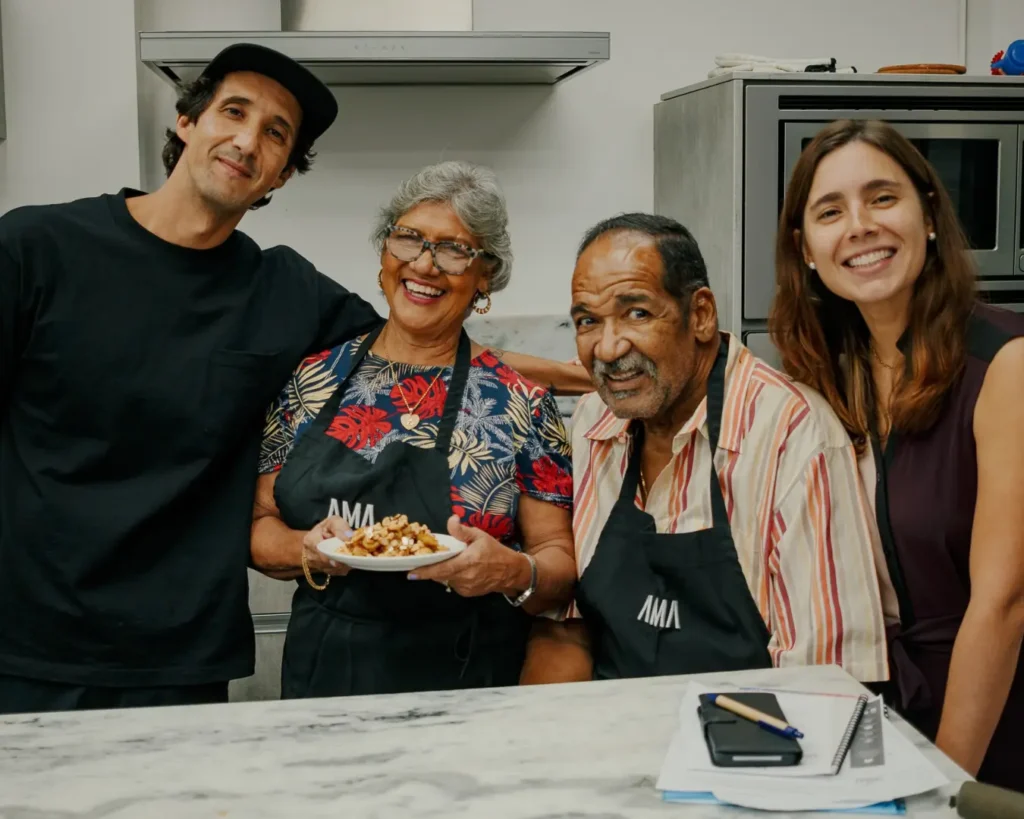
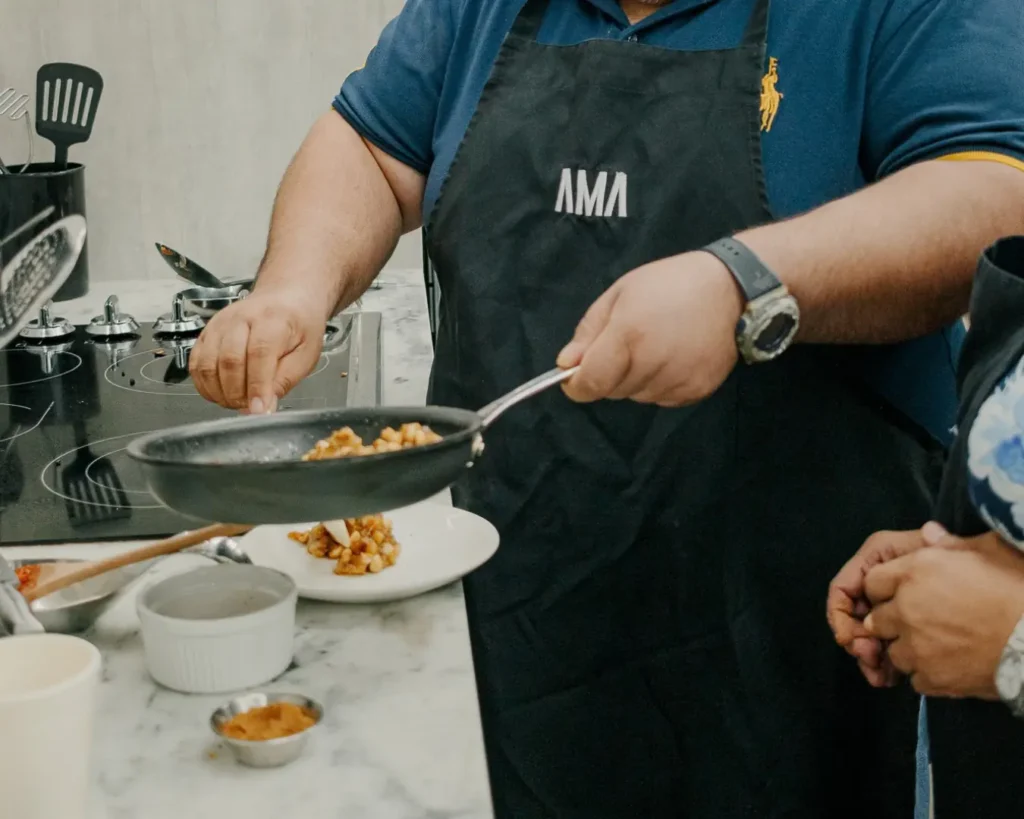
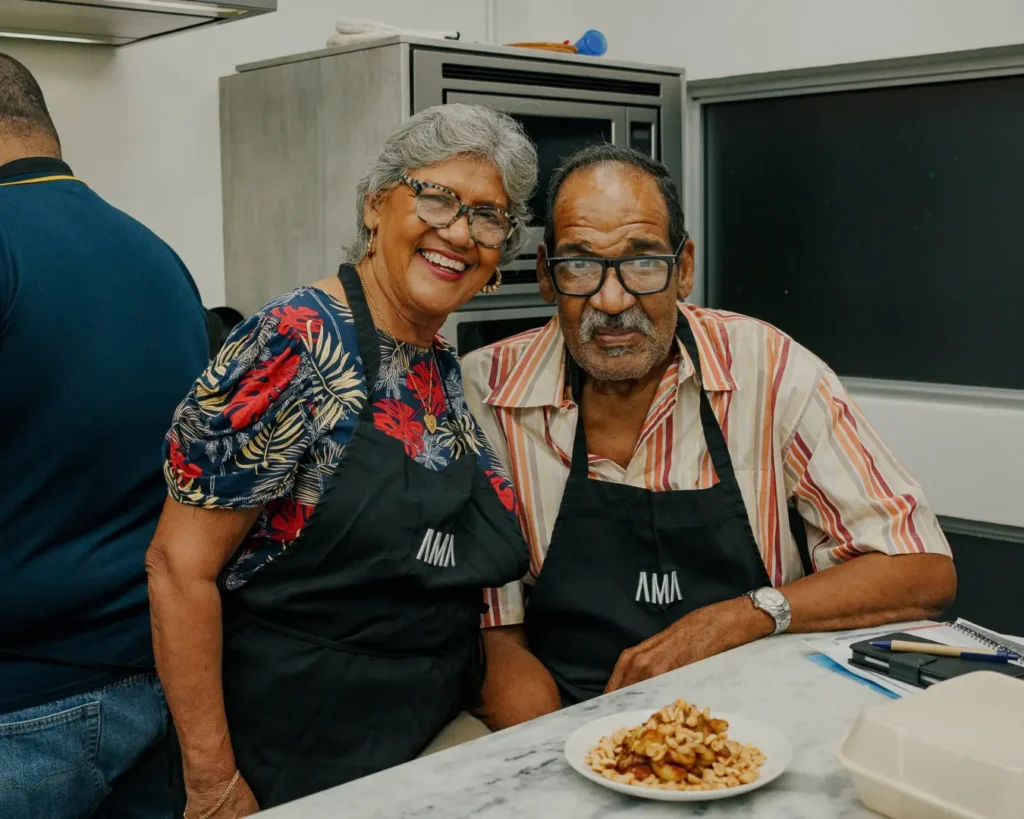
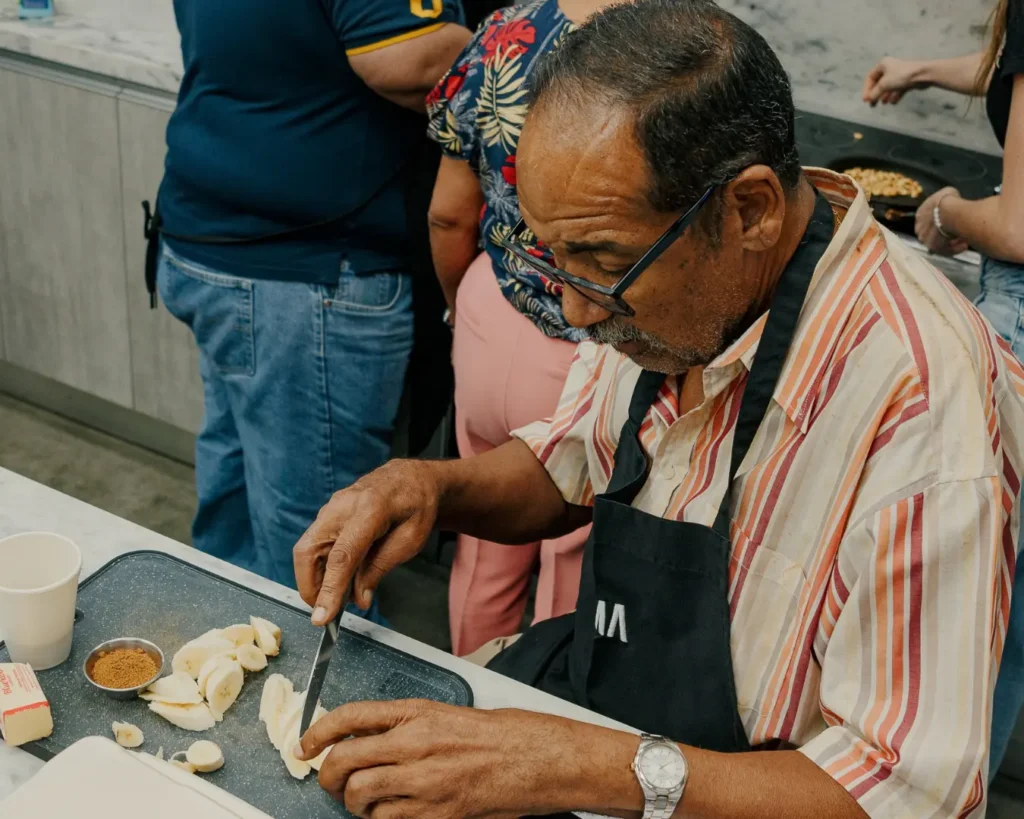
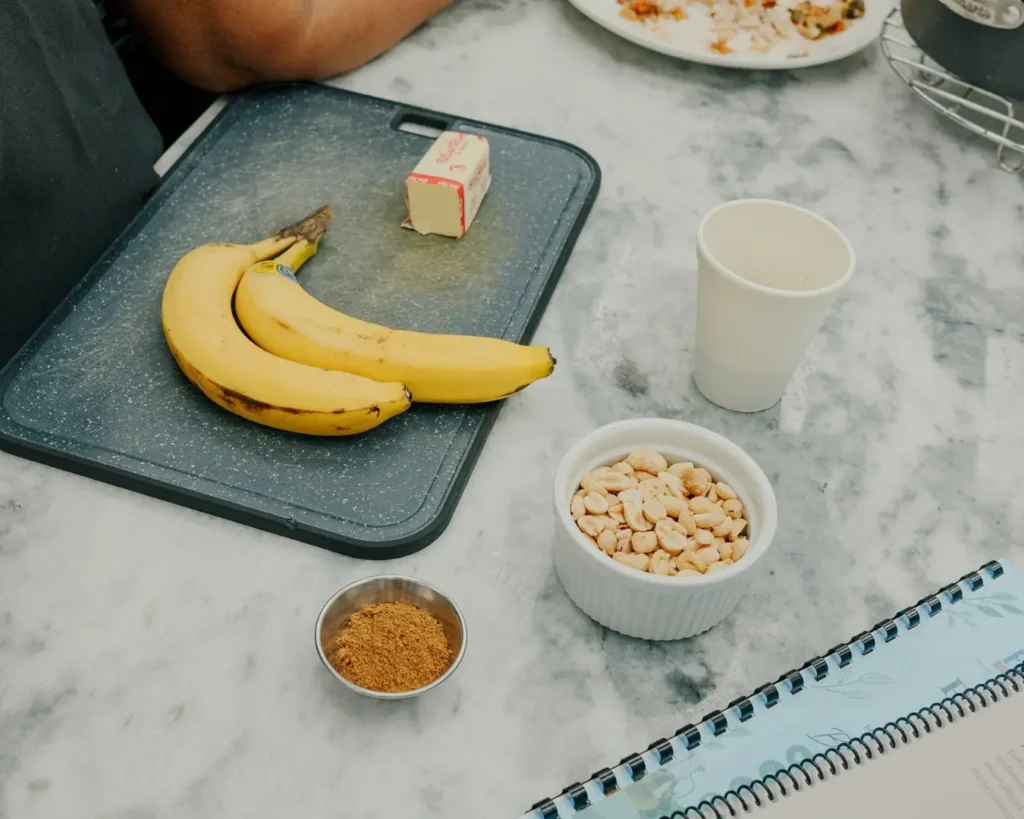
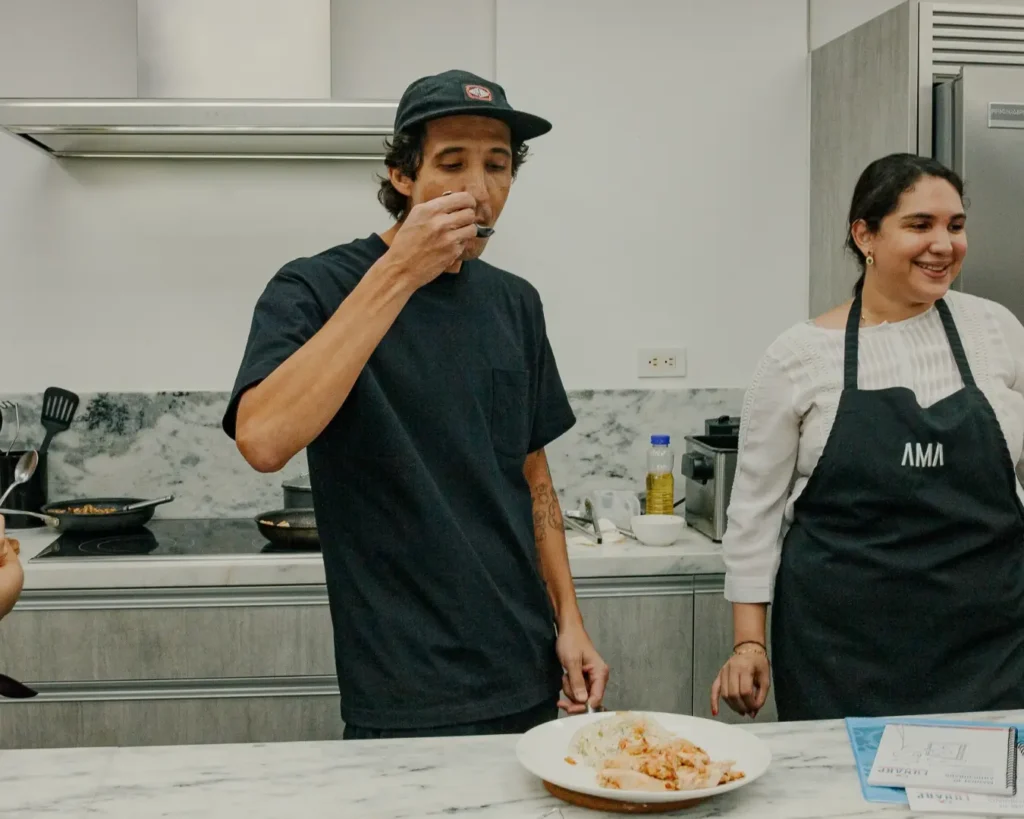
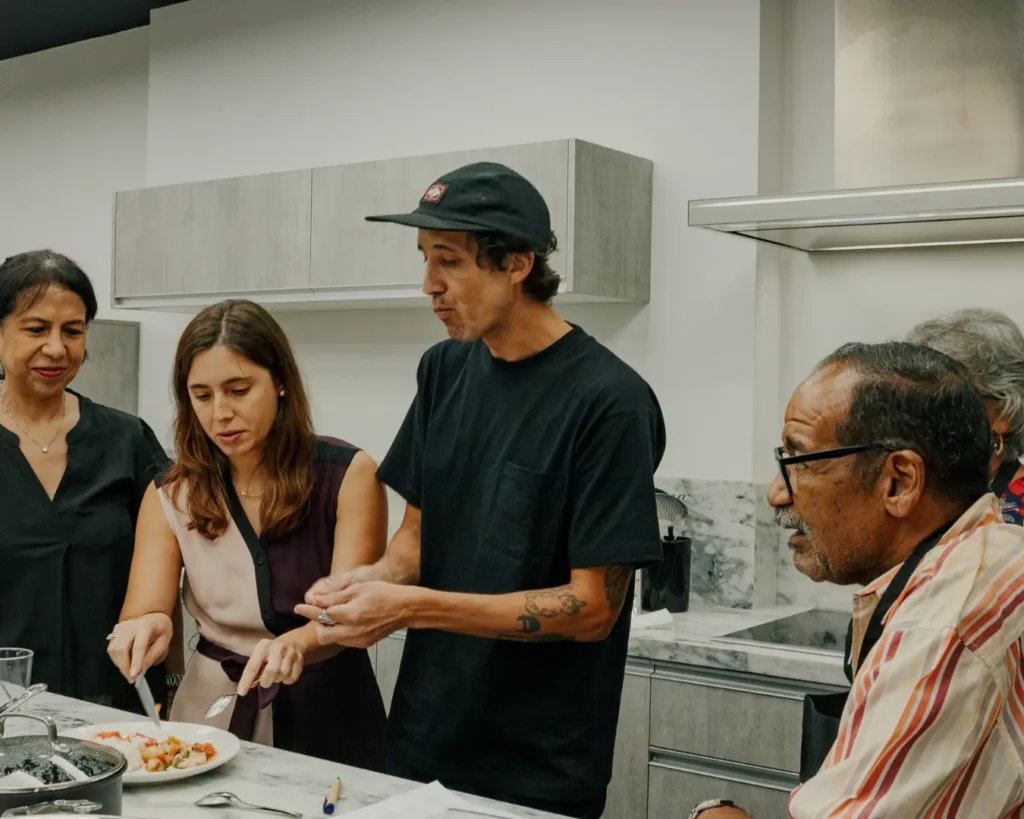
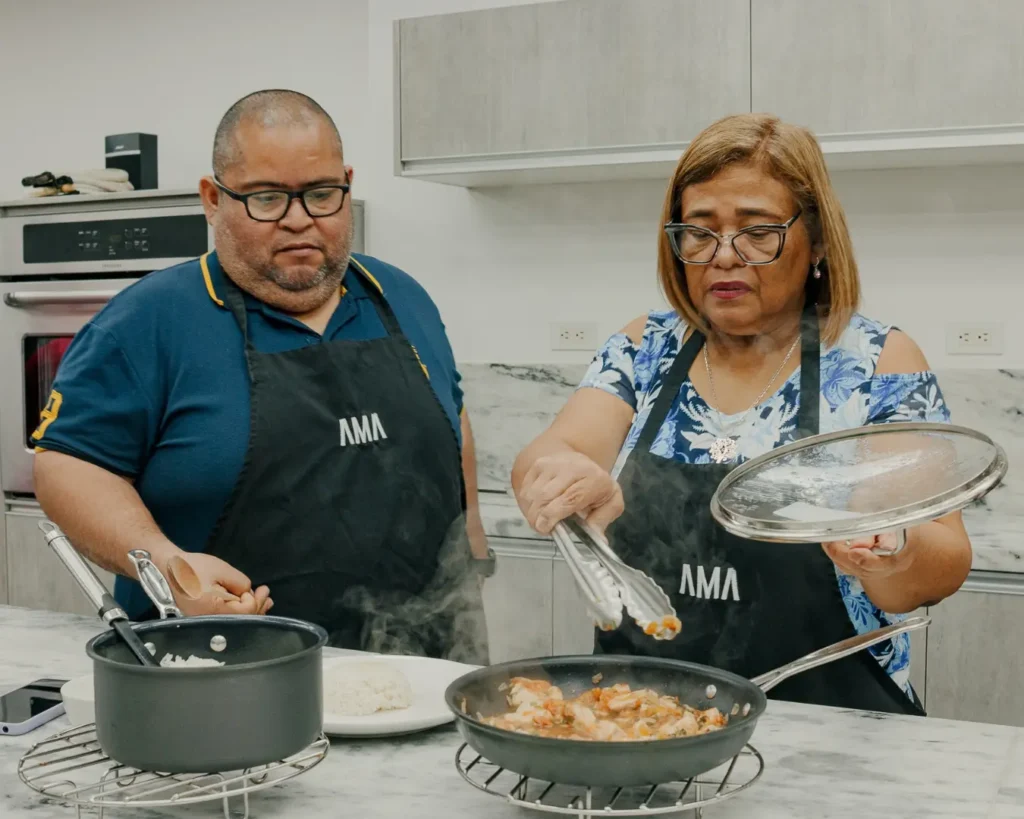
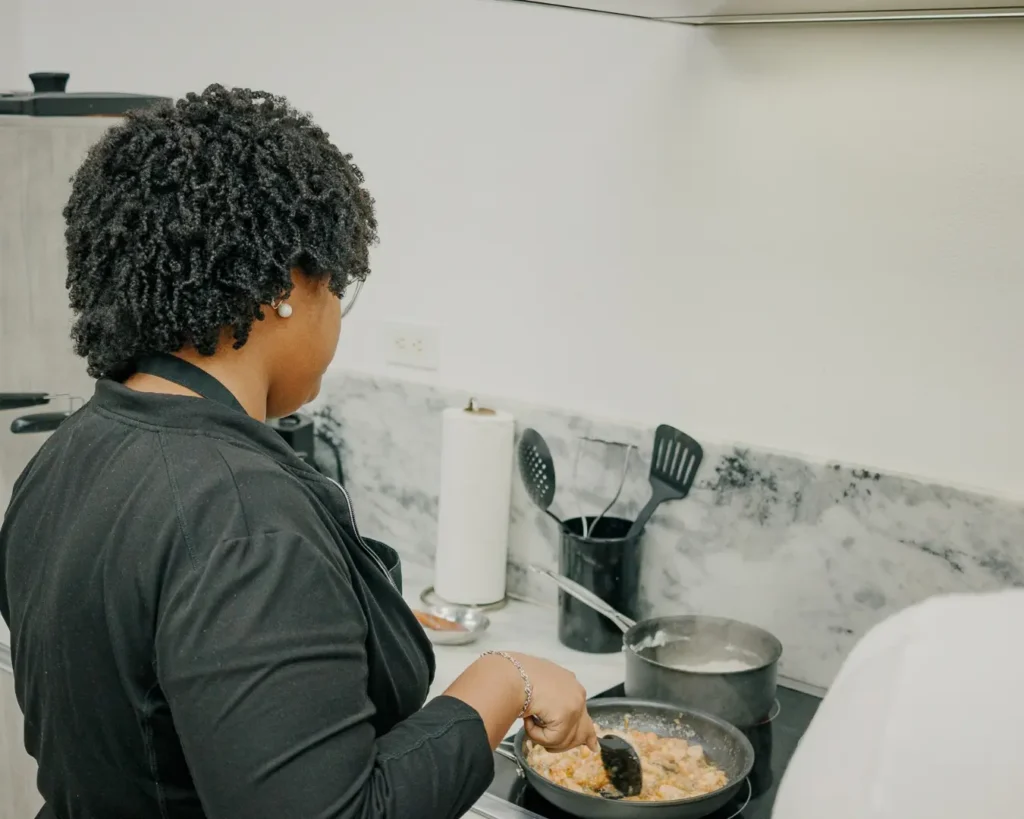
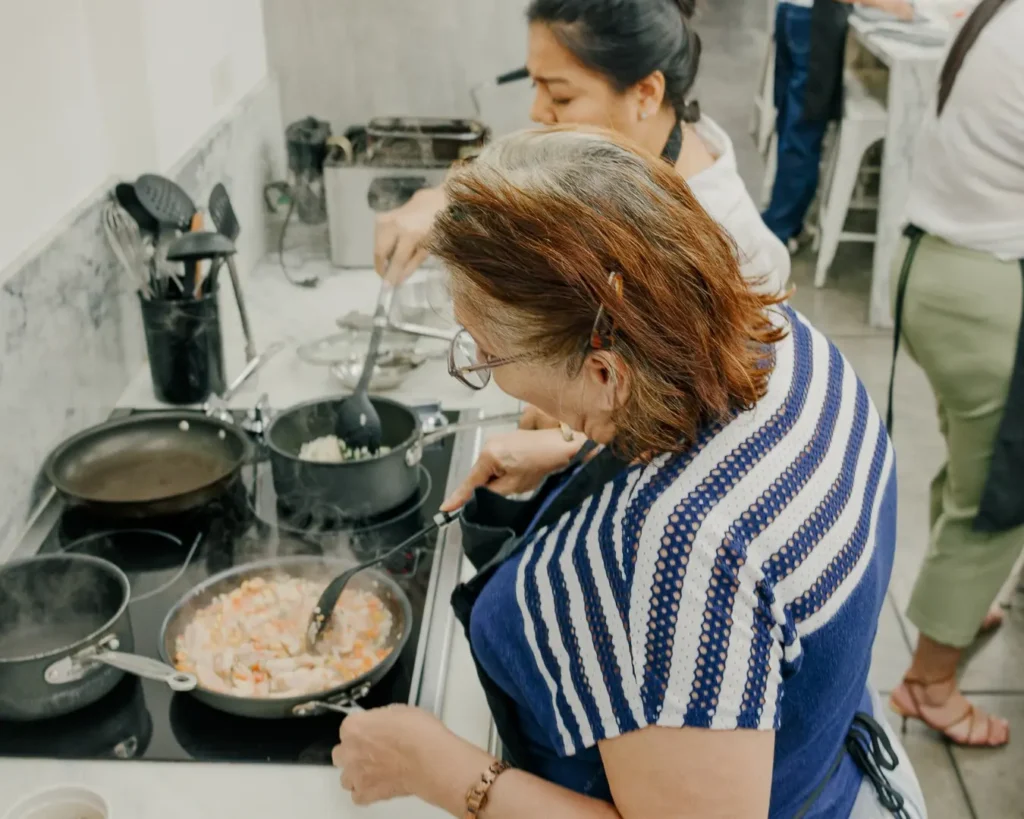
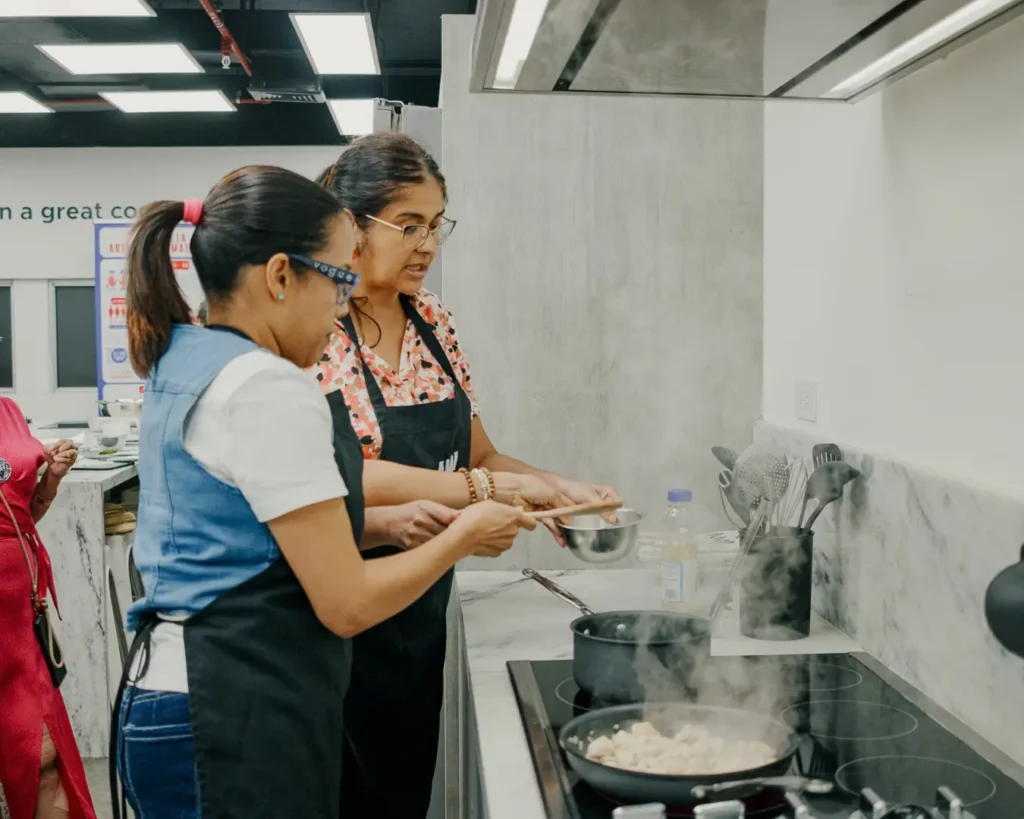
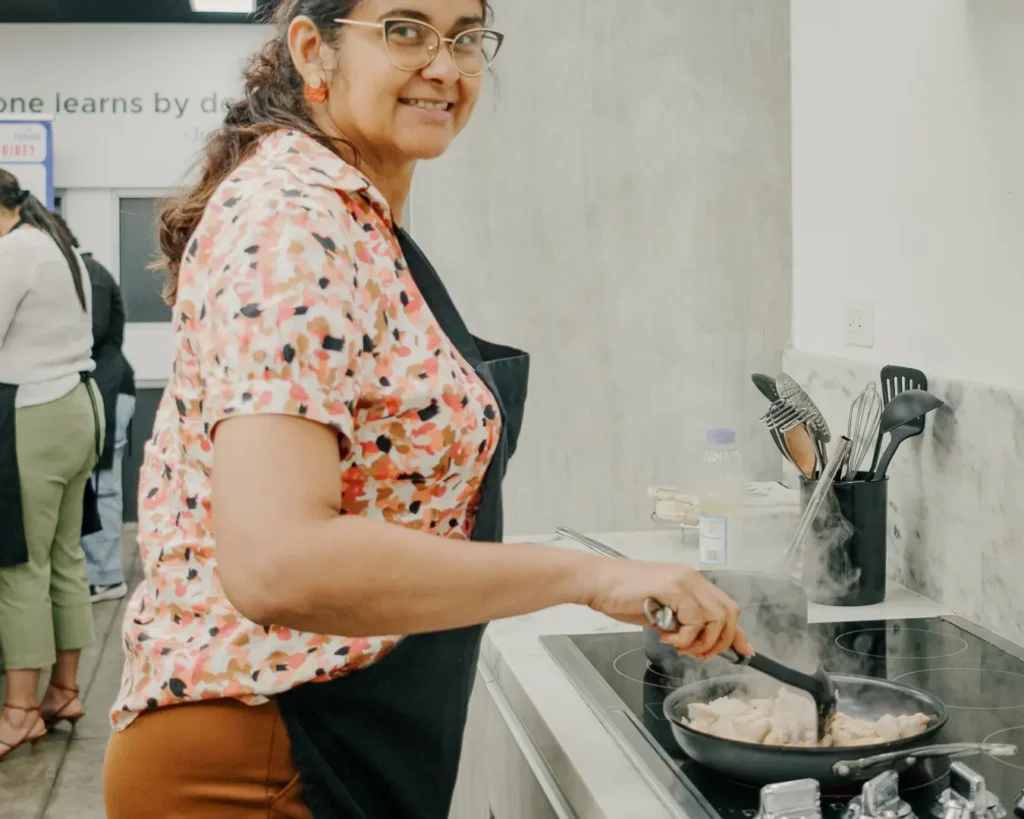
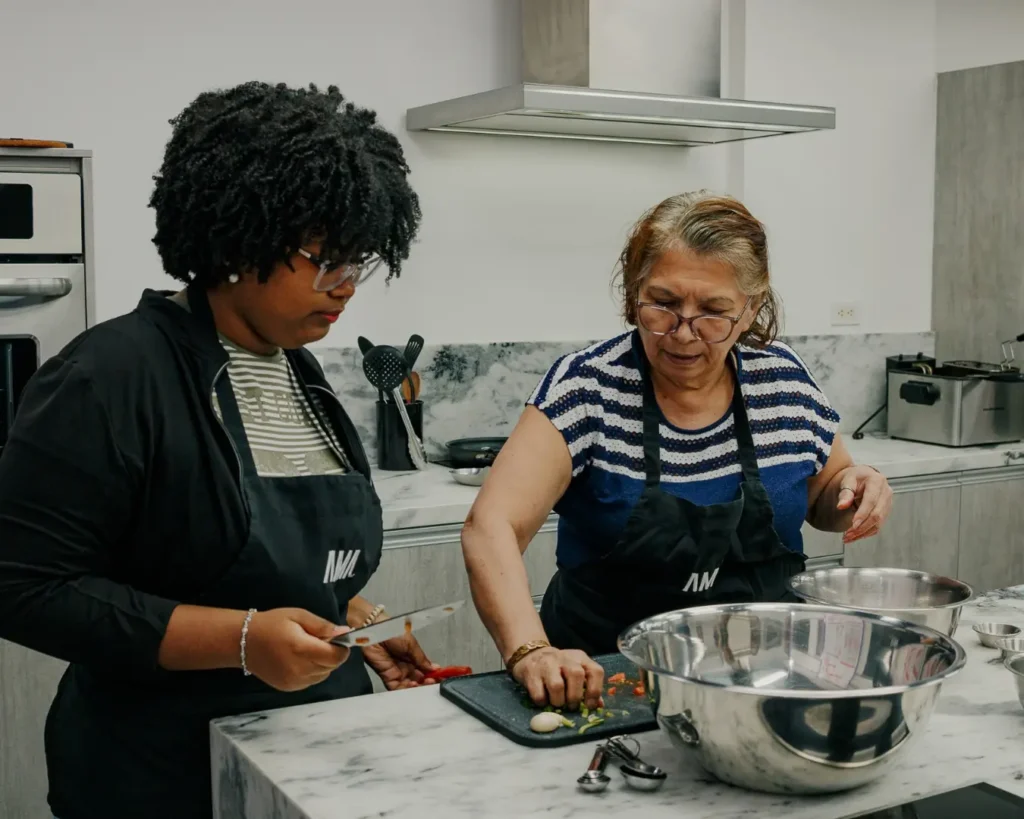
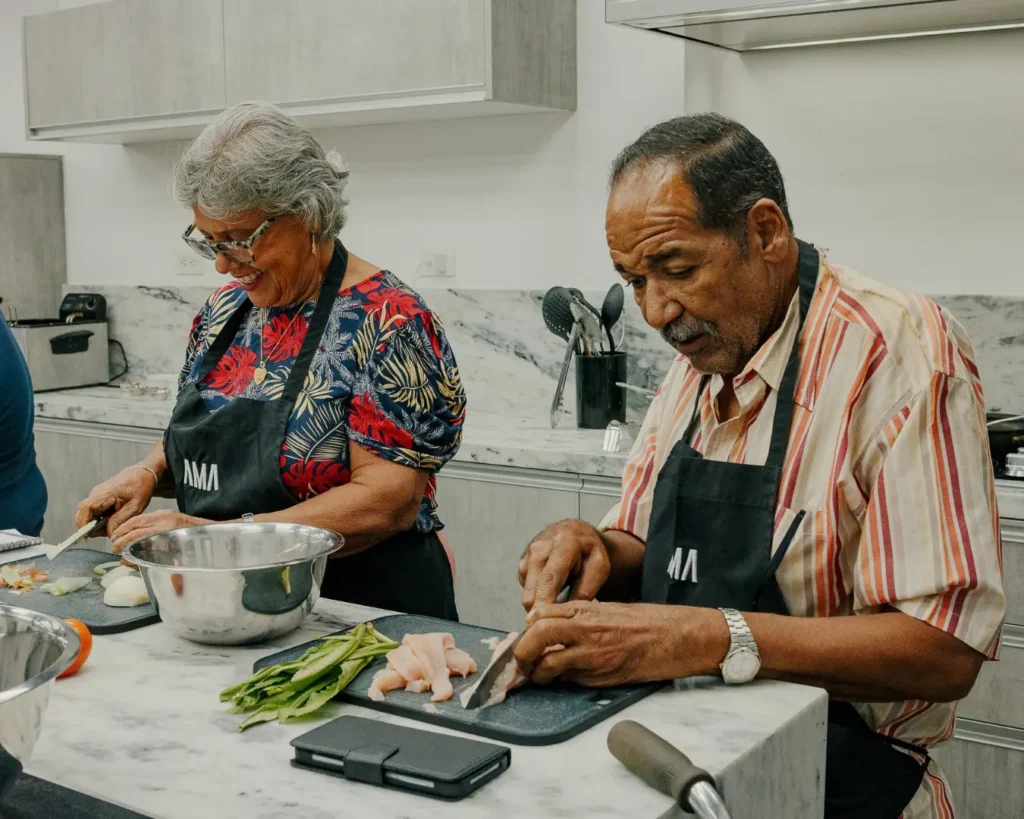
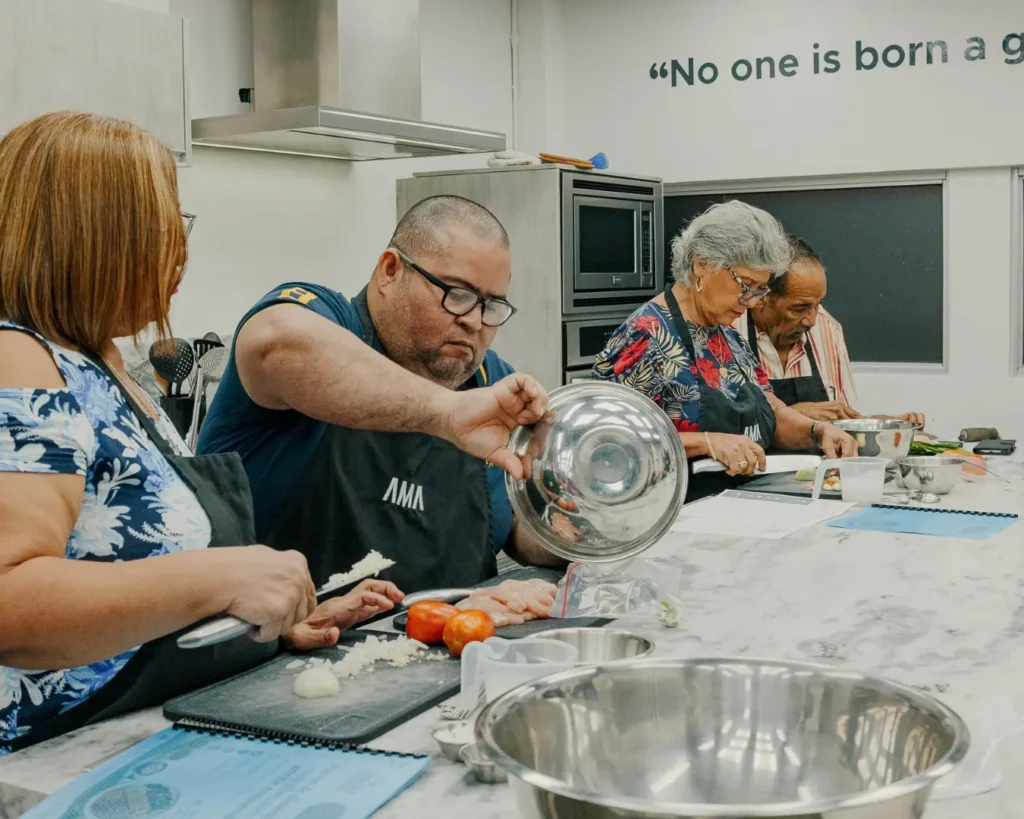
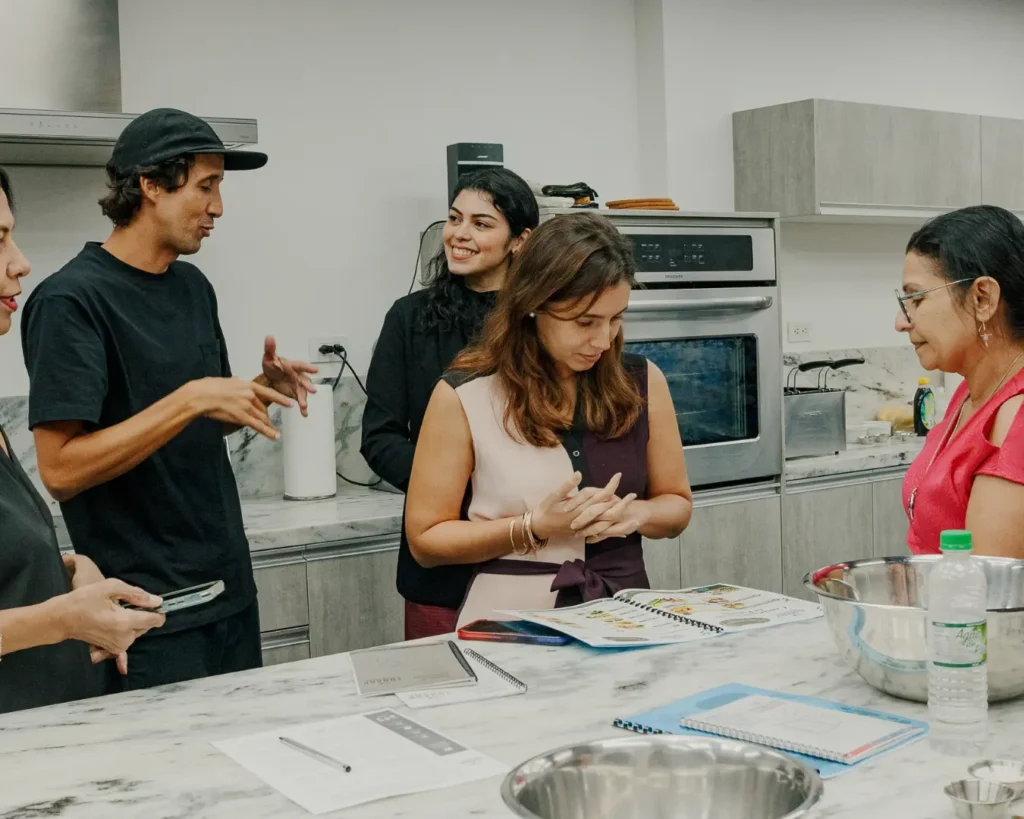
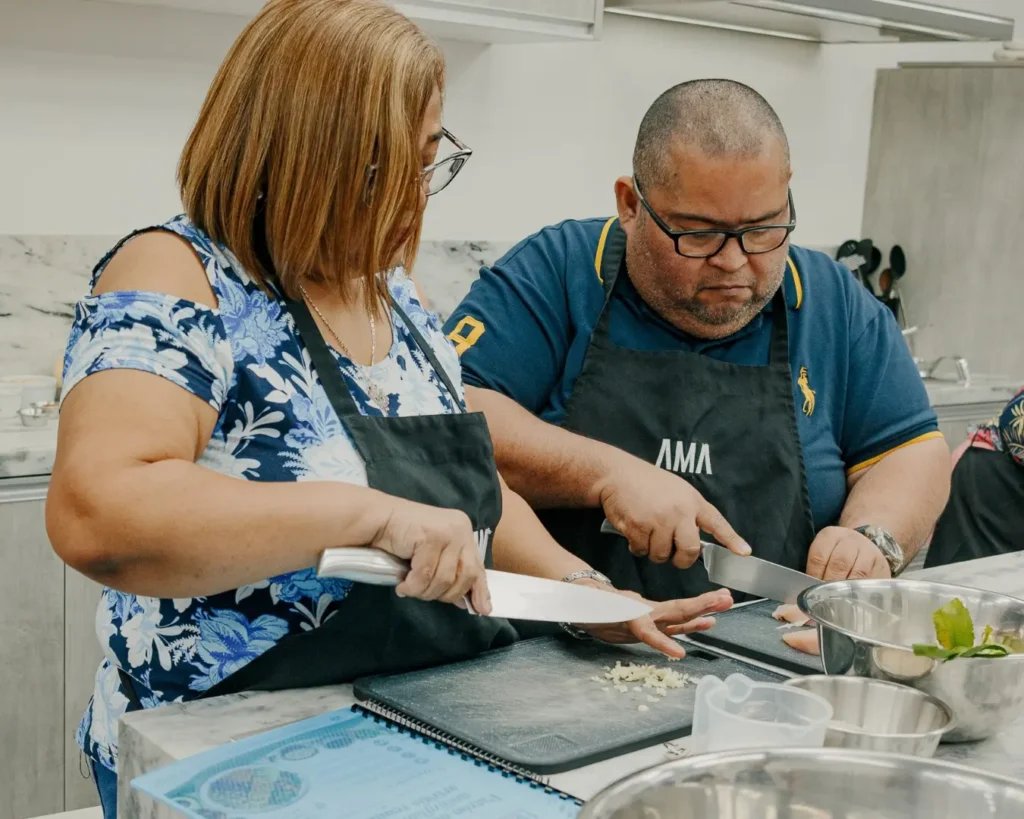
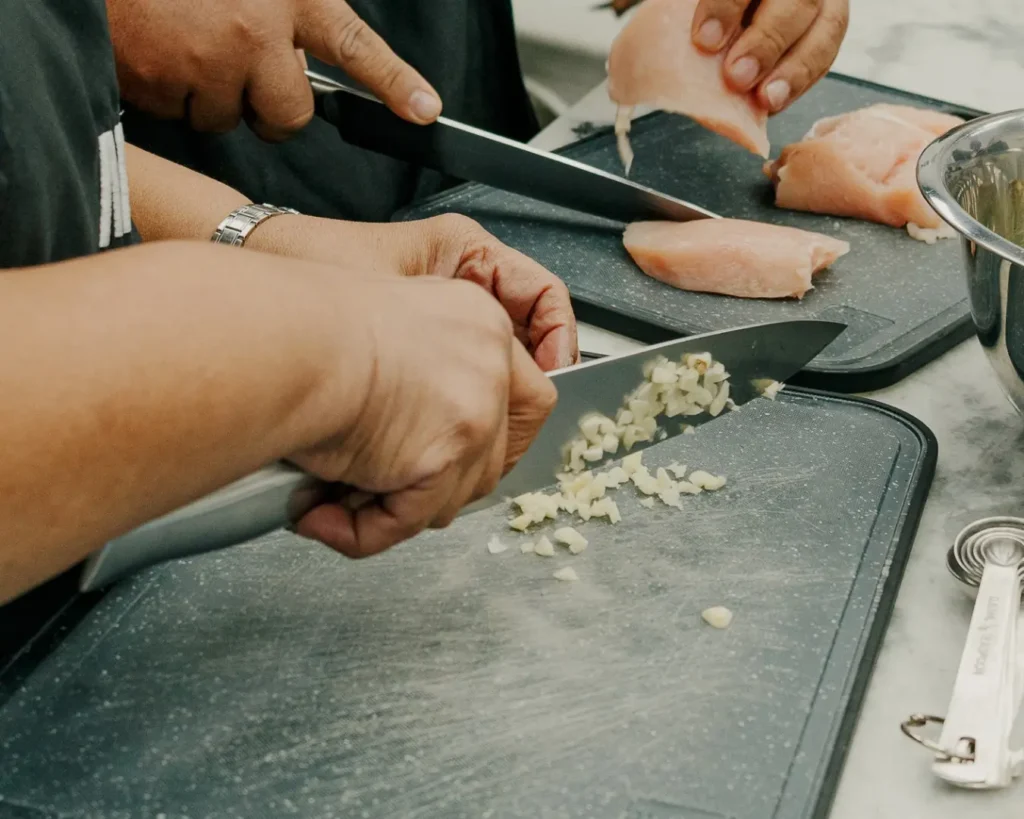
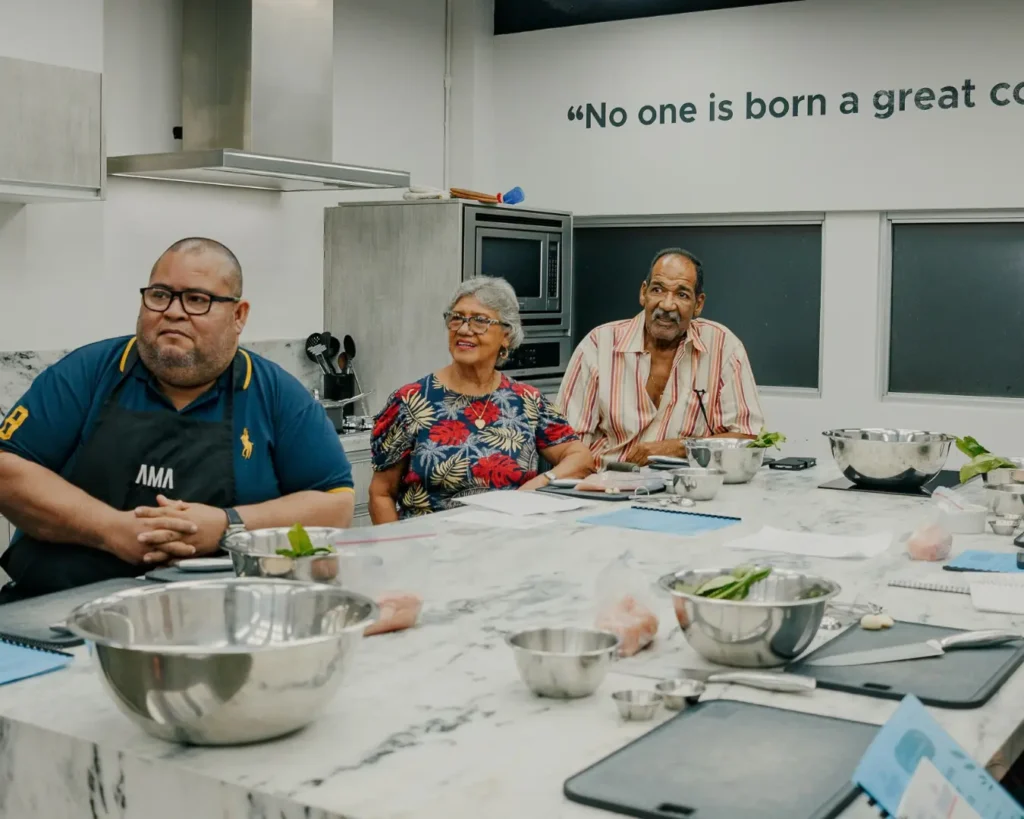
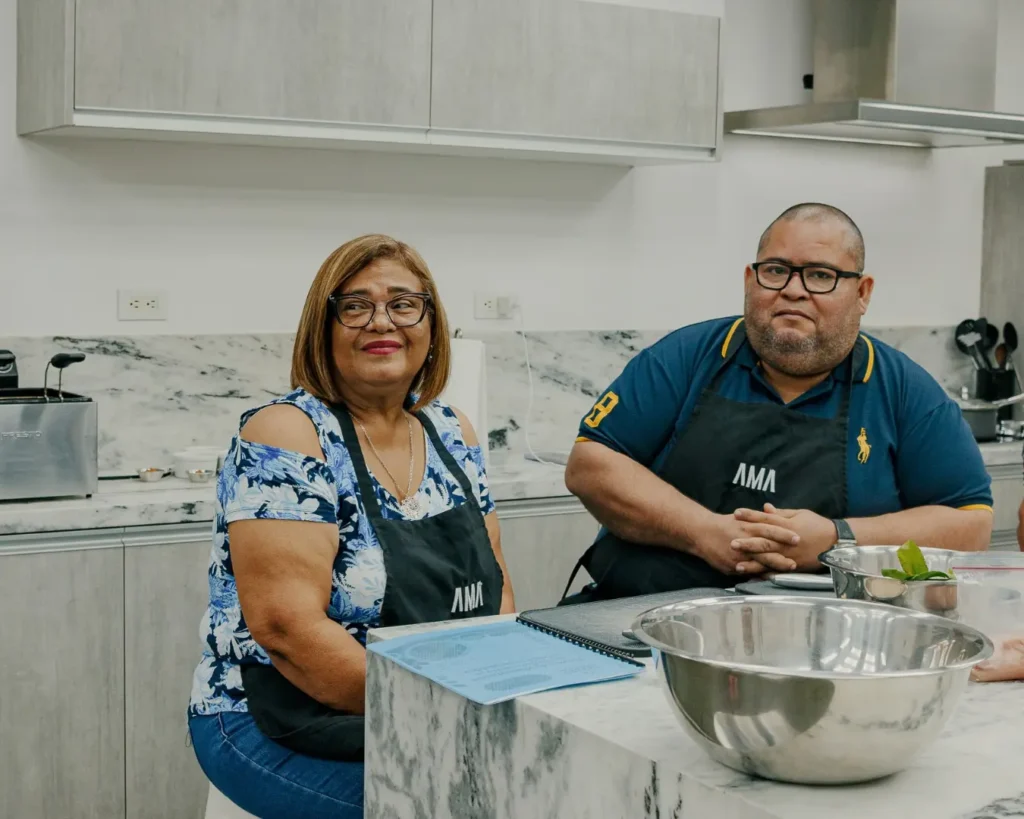
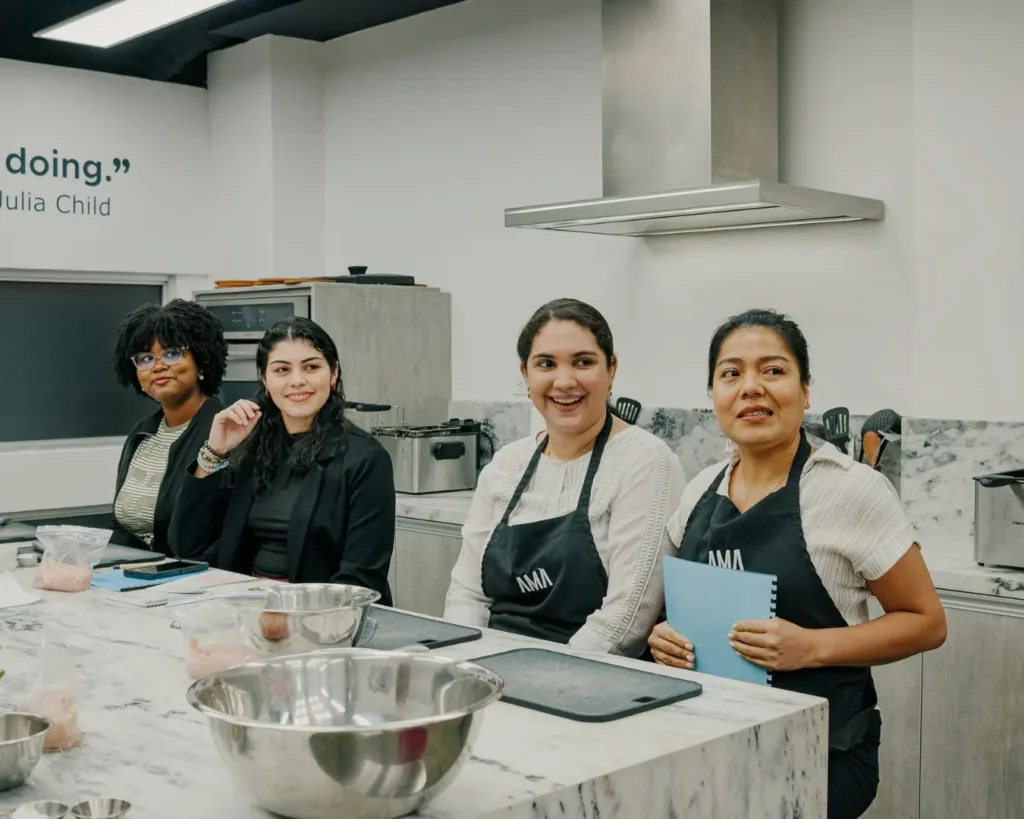
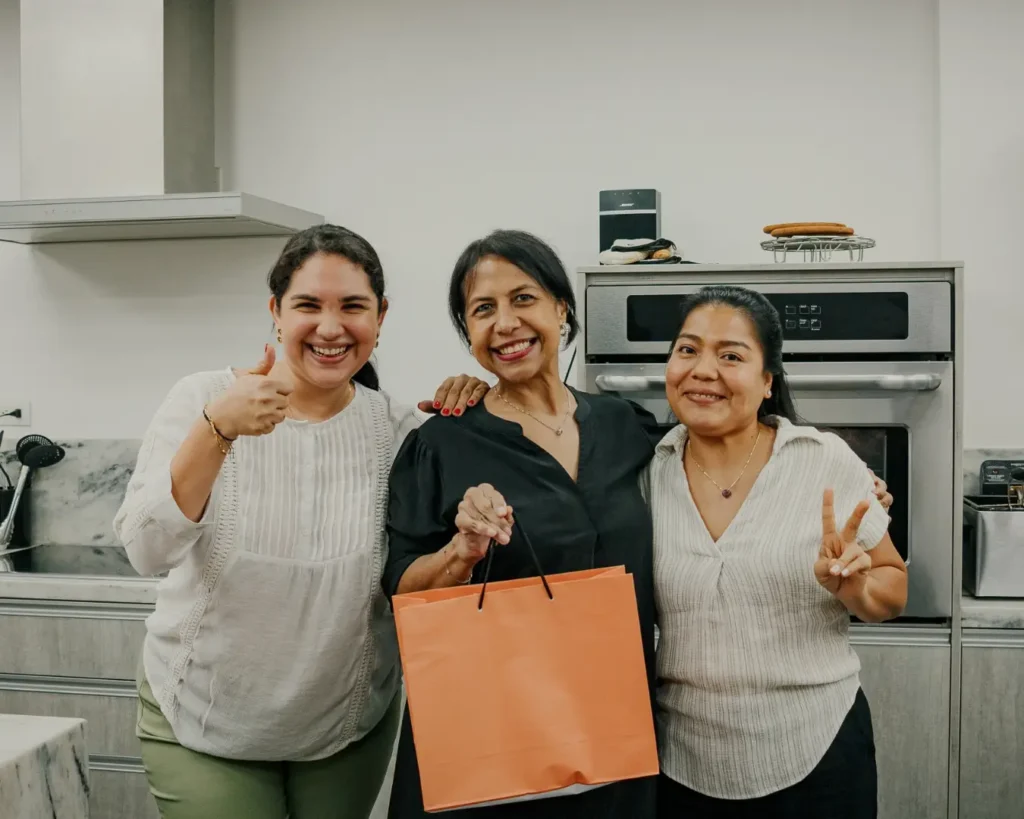
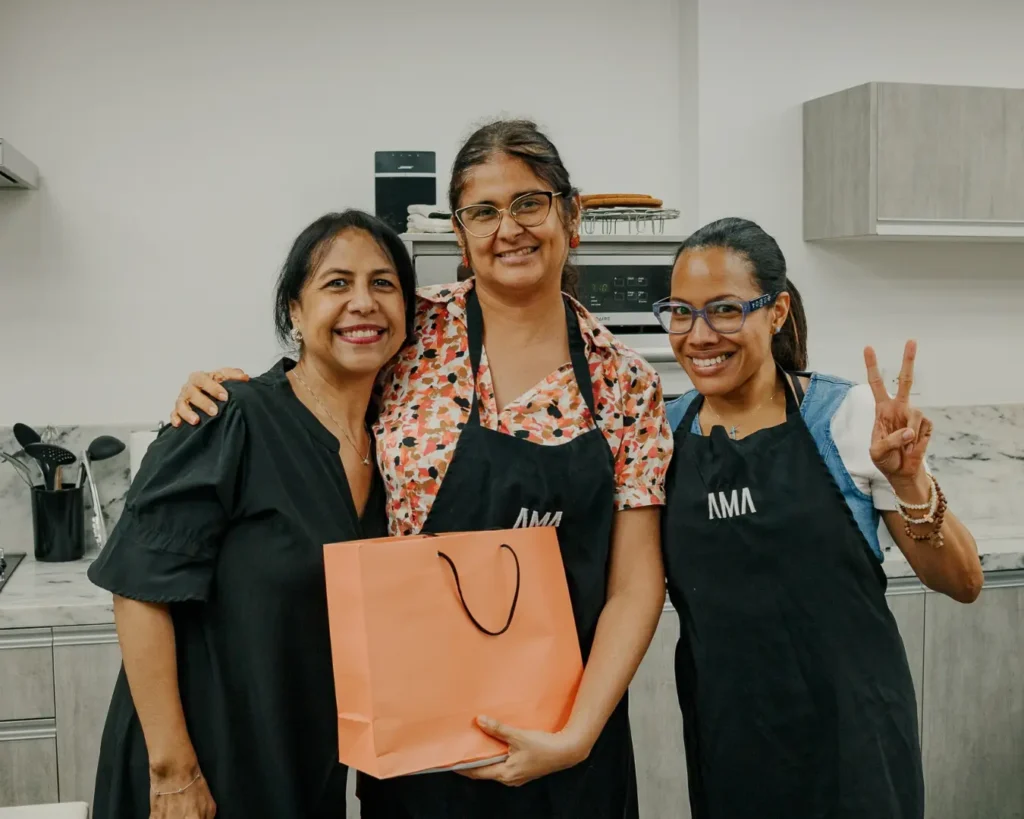
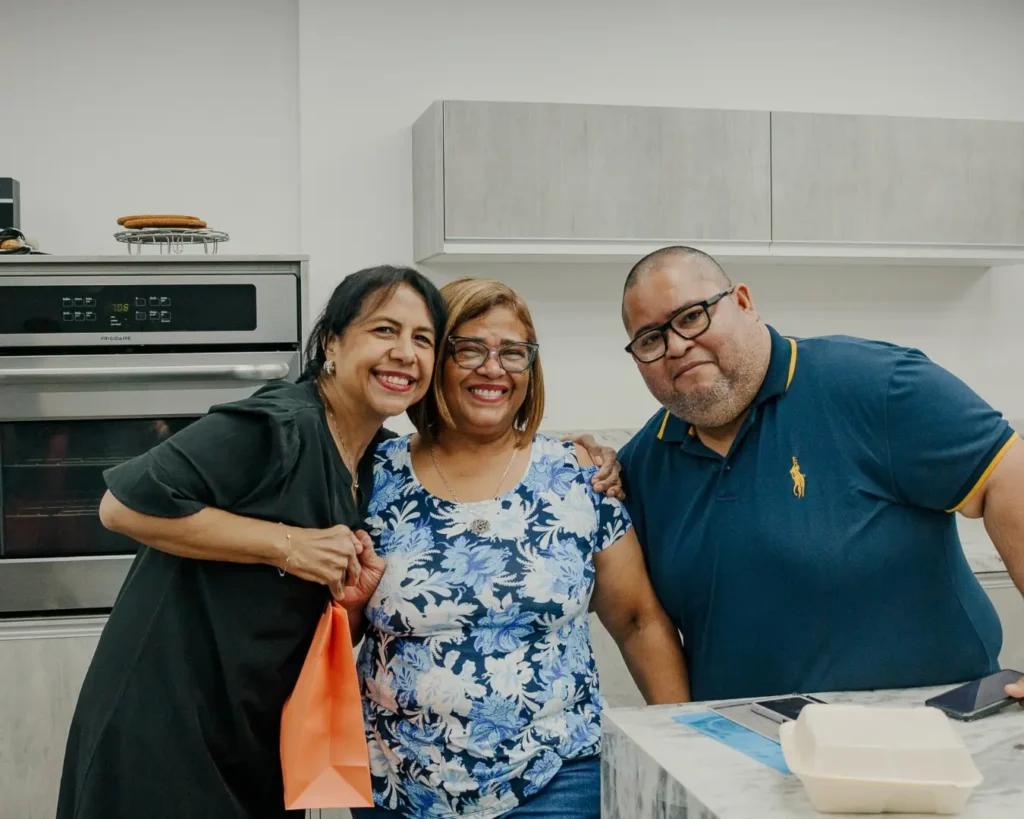
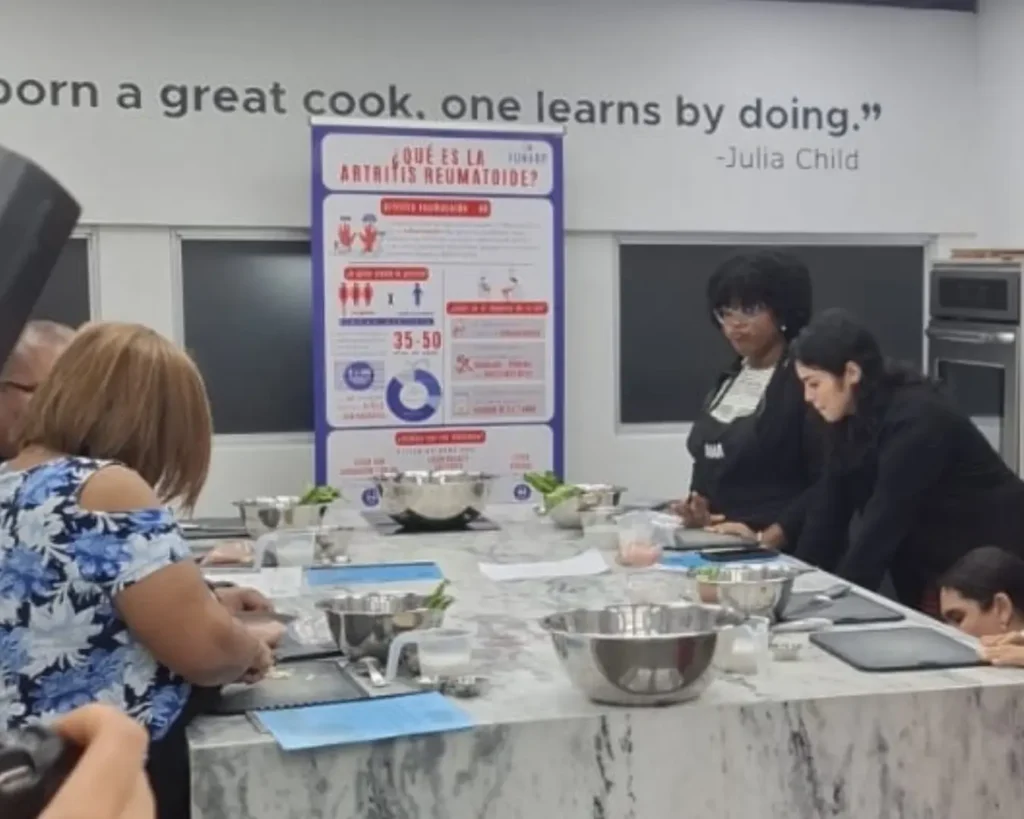
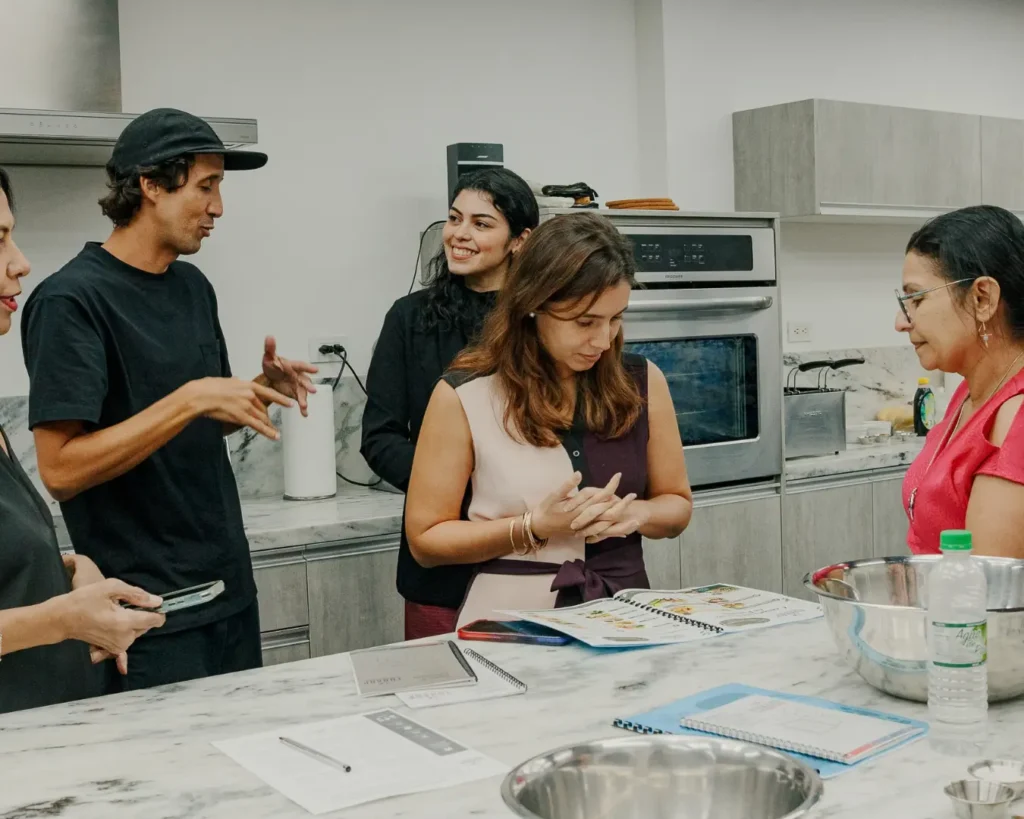
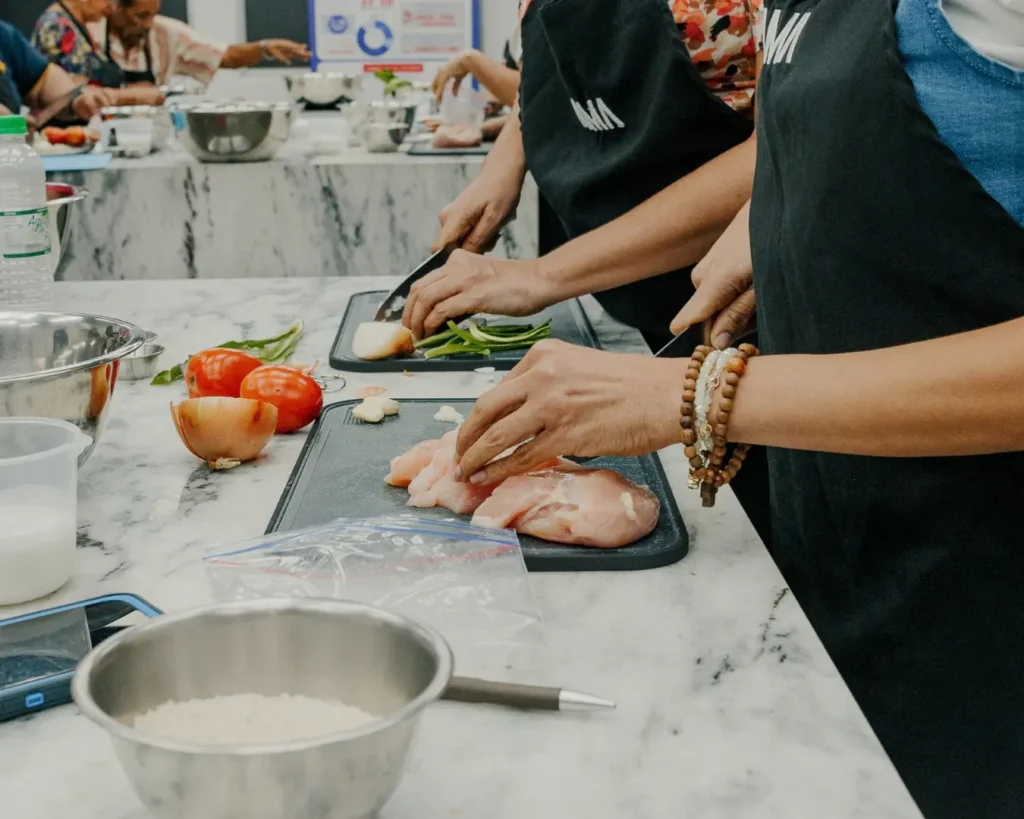
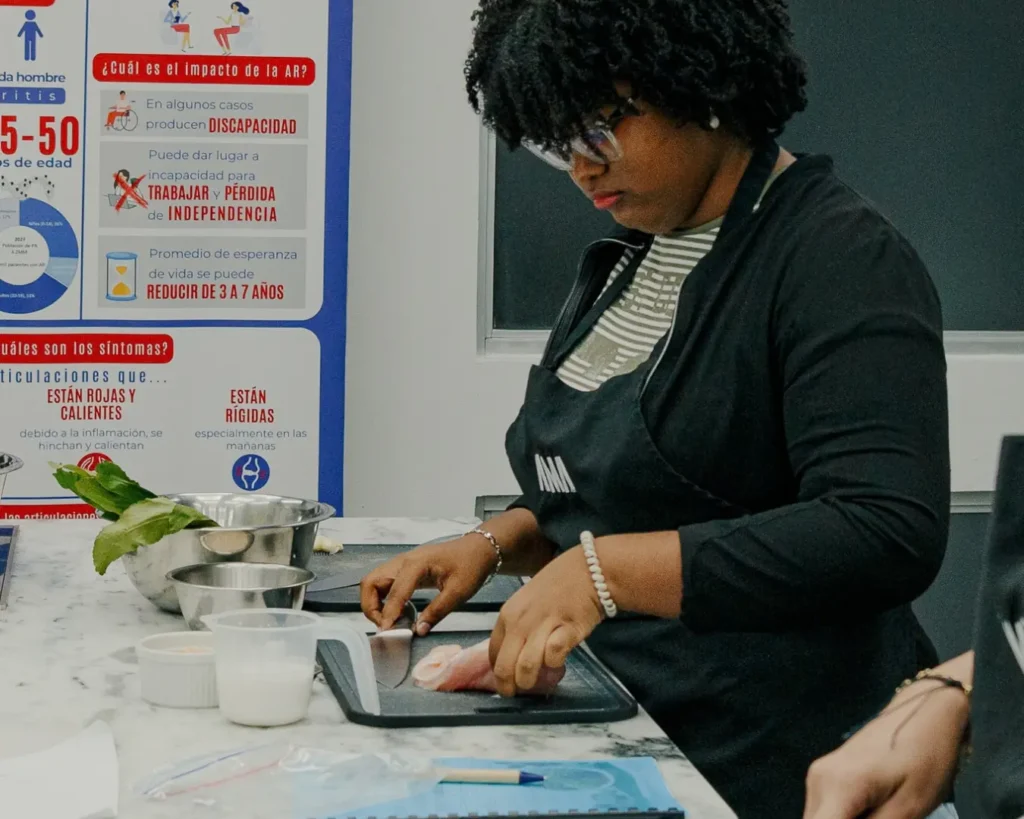
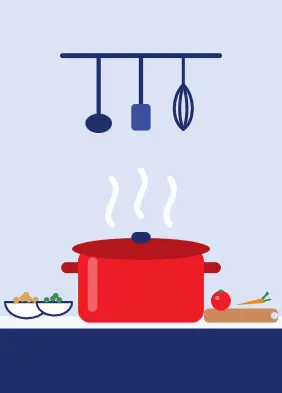
"Chopped"-style cooking contest
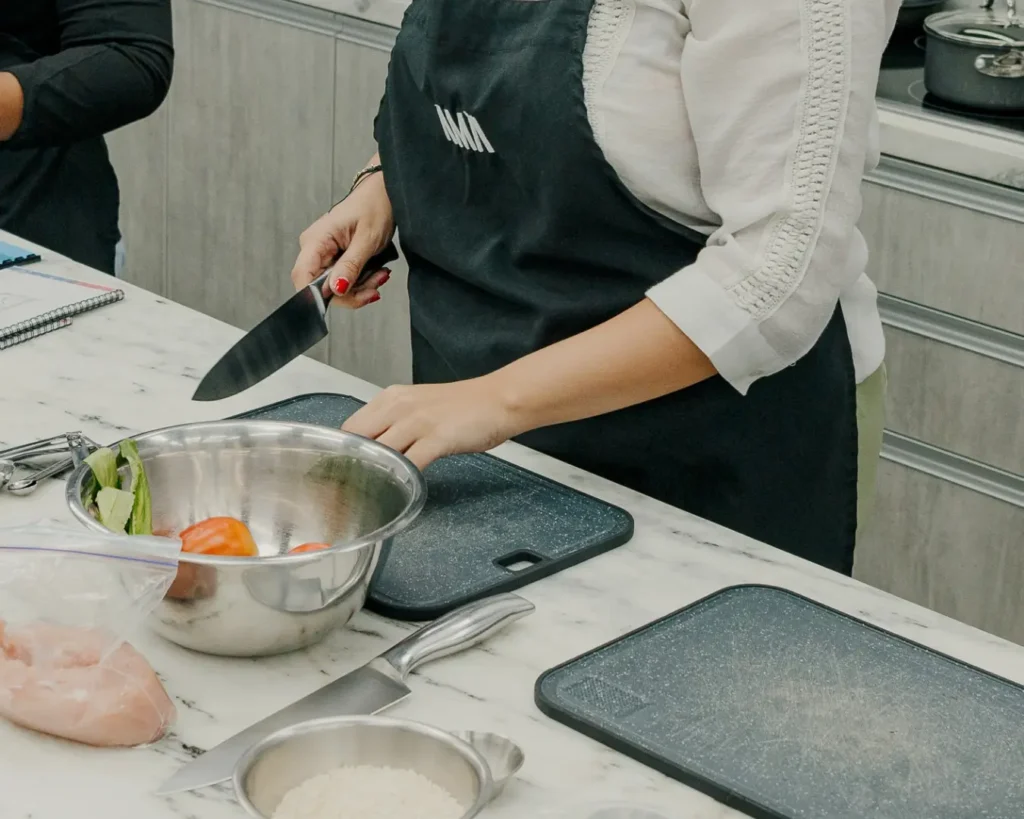
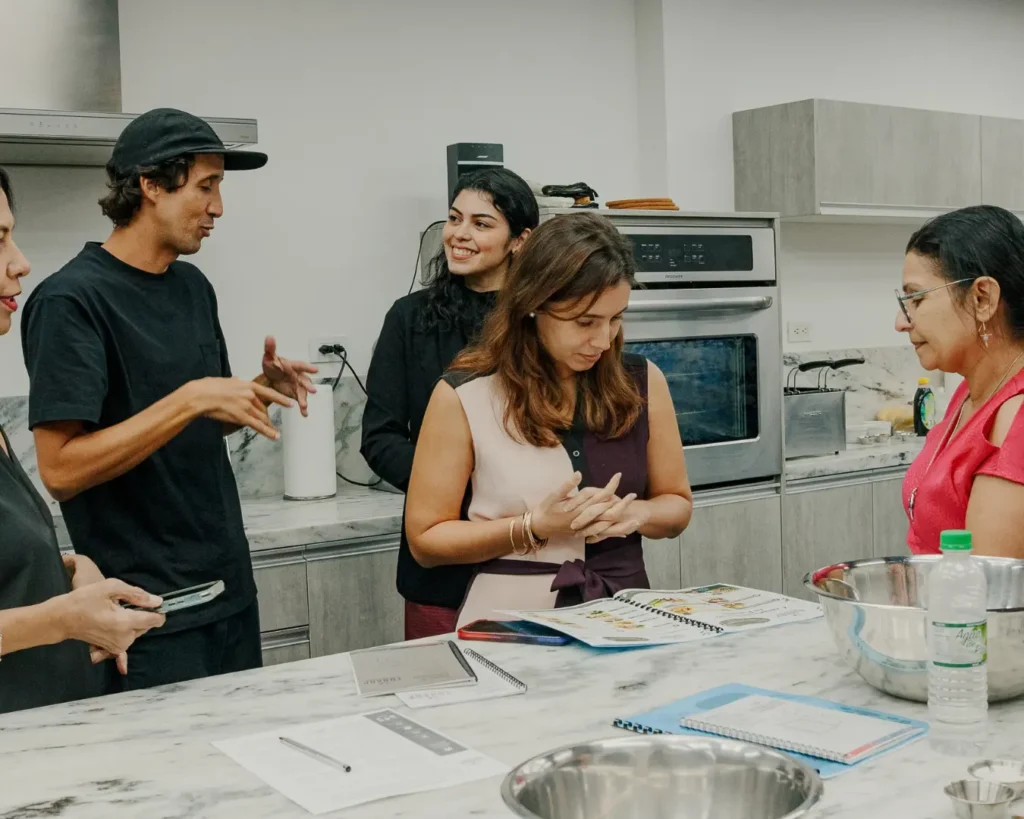
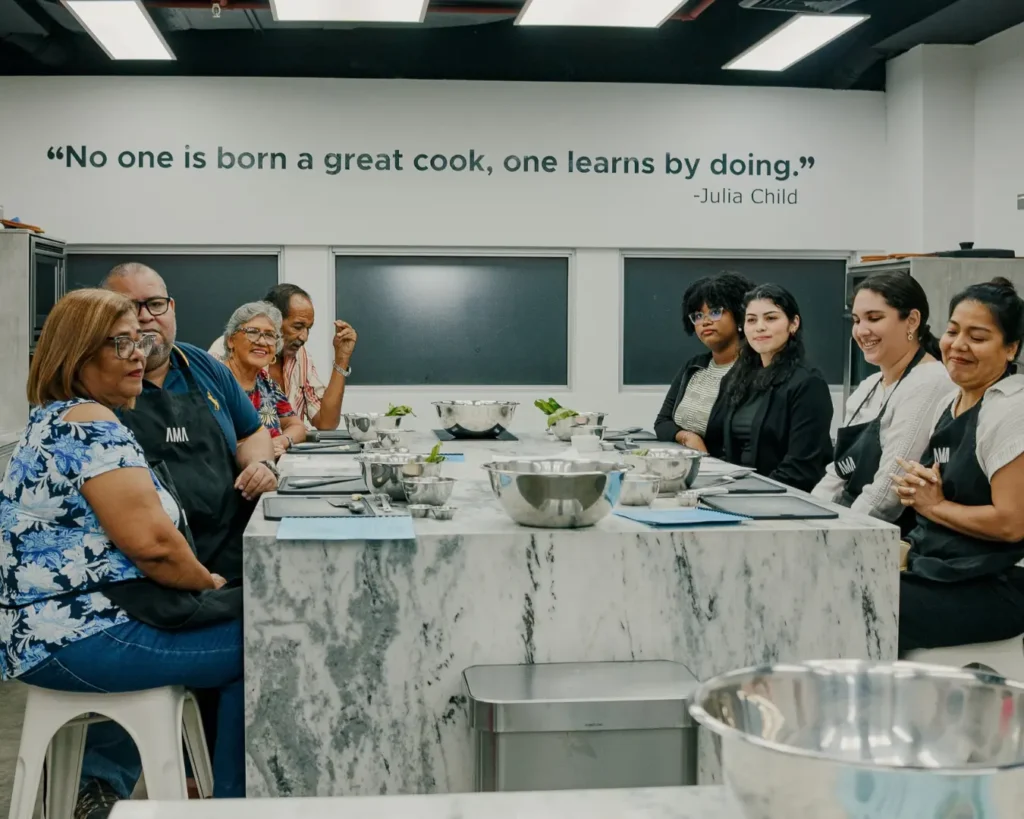
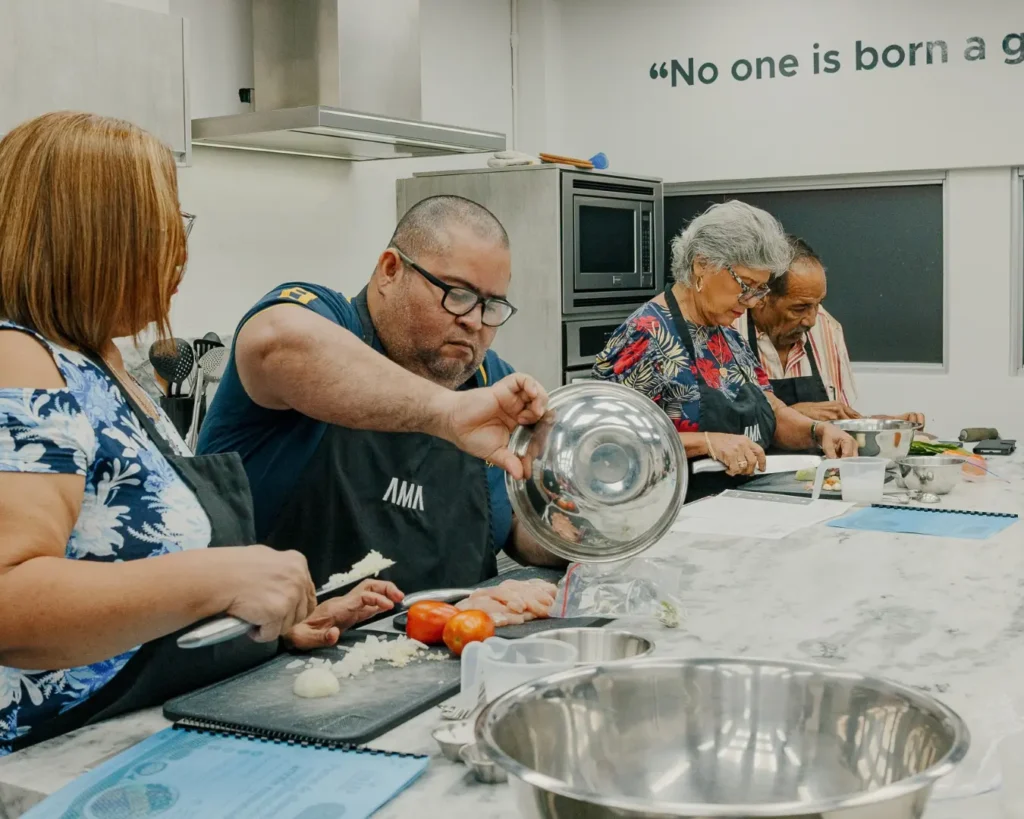
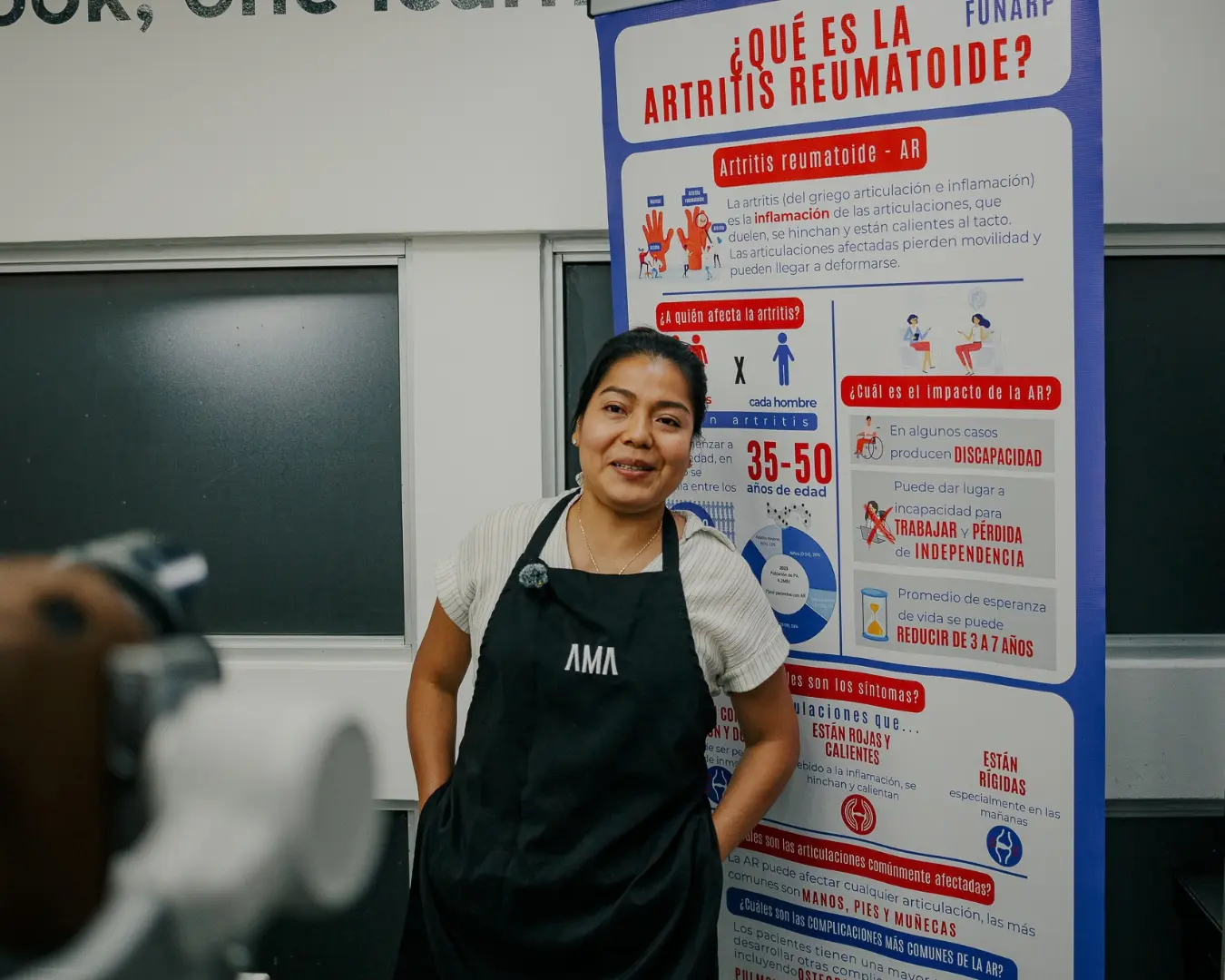
Living with a rheumatic or musculoskeletal disease doesn’t only affect the patient: it also changes the daily routine of the person who cares for them. Everyday meals are a good example, because cooking demands effort from the hands as well as time, energy and organization. As part of World RA Day 2026, “Reach Your Dreams“, FUNARP organized a cooking contest in which patients and caregivers prepared a simple, healthy meal together, learned from professionals and discovered tools that make cooking easier.
The activity was based on the 2021 EULAR lifestyle recommendations (Gwinnutt et al.), which include diet and weight among the habits that can influence the progression of these diseases. Healthy eating complements medical treatment and never replaces it.
Why is it needed?
Mutual support between patient and caregiver matters. In an Australian study of 163 couples, patients with rheumatoid arthritis who reported more supportive dyadic coping had less depression, anxiety and stress, and better relationship quality. Other studies suggest that couple-based psychological interventions can improve quality of life and satisfaction with communication. Finally, we found a scientific editorial arguing that managing a chronic disease is a collaborative experience between patients and informal caregivers.
Cooking can be a practical way to strengthen that support. In a pilot with women with RA, the group that attended cooking classes for 6 weeks improved compared with controls in pain, morning stiffness and global assessment, although only patients took part, not their caregivers.
In addition, a qualitative study of 8 couples described the relational components of cooking together (relationship skills, emotional connection and language), and another proposes that cooking and eating together can improve family well-being.
How did we do it?
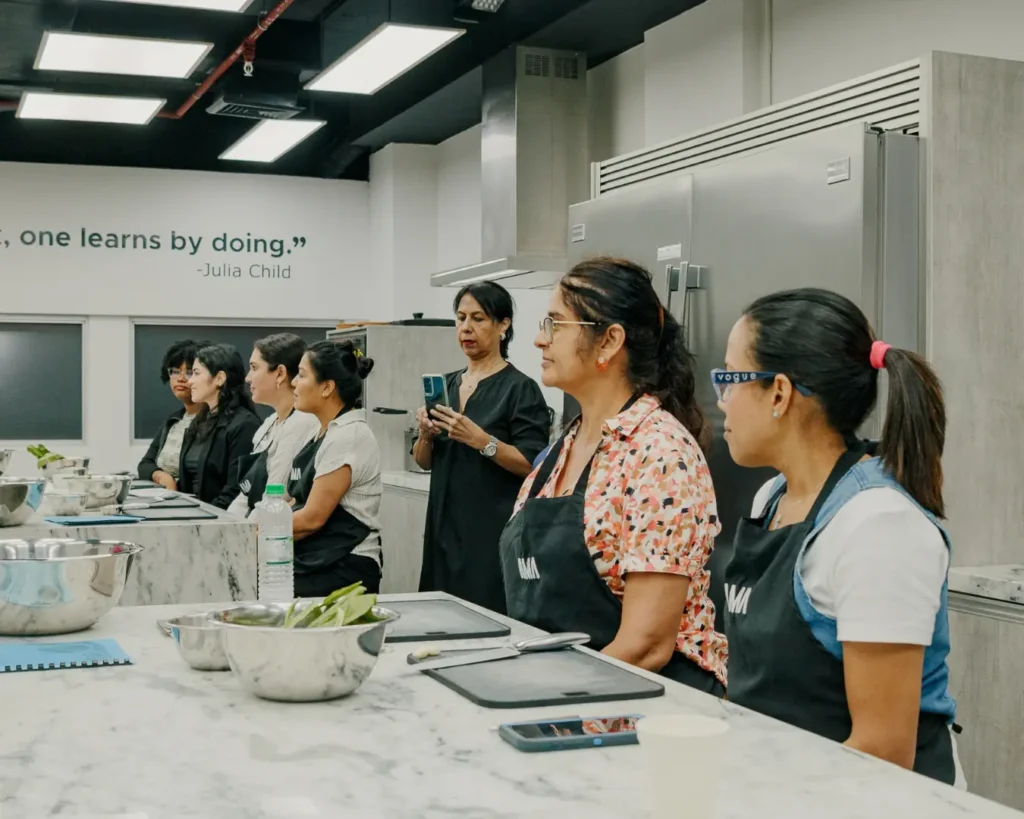
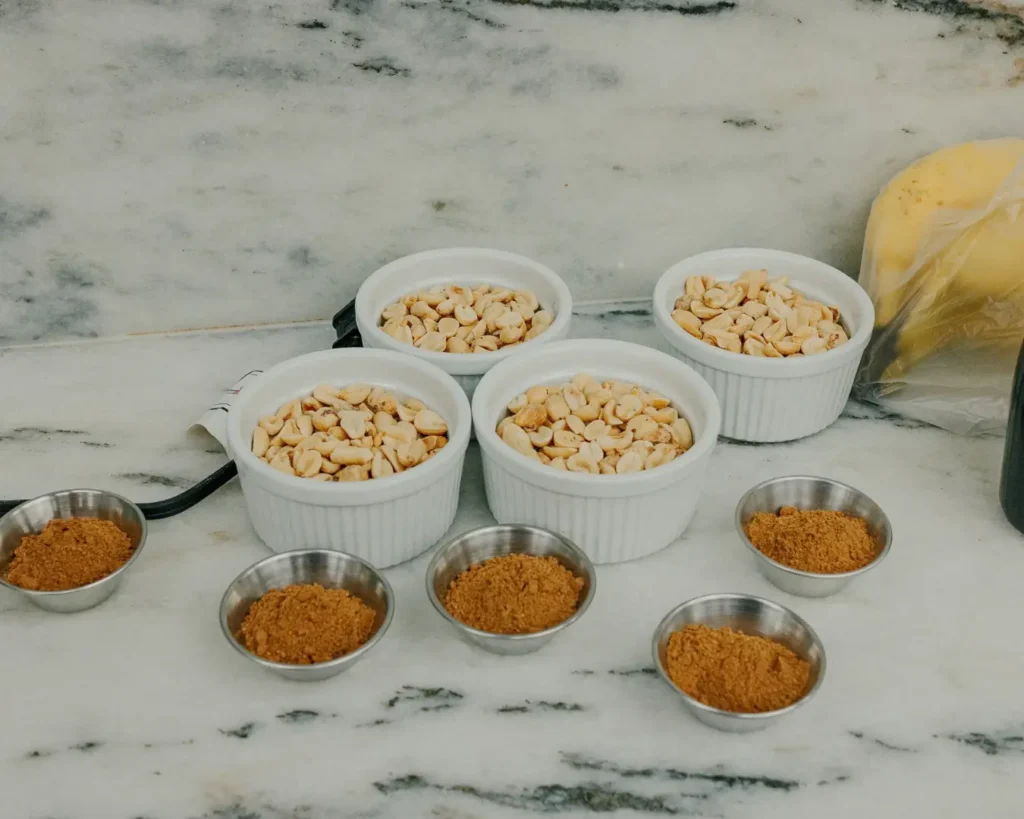
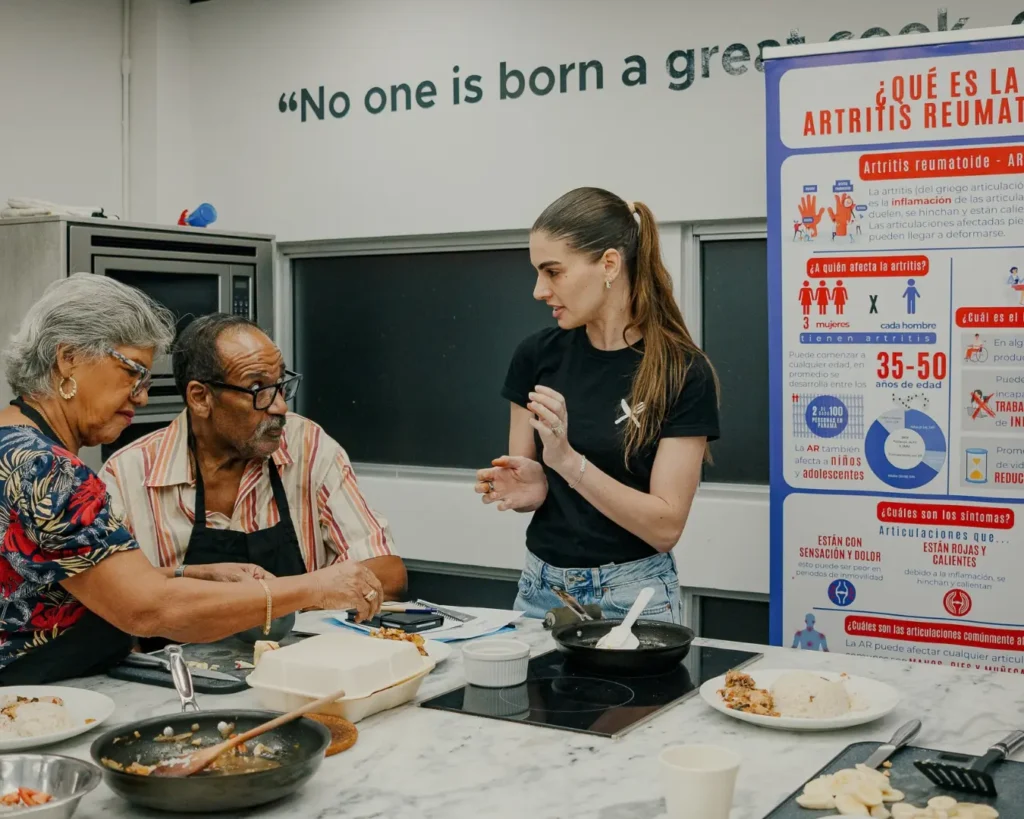
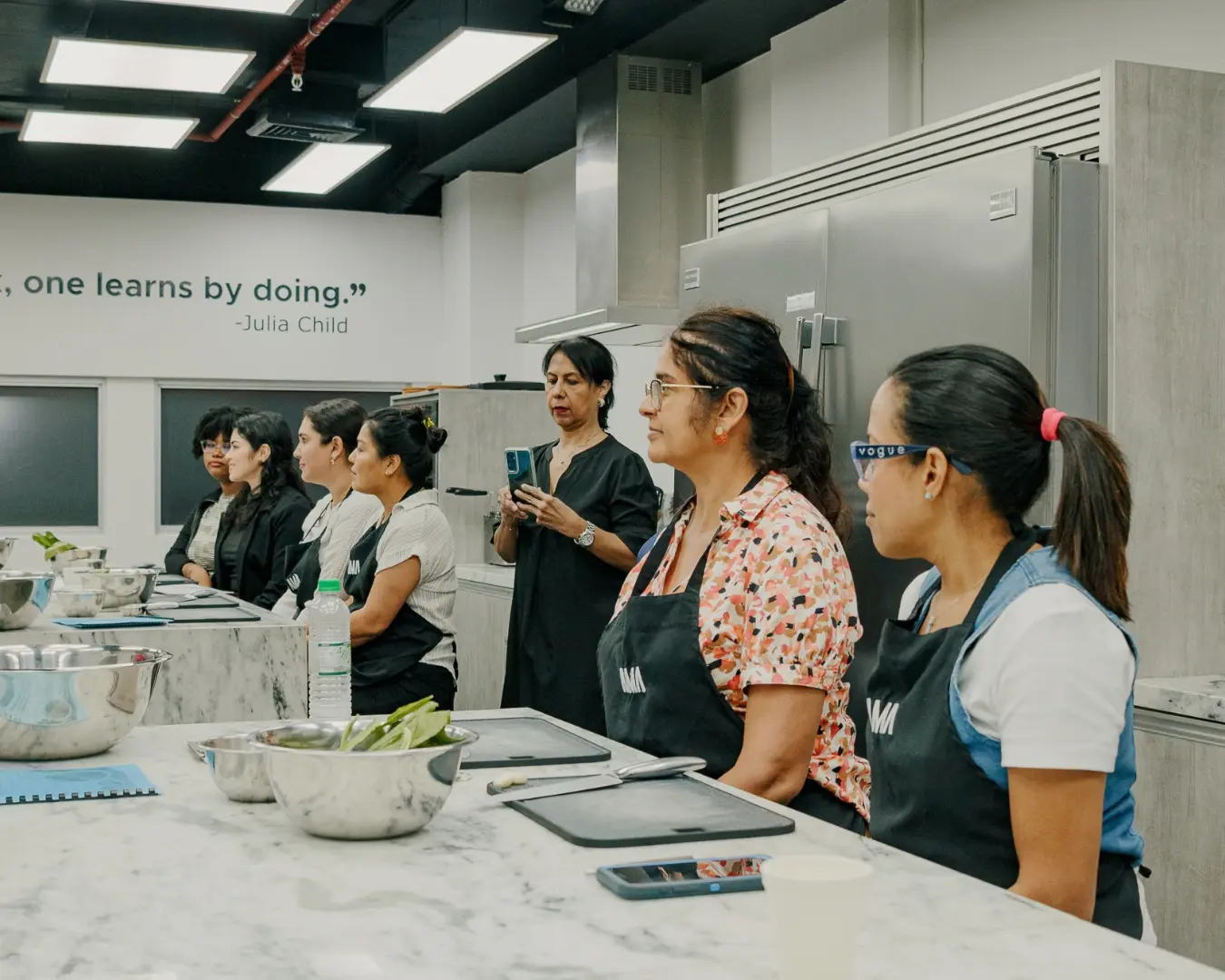
On September 9, we invited 5 patients and their caregivers to a “Chopped”-style cooking contest in the professional kitchen of AMA Cooking Studio. The organizers chose five ingredients for the main course (chicken, culantro, coconut milk, rice and tomato) and four for dessert (banana, molasses, butter and peanuts). Each team had to prepare a complete meal and make the secret ingredient the star: coconut milk in the main course and peanuts in the dessert.
The judges were renowned chef Carlos Ossa; Dr. Ericka Stahl, a specialist in complementary medicine; and Dr. Larissa Caballero, a specialist in cardiometabolic health. They evaluated creativity, flavor, presentation and original use of the secret ingredients. The teams then shared their dishes.
The doctors explained the benefits of simple home cooking, and the chef showed how to prepare healthy food with few ingredients and in little time. Prizes that make cooking easier were awarded (special knives, can openers, bottle openers and food grippers), along with two gift certificates for Antiburger.
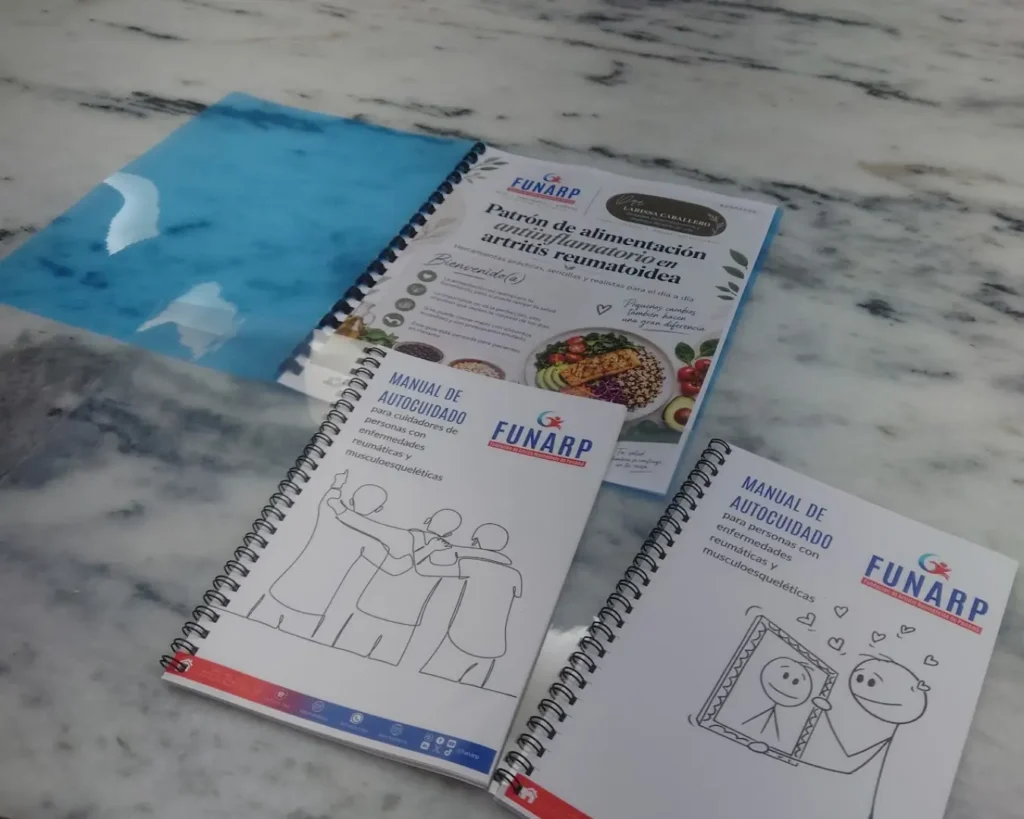
Patients received the self-care manual and caregivers received the caregivers’ self-care manual. In addition, Dr. Caballero prepared an anti-inflammatory nutrition guide with her method for buying and preparing food.
What did we achieve?
All ten participants completed the surveys before and after the activity. All ten had already answered yes to the two awareness questions before the contest, so those items could not change. Naming a concrete technique rose from 0 out of 10 to 10 out of 10. After the contest, all ten mentioned cooking and eight mentioned the time spent with their caregiver. One participant wrote that cooking with his wife made him feel closer to her.
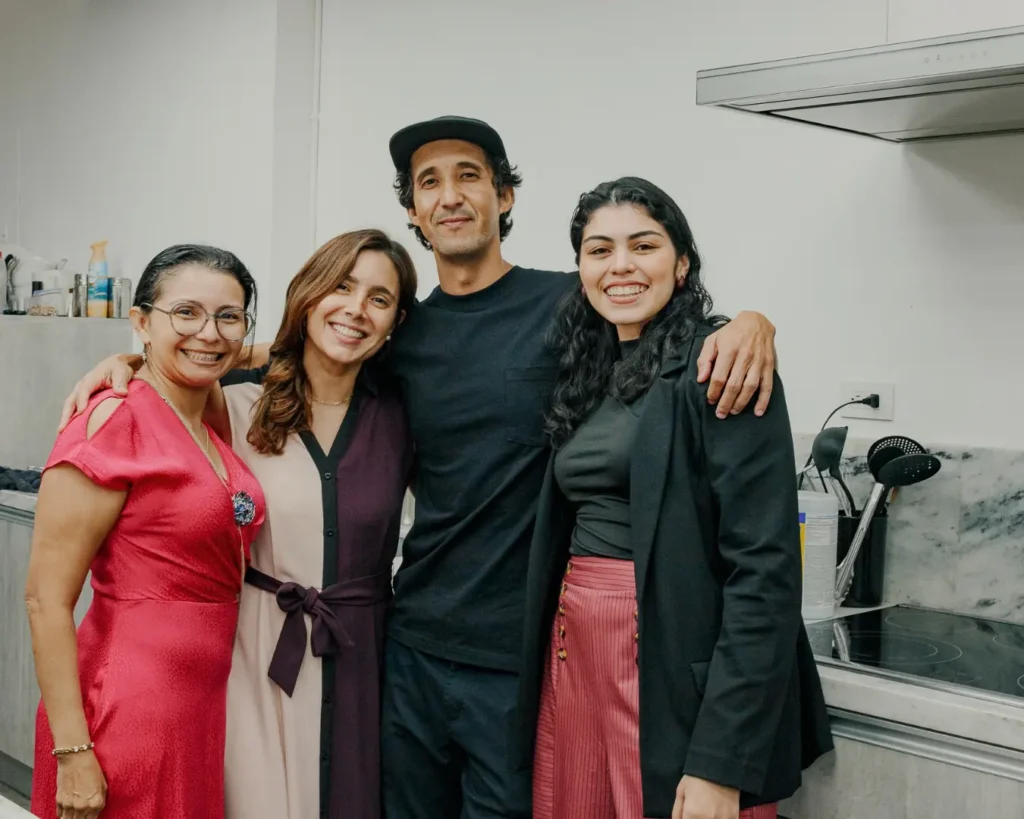
We noticed that at first the teams doubted they could cook together; by the end, everyone was happy, smiling and satisfied with their creations.
References
- Mittinty MM, et al. Interpersonal Process of Dyadic Coping in Rheumatoid Arthritis: A Perspective From the Australian Rheumatology Association Database. J Rheumatol 2024. https://pubmed.ncbi.nlm.nih.gov/38692667/ (editorial: https://www.jrheum.org/content/51/9/839.full.pdf)
- Tiete J, Porter L. Review of psychosocial interventions in patient–caregiver dyads, 2022 (approximate title). https://dipot.ulb.ac.be/dspace/bitstream/2013/349614/3/Tiete_Dyadic_psychosocial_interventions_review_2022.pdf
- Rapelli G, et al. Editorial: Promoting patient and caregiver engagement in chronic disease management. Front Psychol 2023. https://www.frontiersin.org/journals/psychology/articles/10.3389/fpsyg.2023.1324935/epub
- McKellar G, et al. A pilot study of a Mediterranean-type diet intervention in female patients with rheumatoid arthritis living in areas of social deprivation in Glasgow. Ann Rheum Dis 2007;66(9). https://ard.bmj.com/content/66/9/1239
- Nourishing Holistic Well-Being: The Role of Family Dynamics and Family Cooking. https://pmc.ncbi.nlm.nih.gov/articles/PMC11855907/
Testimonials
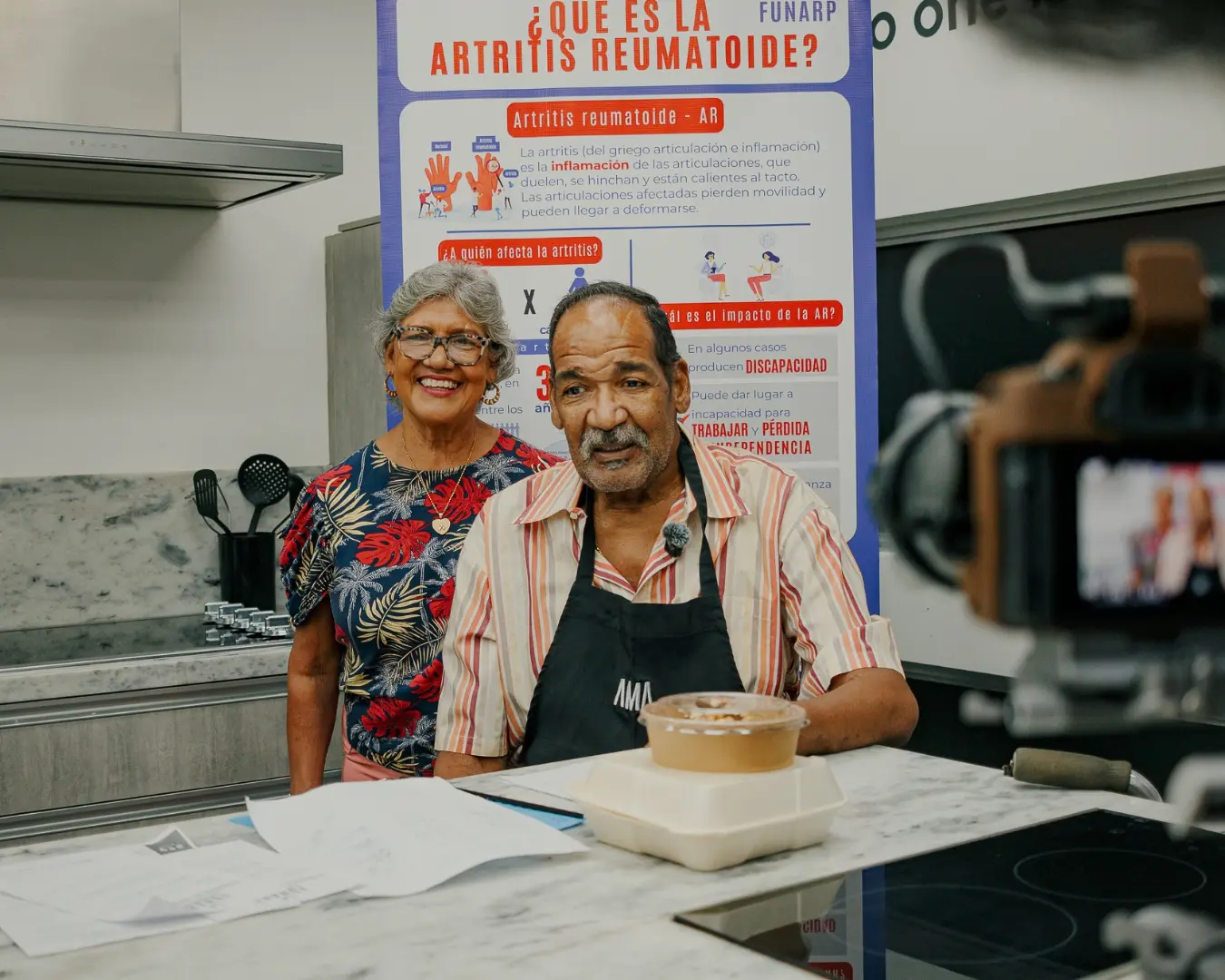
Event video
Dreams of joy and happiness
Laughter therapy session
There is solid scientific evidence on the benefits of laughter therapy induced by watching comedies (films, videos or plays), especially for people with chronic conditions and rheumatic and musculoskeletal diseases.
Laughter significantly lowers cortisol levels, releases endorphins with a natural pain-relieving effect, improves circulation and cardiovascular function, stimulates the immune system and increases the activity of white blood cells and immunoglobulins.
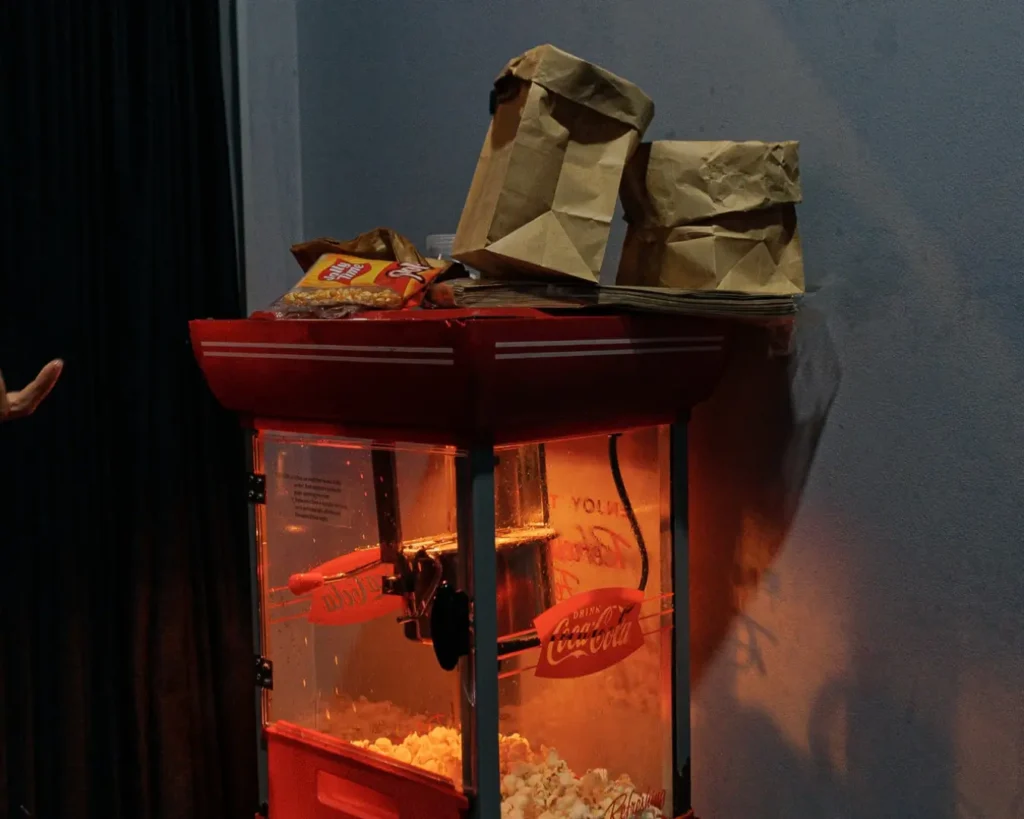
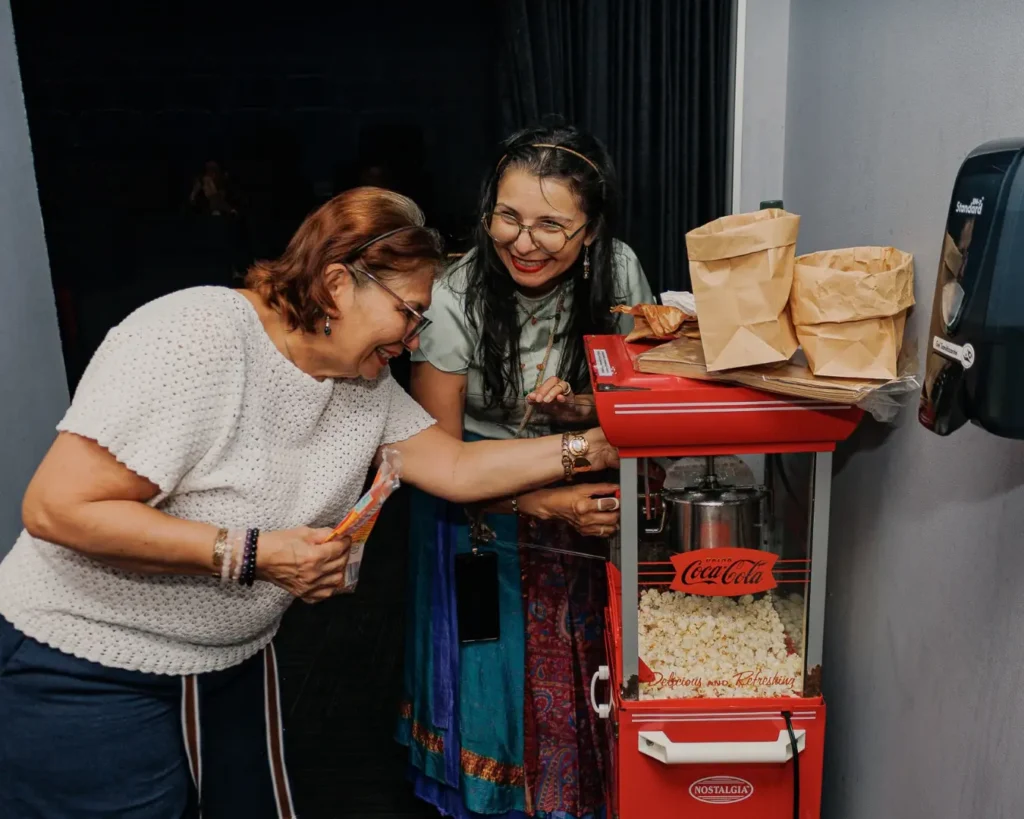
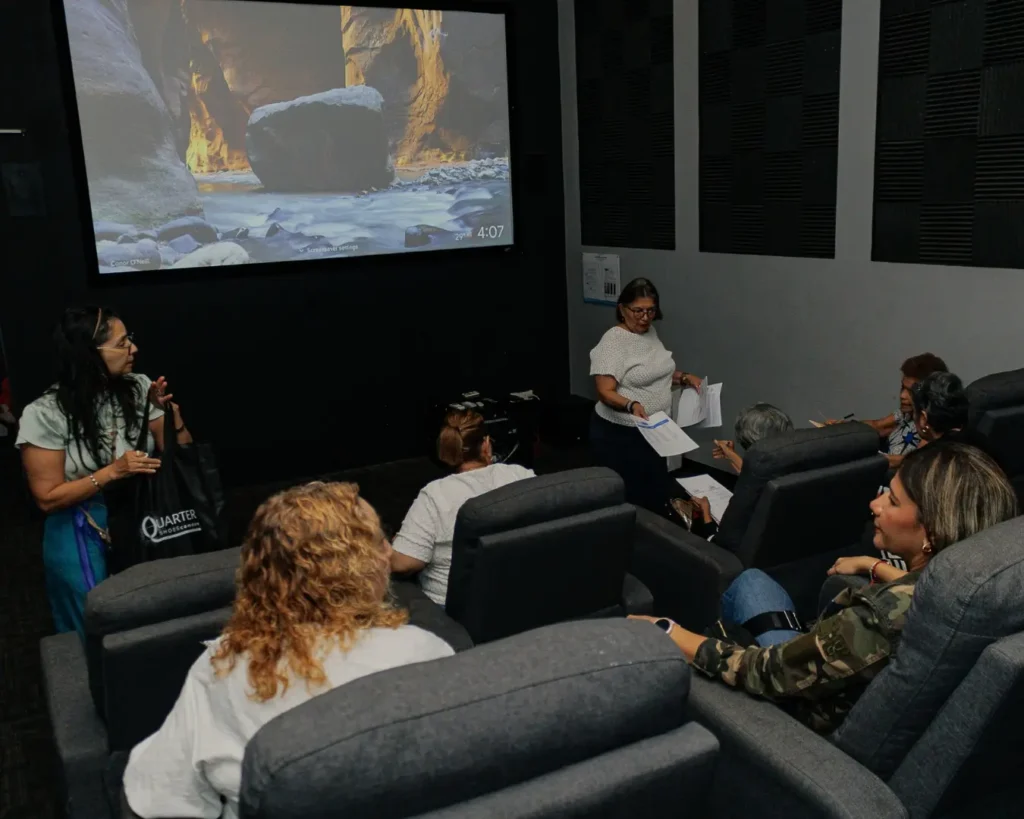
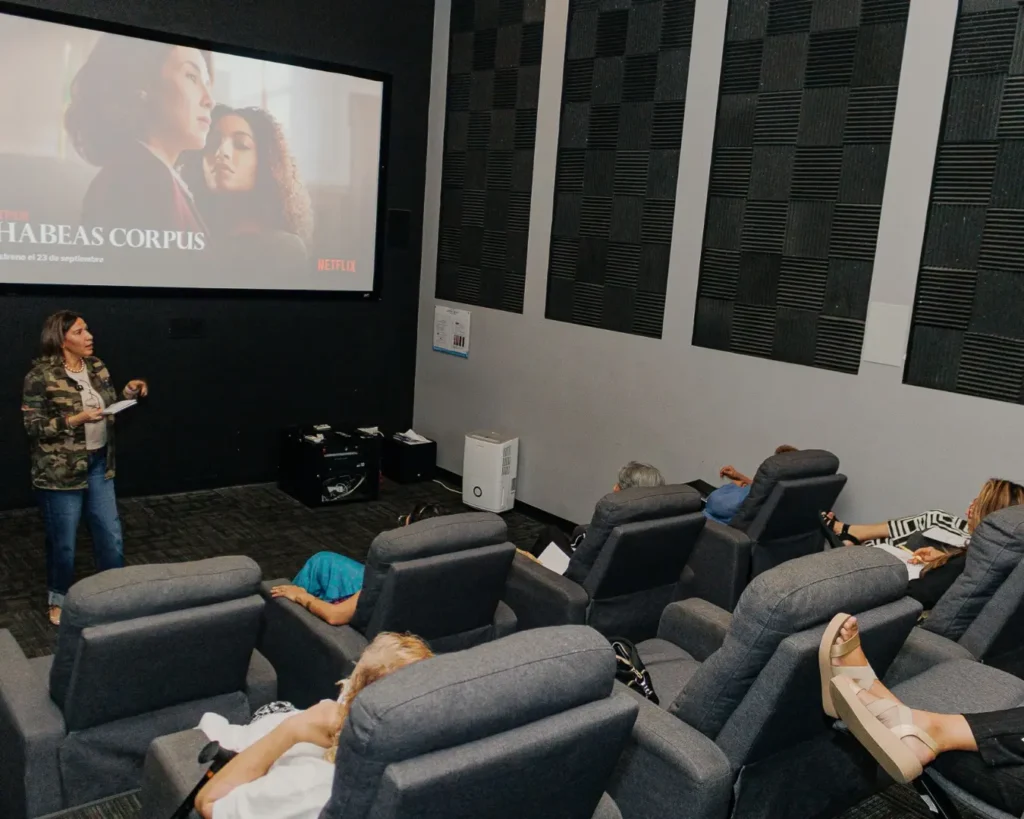
That is why, on September 12, FUNARP organized a hands-on comedy-film session for patients and caregivers.
Why is it needed?
It also modulates inflammation by lowering pro-inflammatory cytokines such as IL-6 and, in some cases, TNF-α. It increases pain tolerance and reduces pain perception, an effect documented since the case of Norman Cousins and confirmed in a 2024 trial in patients with rheumatoid arthritis. It also reduces anxiety and depression, improves mood and raises quality of life. In patients with chronic conditions (cancer, diabetes, COPD and musculoskeletal pain) and rheumatic diseases, these effects are particularly relevant.
Patients with chronic and rheumatic diseases live every day with pain, inflammation, stress, anxiety and a reduced quality of life.
The evidence shows that comedy-induced laughter is a safe, low-cost and easy-to-use tool that works as a non-drug complementary therapy.
It reduces pain, modulates inflammation, improves emotional well-being and builds resilience, aspects that conventional treatments do not always address sufficiently.
How did we do it?
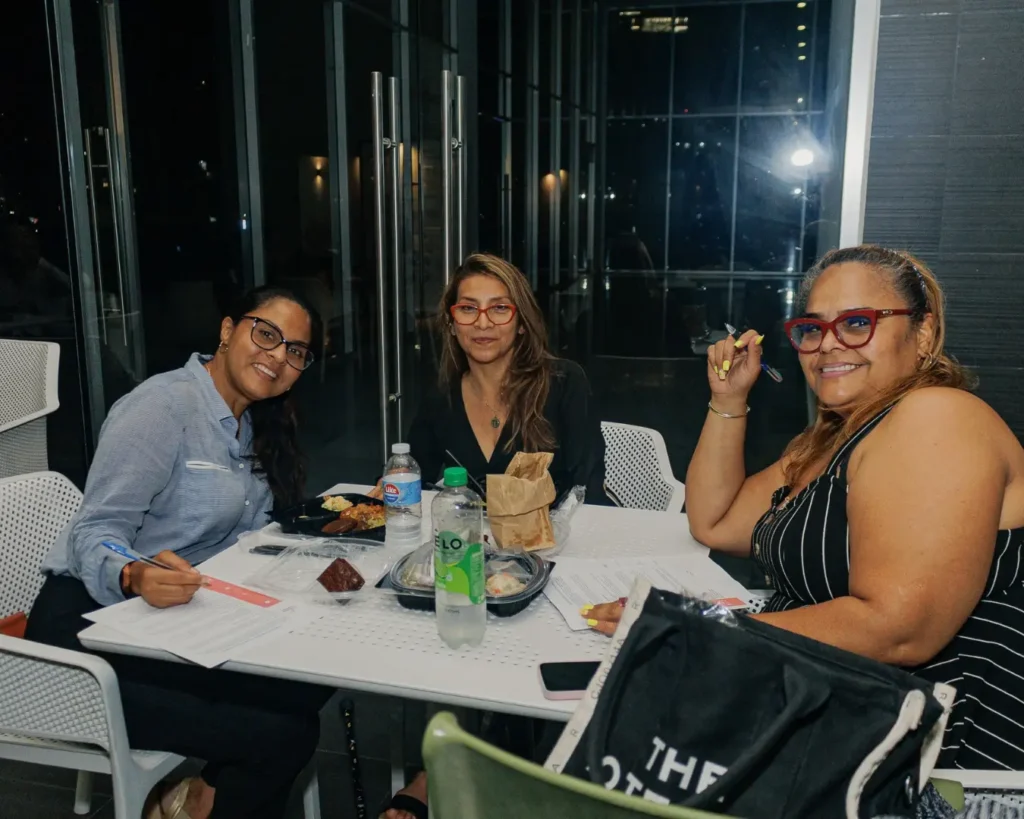
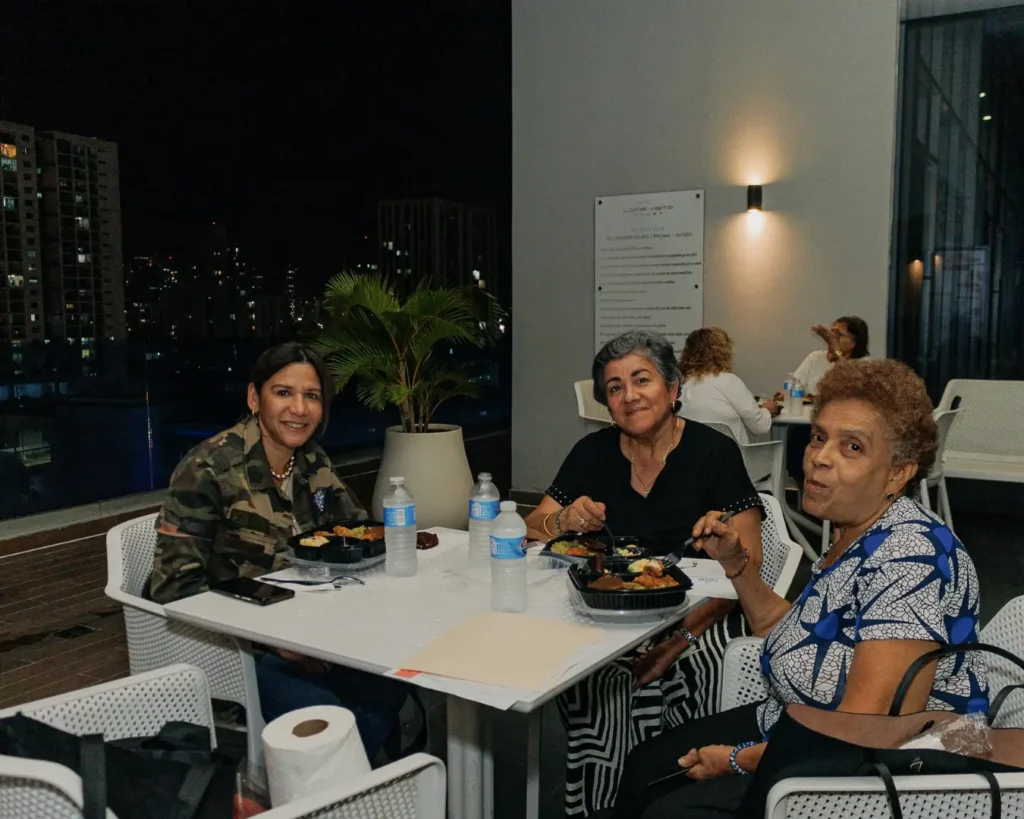
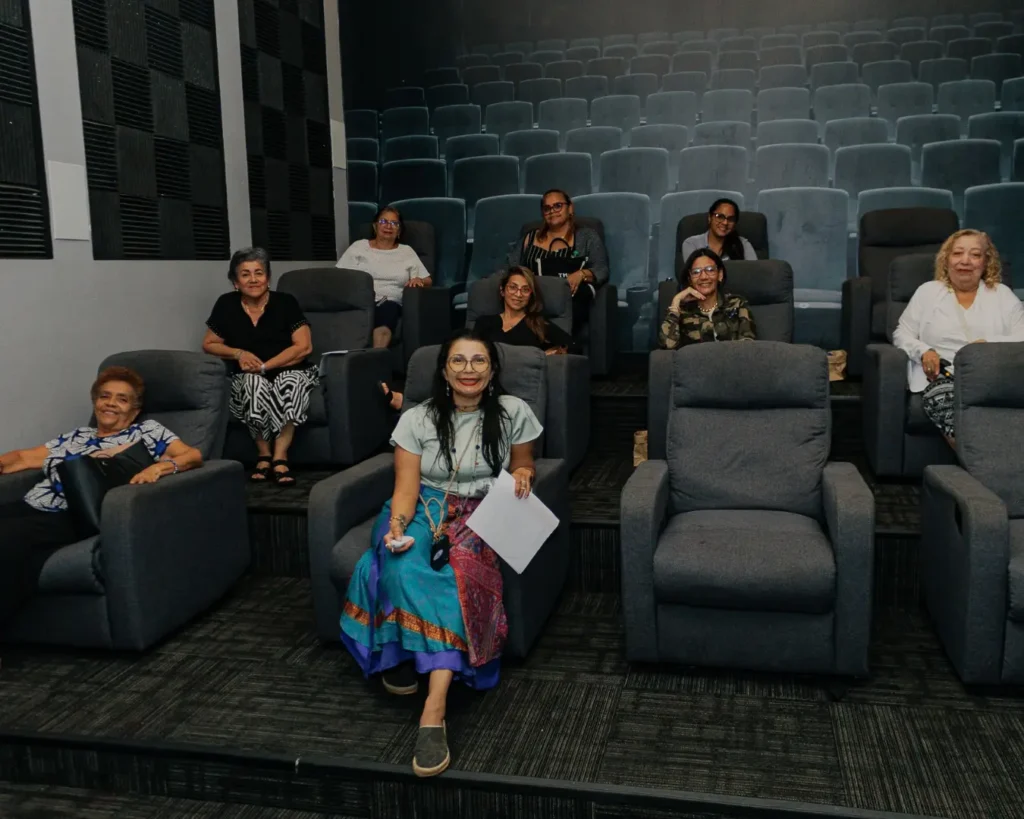
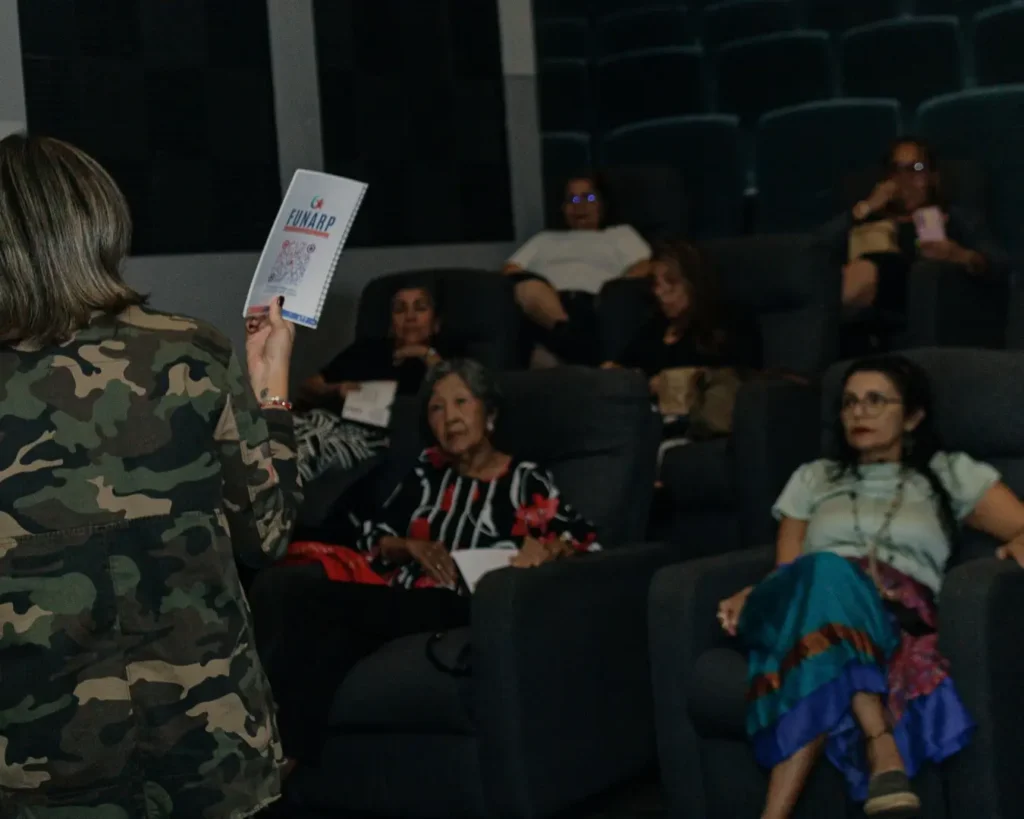
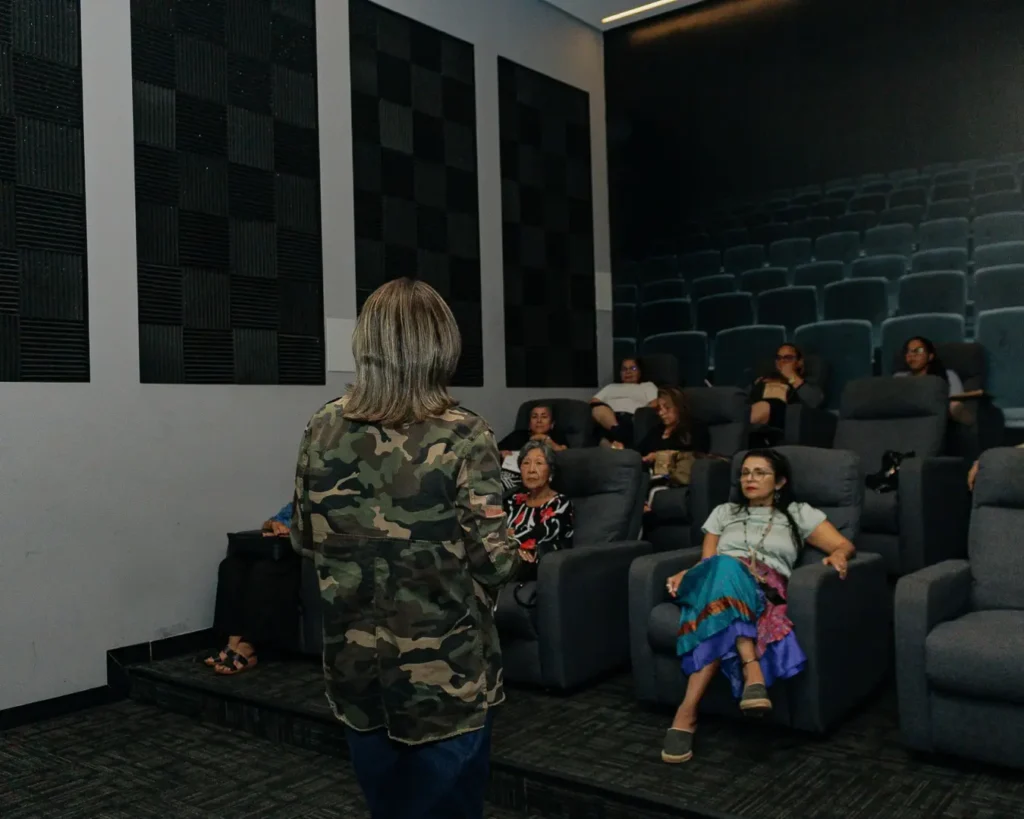
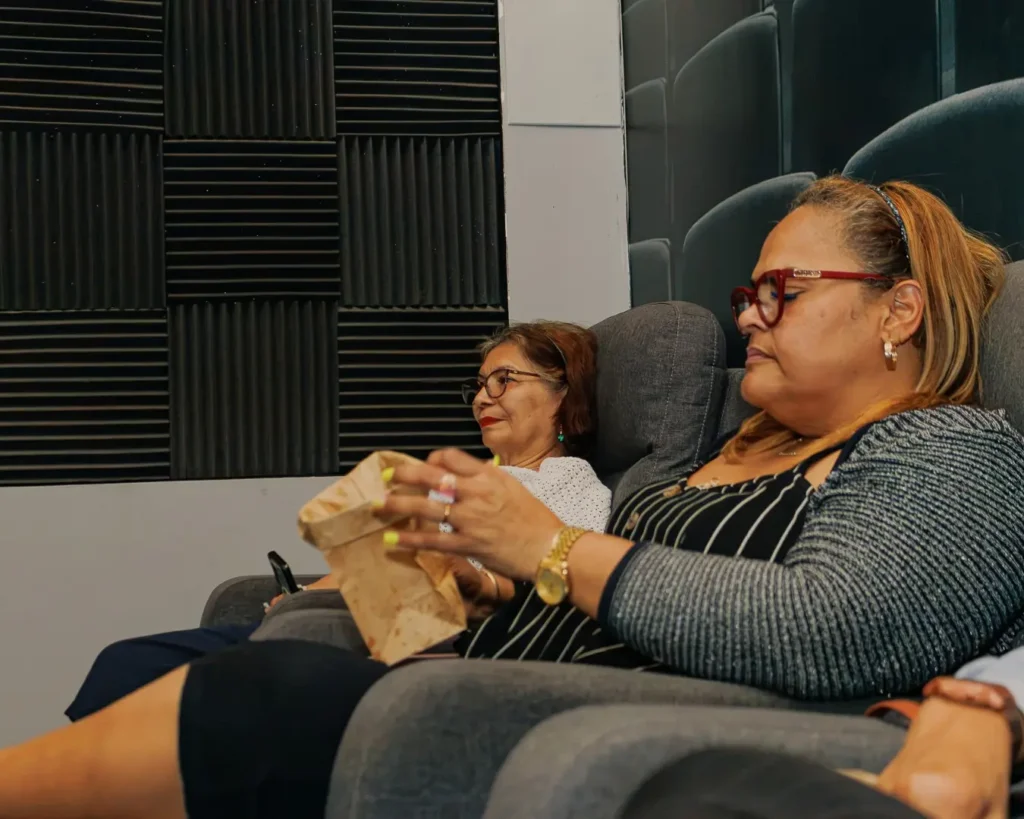
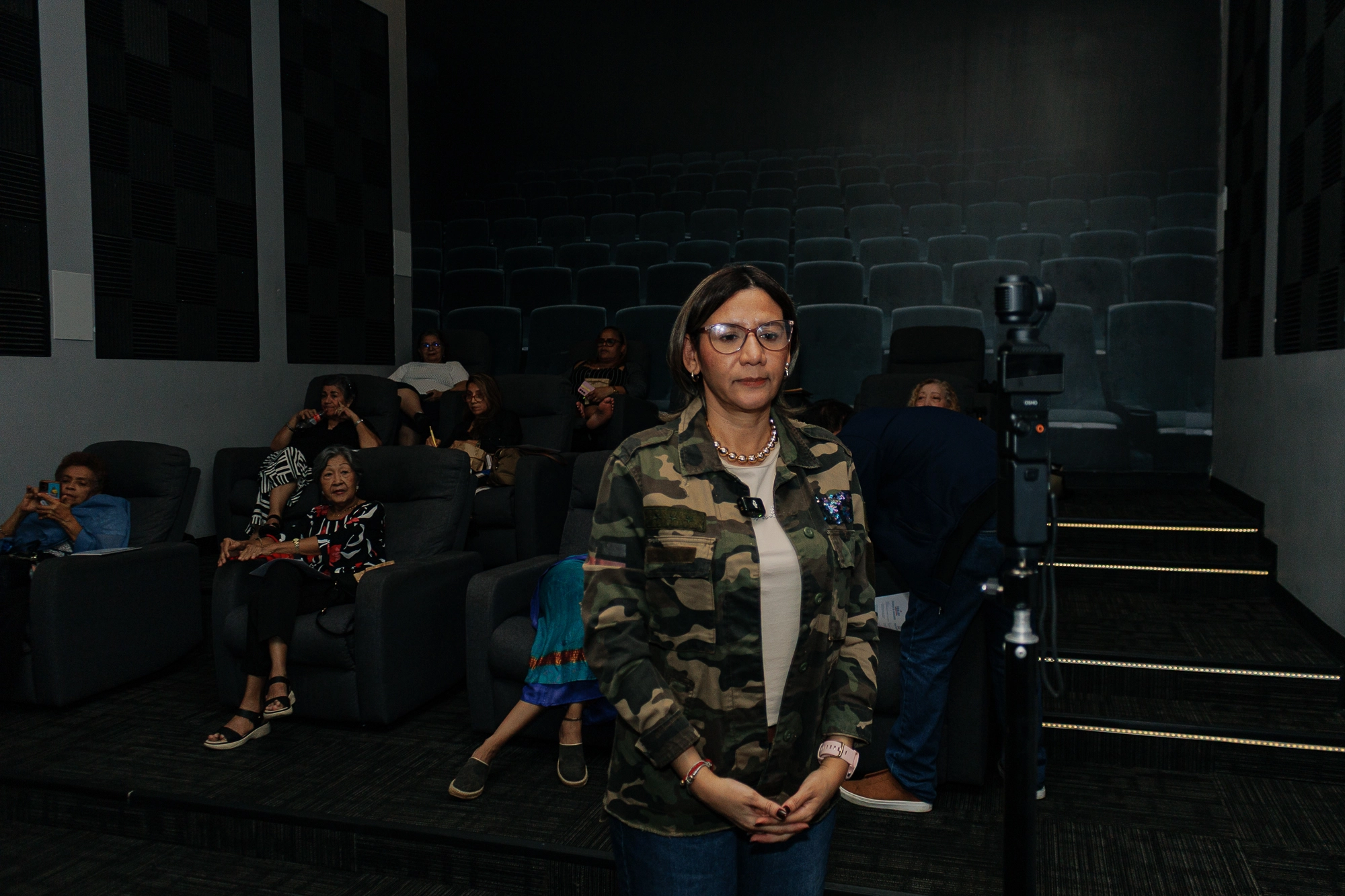
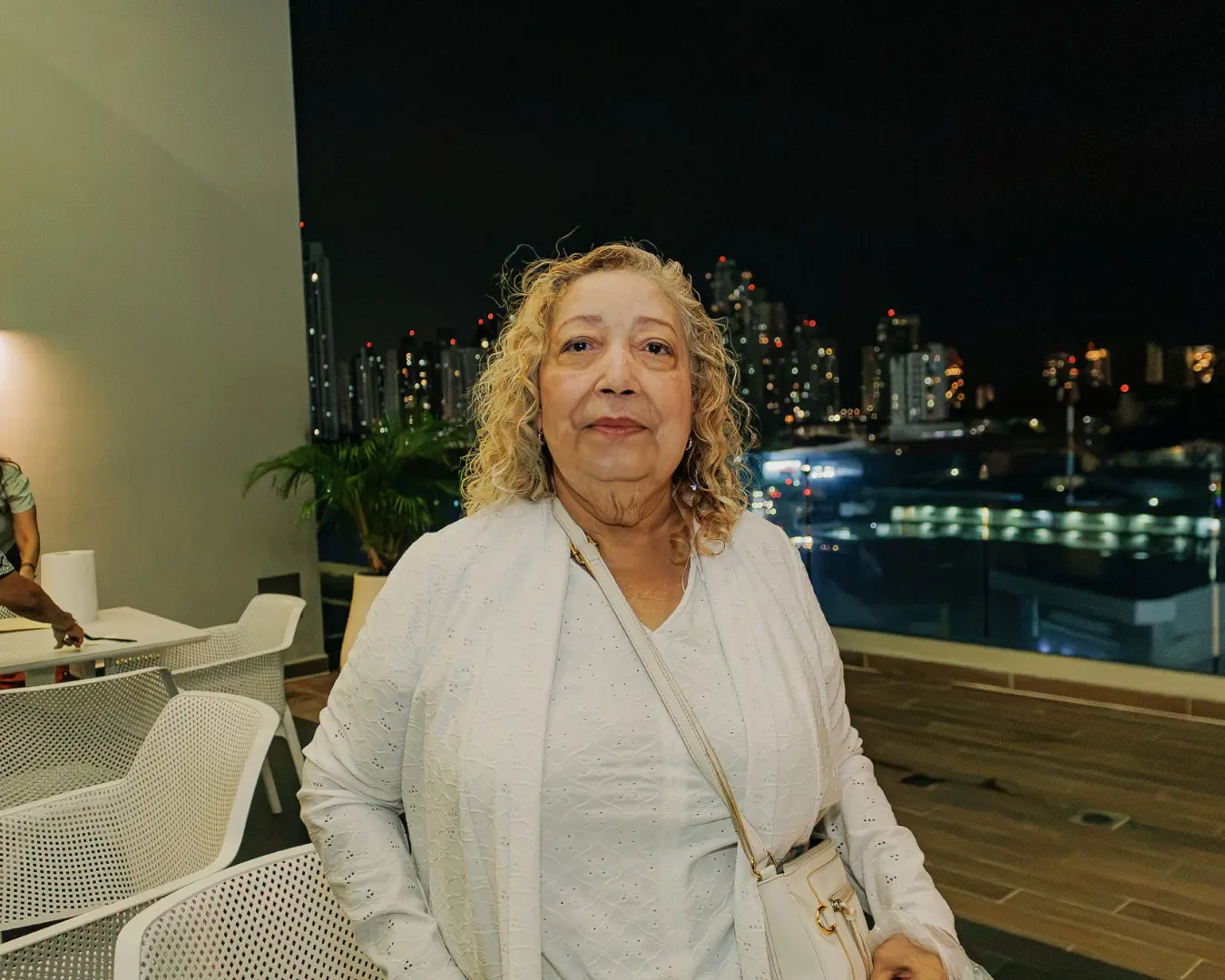
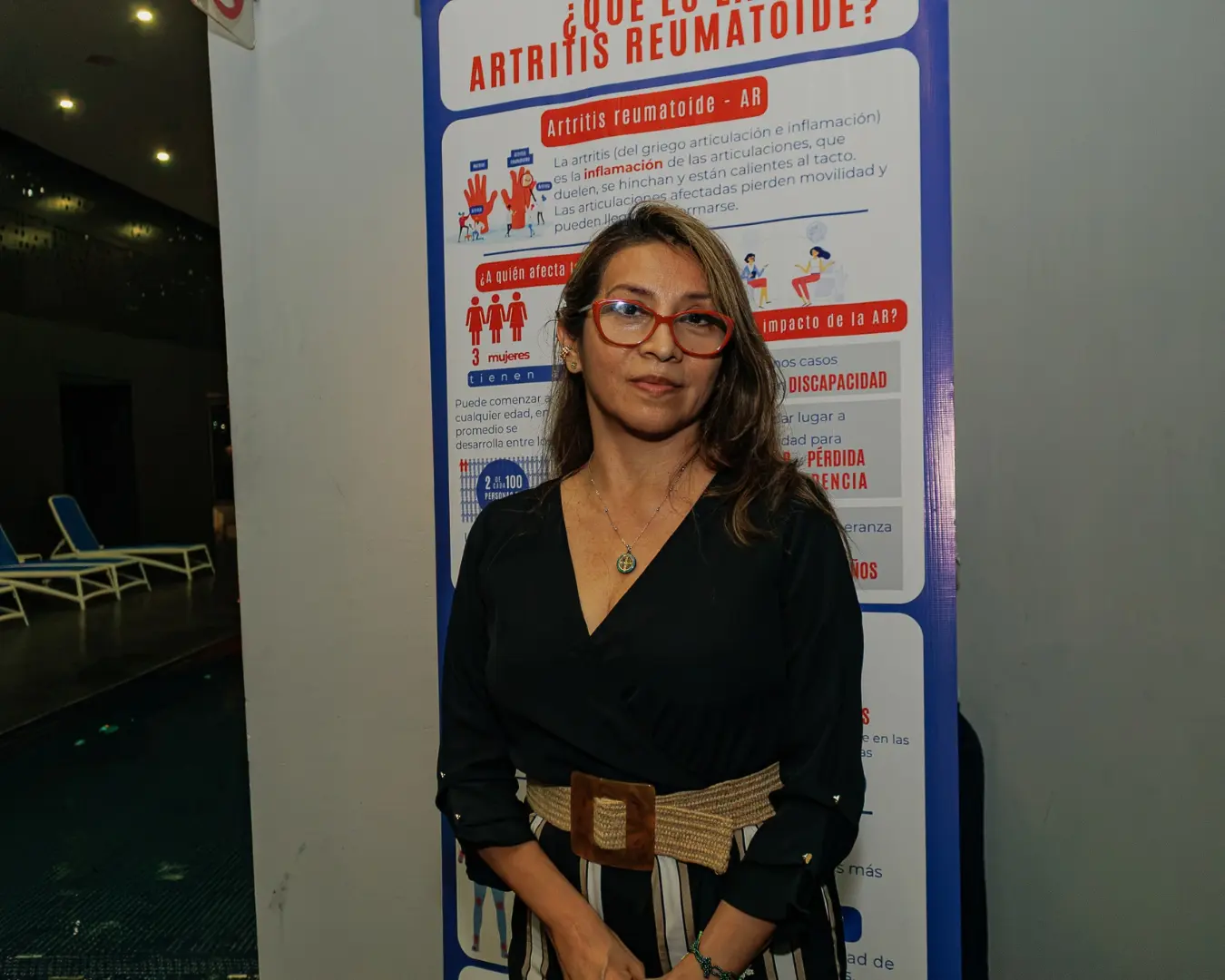
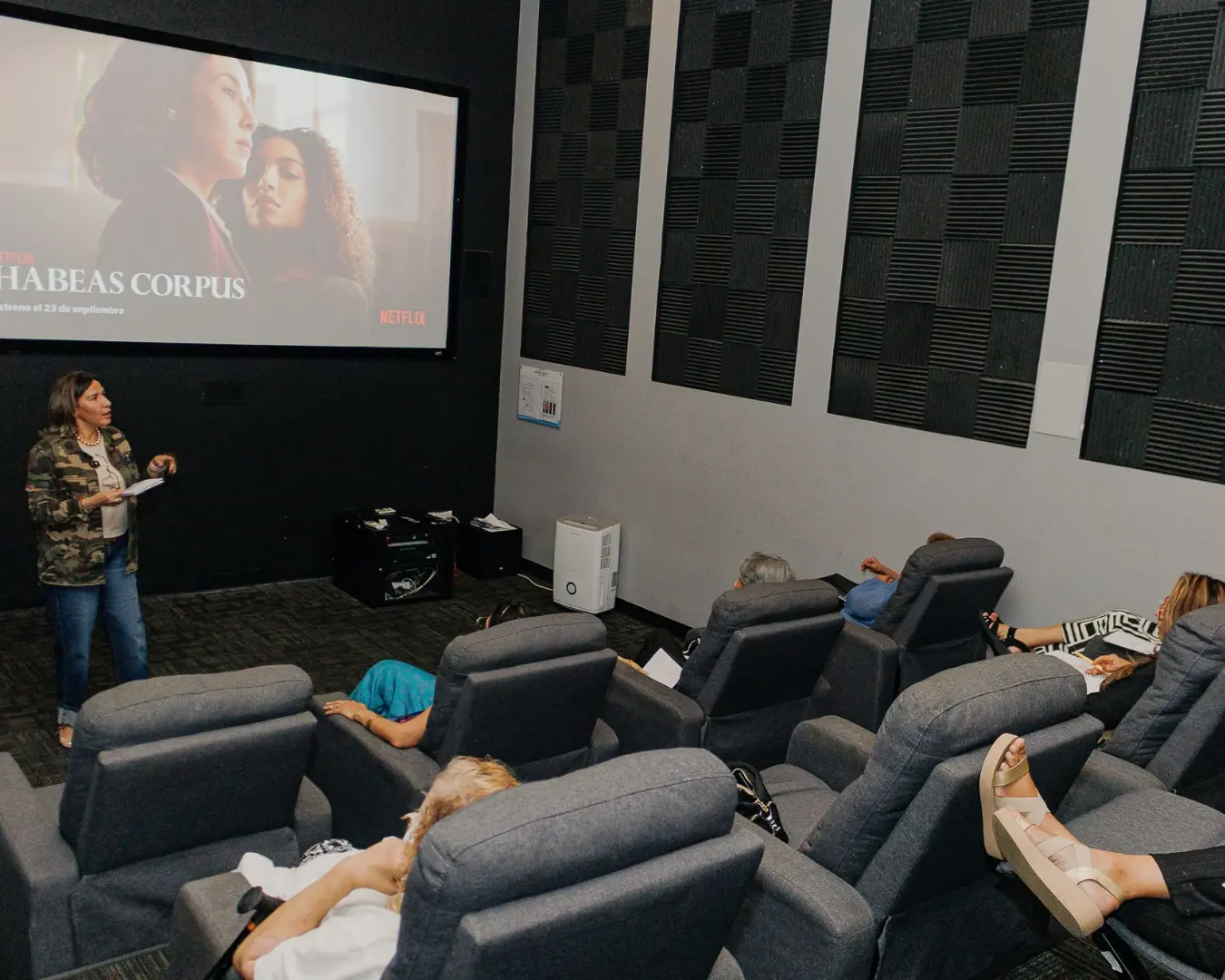
On September 12, FUNARP invited 10 patients and caregivers to a session in a small home cinema at the house of a Board of Directors member. Dr. Sindy Cárdenas, a wellness specialist, explained how laughter affects stress and the immune system. She gave practical tips to try right then and to repeat at home, along with the science behind them. The group then enjoyed a comedy film with popcorn and a snack. At the end, the self-care manuals (one for patients and one for caregivers) were handed out.
What did we achieve?
Participants completed a survey before and after the session. The number of people able to name a concrete well-being technique rose from 1 out of 10 to 10 out of 10, and the average number of techniques known increased. Awareness of non-drug ways to feel better and of the benefits of hobbies rose in both cases from 3 out of 10 to 7 out of 10. After the activity, all seven patients identified humor or laughter as a useful resource, and four also mentioned physical activity.
References
- Braunstein, M. (2015). Laughing Your Ass Off. The Reader.
https://thereader.com/2015/11/24/laughing-your-ass-off/ - Stiwi, K., & Rosendahl, J. (2022). Efficacy of laughter-inducing interventions in patients with somatic or mental health problems: A systematic review and meta-analysis of randomized-controlled trials. Complementary Therapies in Clinical Practice, 47, 101552.
https://www.sciencedirect.com/science/article/pii/S1744388122000202 - Sakamoto, R., Hida, Y., Shiozaki, M., Motooka, H., & Koyama, A. (2023). Efficacy of Comedy on Health-Related Quality of Life and Oxidative Stress in Cancer Survivors. Cureus, 15(7), e42760.
Full PDF: https://assets.cureus.com/uploads/original_article/pdf/168716/20230830-9309-1ez7bbk.pdf - Babadağ Savaş, B., Orlu, N., Balcı Alparslan, G., Çolak, E., & Korkmaz, C. (2024). Effect of Humor on Pain and Anxiety in Patients With Rheumatoid Arthritis: A Prospective, Randomized Controlled Study. Holistic Nursing Practice, 38(3), 130-137.
https://pubmed.ncbi.nlm.nih.gov/38709128/ - Matsuzaki, T., Nakajima, A., Ishigami, S., Tanno, M., & Yoshino, S. (2006). Mirthful laughter differentially affects serum pro- and anti-inflammatory cytokine levels depending on the level of disease activity in patients with rheumatoid arthritis. Rheumatology, 45(2), 182-186.
https://pubmed.ncbi.nlm.nih.gov/16319105/ - S. Department of Veterans Affairs. (2024, updated May). The Healing Benefits of Humor and Laughter. Whole Health Library.
https://www.va.gov/WHOLEHEALTHLIBRARY/tools/healing-benefits-humor-laughter.asp
Gallery
Testimonials
Event video
Dreams of physical well-being
Gallery
Hydrotherapy workshop for children and teens
Children with rheumatic and musculoskeletal diseases (RMDs) live with pain, stiffness and fatigue that can limit their play and movement.
In the water, buoyancy reduces the load on the joints, making it easier to move. FUNARP is organizing a hydrotherapy session in an adapted, temperature-controlled pool with mobility aids, guided by physiotherapists.
While the children exercise, one caregiver per child takes part in a parallel educational session on their role and the ten steps of the caregivers’ manual. The activity draws on the principles of the EULAR physical activity recommendations (2025 update) and on the available pediatric evidence. It complements medical treatment and never replaces it.
Why is it needed?
Children with juvenile idiopathic arthritis (JIA) have lower physical fitness and spend less time in moderate-to-vigorous activity, and both they and their parents often fear that exercise will worsen their symptoms. A systematic review and meta-analysis of five randomized trials with 310 patients found that hydrotherapy reduced pain and improved peak oxygen uptake compared with standard care, with no differences in function, strength or walking test. The quality of the evidence ranged from very low to moderate. Another review concluded that exercise, including aquatic exercise, is well tolerated, although high-quality studies are lacking.
The EULAR physical activity recommendations call for promoting it as part of standard care and tailoring it to each person. They are aimed at adults with inflammatory arthritis and osteoarthritis, not children.
How did we do it?
The children will attend classes led by physiotherapists in an adapted, temperature-controlled pool with mobility aids and water chairs. One caregiver per child observes or takes part in a parallel educational session, where the facilitators explain their role and the ten steps of the caregivers’ manual.
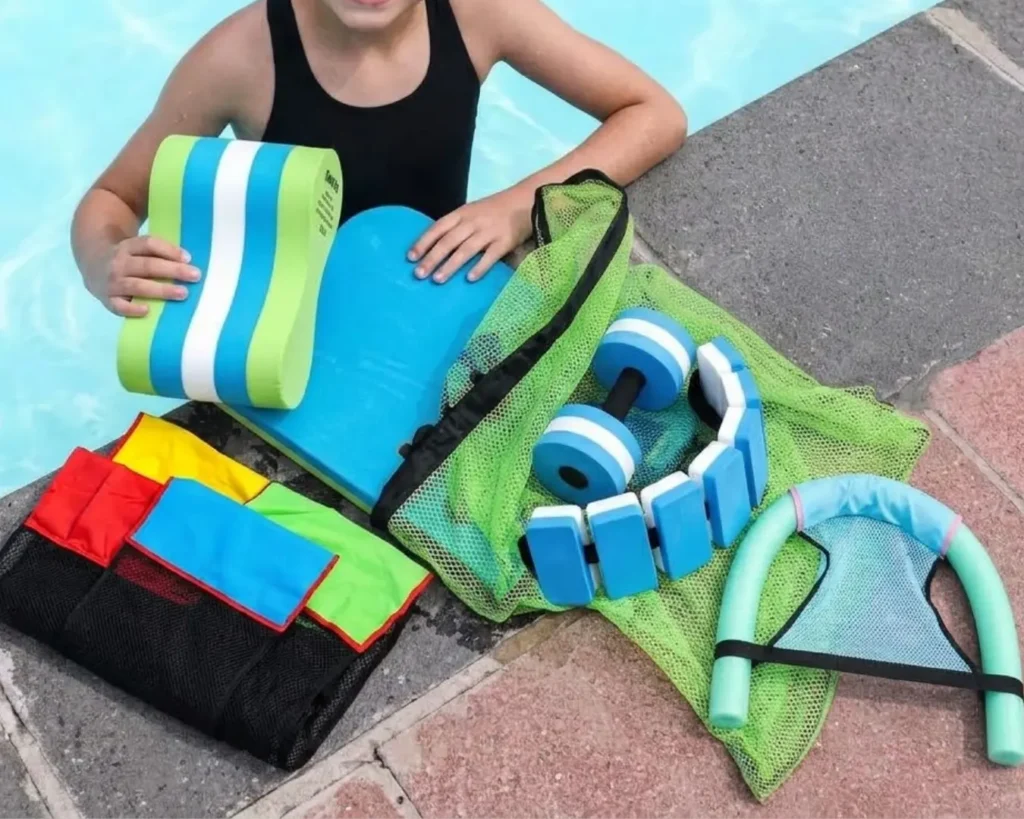
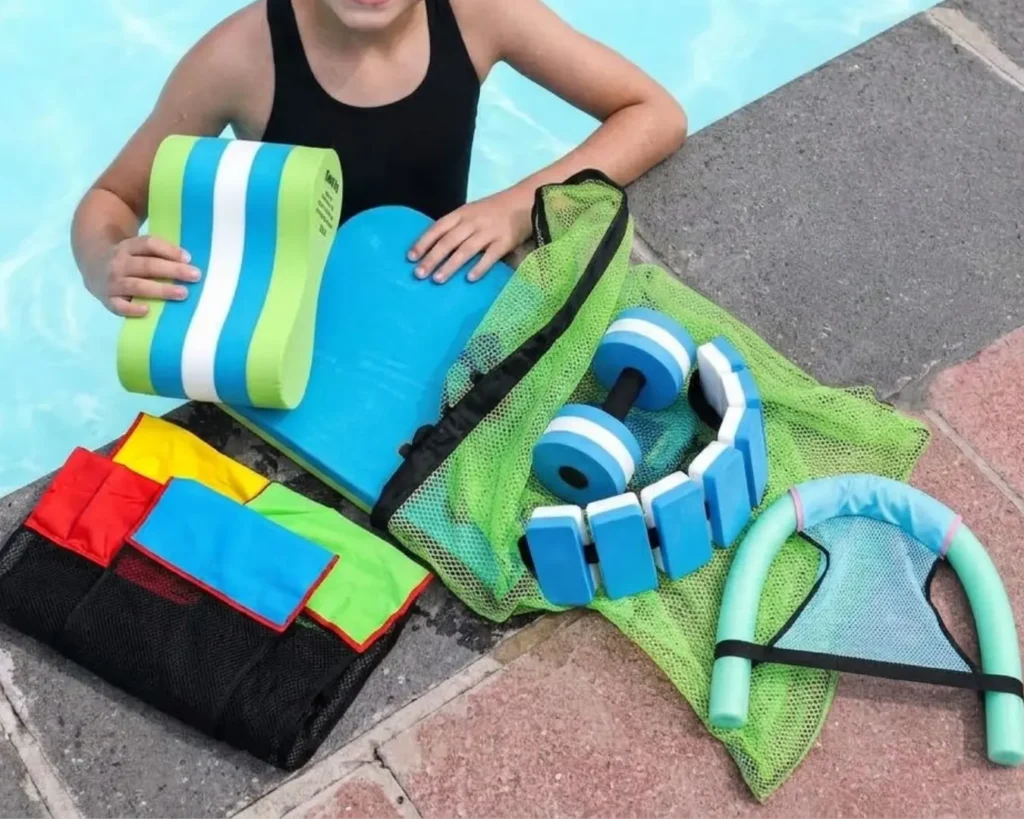
FUNARP bought the equipment the children need: waist floats, kickboards, carry bags, aqua dumbbells, goggles and swim caps. Three physiotherapists designed a routine the children can repeat at their local pools. Each child receives the “Mi Proceso” (“My Process”) booklet and a packed meal, and parents and caregivers receive the self-care manual.
What did we achieve?
(To be completed after the session.)
- Attendance: ___ children and ___ caregivers.
- Surveys: ___ completed before and after. Results: ___.
- Testimonials and photos: ___.
References
- Rausch Osthoff AK, et al. EULAR recommendations for physical activity in people with inflammatory arthritis and osteoarthritis: 2025 update. Ann Rheum Dis 2026;85(6):1026-1038. https://doi.org/10.1016/j.ard.2026.03.006 — open access: https://jyx.jyu.fi/handle/123456789/111502
- Rausch Osthoff AK, et al. 2018 EULAR recommendations for physical activity in people with inflammatory arthritis and osteoarthritis. Ann Rheum Dis 2018;77(9):1251-60. https://doi.org/10.1136/annrheumdis-2018-213585
- Verit G, et al. Effects of hydrotherapy on juvenile idiopathic arthritis: a systematic review and meta-analysis. Pediatr Phys Ther 2025;38(1):20-30. https://doi.org/10.1097/PEP.0000000000001256 — registration: https://search.pedro.org.au/search-results/record-detail/84390
- Epps H, et al. Is hydrotherapy cost-effective? A randomised controlled trial of combined hydrotherapy programmes compared with physiotherapy land techniques in children with JIA. Health Technol Assess (year not confirmed). https://njl-admin.nihr.ac.uk/document/download/2004939
- Physical activity in children with juvenile idiopathic arthritis: a review of recent literature. Reumatologia (authors not confirmed). https://reu.termedia.pl/Physical-activity-in-children-with-juvenile-idiopathic-arthritis-a-review-of-recent,195016,0,2.html